
SEND THE DETAILS
Share a nameplate photo, the location, and whatever you know about your equipment. No testing is required from you.
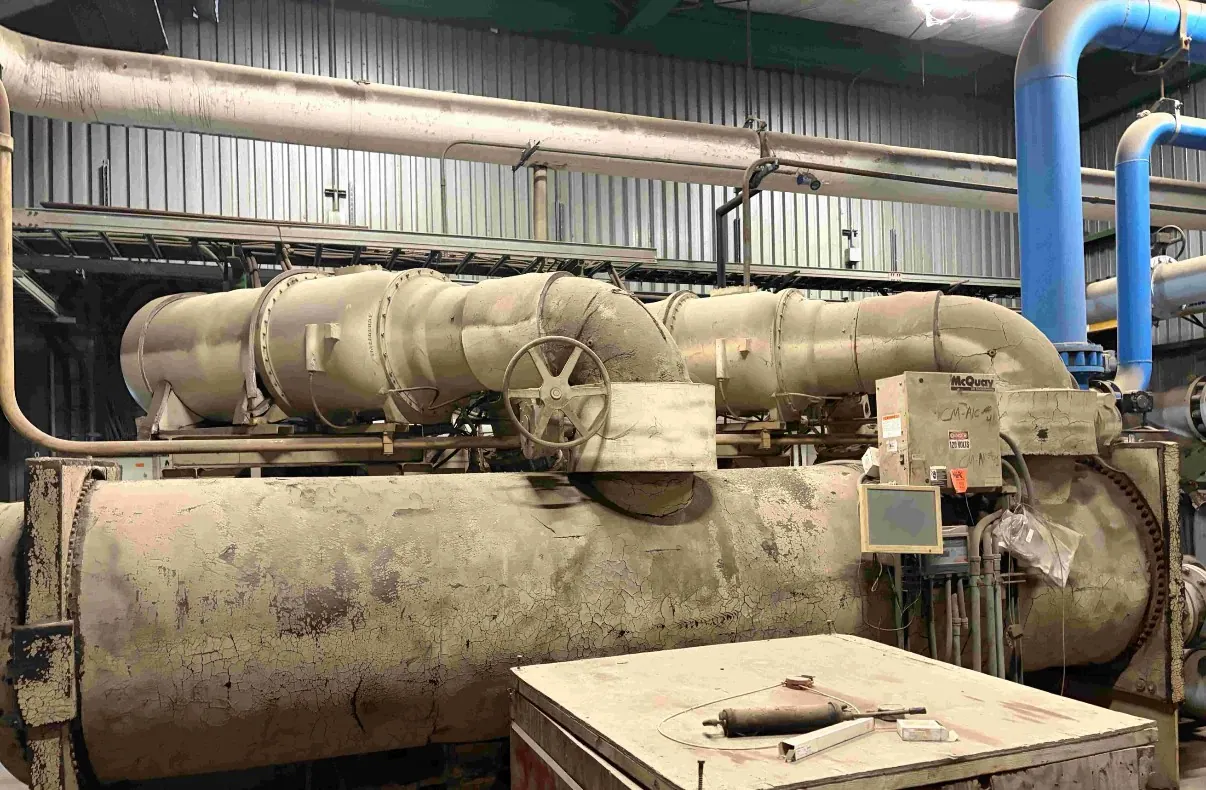
We buy chillers under 100 tons in Midland, Texas, with cash offers and upfront payment when a purchase is agreed. We handle removal, and the seller does not need to test the equipment.
From first photo to final haul, we take care of the details so you can move forward.
Share a nameplate photo, the location, and whatever you know about your equipment. No testing is required from you.
We review the chiller and your site information, then make an offer. Payment is upfront.
We handle disconnects, refrigerant recovery, crane and rigging, loading, freight and hauling.
An under-100-ton chiller may be a complete, operating unit, an idle asset, or equipment that has stopped working. We consider water-cooled and air-cooled chillers, including centrifugal, screw, and scroll machines, across refrigerants. Whether a particular unit is a fit depends on review of the asset and the removal job; capacity alone does not establish value or guarantee an offer.
You do not need to run, repair, restart, or test the chiller to begin. Share the information already available and be clear about what is uncertain. Do not open the refrigerant circuit or vent anything to prepare for a sale.
A clear equipment boundary helps the offer and pickup plan refer to the same property. Send a photo of the whole chiller and, if accessible without disturbing the equipment, its identification plate. Include any known manufacturer, model, serial number, capacity, refrigerant marking, and condition. If a label is damaged or unreadable, say so rather than guessing.
Note whether controls or other accessories are included, and distinguish them from nearby equipment that will remain. Pumps, piping, electrical gear, and adjacent chillers may belong to a larger system, but should not be treated as part of the sale unless that is intended. Photos showing the surroundings can help explain the boundary.
The “under 100 ton” description refers to cooling capacity, not the machine’s weight. Dimensions, shipping weight, rigging points, and lifting restrictions are separate details. If you have records or drawings, they can help; do not estimate critical lifting information when it is unknown.
A chiller can be tied into electrical service, water piping, controls, or other facility systems. The actual arrangement is not known from capacity or a photograph alone. Tell us what is known about the connections and which systems must remain in service. The authorized facility representative coordinates site isolation and identifies operating boundaries; removal work should not disrupt equipment the property intends to keep running.
We arrange appropriate refrigerant recovery with qualified personnel, along with equipment disconnects. The scope is planned for the specific installation. The seller does not need to hire a separate recovery provider or disconnect the chiller before the review, and should not release refrigerant or open the circuit.
For equipment in Midland, the next useful information is about the property and the route out, not an assumed local site condition. Let us know whether the chiller is indoors, outdoors, elevated, or in a mechanical area if you know. Photos of doorways, corridors, roof access, exterior approaches, and the possible loading area can reveal questions that a close-up of the machine cannot.
The property contact should identify access rules, approved work hours, escort or permit requirements, and areas that must stay clear. If a route crosses an active work zone or shared yard, scheduling may need to account for that. Any known limits on overhead clearance, ground support, or truck access are useful; the actual handling plan follows review of conditions.
After the asset and site are reviewed, we coordinate the required rigging, crane work when needed, loading, freight, and hauling. The appropriate method depends on the machine’s verified weight and configuration, lifting points, clearance, route, and available working space. A compact capacity does not by itself mean the chiller is easy to move.
We handle the equipment work and arrange the people and transport needed for an agreed purchase. The seller or site supplies accurate information, authorized access, applicable site rules, and necessary approvals. Do not move the machine or prepare a lift simply because it is being considered for sale; discuss the scope and timing first.
A cash offer depends on the actual chiller and project review, including what is included and the work required to collect it. An idle or non-running condition does not prevent consideration, but neither condition guarantees a purchase. The equipment scope, access plan, and terms should be clear before the sale is finalized.
If we agree to purchase the chiller, payment is made upfront before pickup, on the agreed terms. Pickup timing is coordinated with the authorized site contact so access and removal responsibilities are understood. No particular offer or schedule can be promised before the asset and project have been reviewed.
To begin, gather whatever you have: identification-plate details, overall and connection-area photos, known condition, included accessories, and the location and access information. Identify a person authorized to discuss the property’s requirements. Missing specifications can be marked unknown; do not delay simply because the chiller cannot be tested or its records are incomplete.
With those details, we can review whether the under-100-ton unit and its removal scope are suitable for an offer. Keep the equipment undisturbed and the refrigerant circuit closed while that review takes place.

Air-cooled or water-cooled. Centrifugal, screw or scroll. From single units to large shutdown projects, we buy industrial chillers across Texas.
Send us your chiller details and nameplate photos for a cash offer. Don’t worry if you don’t know every specification—we can start with what you have.
Call or text(614) 715-3047TEXT NAMEPLATE PHOTOS ↗Prefer email?
saleselectricalbuyers@gmail.com