
SEND THE DETAILS
Share a nameplate photo, the location, and whatever you know about your equipment. No testing is required from you.
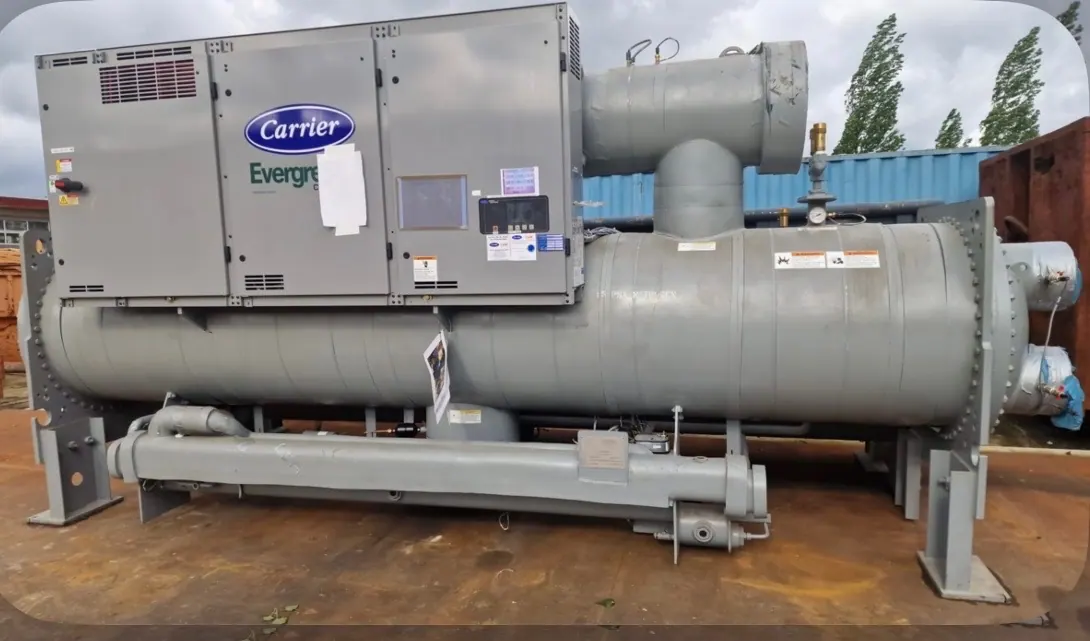
We buy 500 to 999 ton chillers in El Paso, Texas, with cash offers and upfront payment when a purchase is agreed. We handle removal, and the seller does not need to test the equipment.
From first photo to final haul, we take care of the details so you can move forward.
Share a nameplate photo, the location, and whatever you know about your equipment. No testing is required from you.
We review the chiller and your site information, then make an offer. Payment is upfront.
We handle disconnects, refrigerant recovery, crane and rigging, loading, freight and hauling.
A 500–999 ton chiller is a significant piece of equipment, but its cooling rating alone does not tell us what it weighs, how it is built, or whether removal is practical. For an initial review, the most useful details are those you can confirm without operating or opening the unit. If a fact is unknown, label it unknown rather than estimating.
We buy used industrial and commercial water-cooled and air-cooled chillers, including centrifugal, screw, and scroll machines, and consider all refrigerants. Idle and non-running units are also considered. An offer depends on the specific asset and a review of the project; this capacity range does not guarantee a purchase.
Begin with a readable nameplate, then take wider views showing the whole chiller and its surroundings. If accessible, photograph both ends, visible connections, control panels, and any separate components included in the sale. These views can help identify the configuration and show whether the described equipment appears to be one machine or a broader package.
Photograph the unit as it sits. Do not remove panels, disconnect wiring, or approach an unsafe area to get a better image. A clear view of existing damage, corrosion, missing parts, or modifications can be more useful than a polished picture that hides uncertainty. If the plate is unreadable, send a photo anyway and share any model or serial information from records.
Tell us whether the chiller is operating, idle, or known to be non-running, and explain what you know about its service history. Note any known faults, recent repairs, stored components, or changes to the original configuration. A short account from a facilities or maintenance contact is helpful, but a performance report is not required to begin.
You do not need to restart, repair, clean, or test the equipment for us. Do not vent refrigerant or open the circuit. If the charge, refrigerant type, or circuit status is uncertain, say so; the review can account for information that has not yet been verified.
For an El Paso project, share the unit’s general placement and the route a removal crew would need to use. Is it at grade, indoors, on a roof, or in another restricted area? Photos from the chiller toward the exit and from the loading area back toward the unit can reveal turns, overhead limits, stairs, doorways, or changes in elevation that a close-up cannot show.
If the machine is connected to a working plant, identify what belongs to the chiller and what must remain. Mention shared piping, nearby operating equipment, occupied areas, security procedures, and any known limits on work hours or vehicle access. These details help define a possible scope; they do not mean the seller must arrange contractors or prepare the equipment for removal.
We look at the information available about capacity, manufacturer and model, age if known, configuration, condition, included components, and refrigerant. We also consider the actual removal scope: where the unit is located, how it can be reached, what disconnects may be needed, and whether rigging or a crane might be appropriate. The equipment’s physical dimensions and verified weight matter for handling and freight; cooling tons are a capacity measure, not a weight estimate.
A rooftop location, narrow route, active facility, or limited staging area may affect planning if present. Photos, dimensions, drawings, or site notes can help, but the real property and work conditions still need to be assessed. No single detail establishes an offer, and a preliminary discussion is not a commitment to buy.
If a purchase is agreed, we coordinate appropriate refrigerant recovery with qualified personnel, equipment disconnects, rigging, crane work when needed, loading, freight, and hauling. The work is planned around the actual system and site rather than presumed from the tonnage. The authorized site contact supplies accurate information, access, applicable site rules, and necessary approvals; equipment work is the buyer’s responsibility under the agreed scope.
Before pickup, the parties confirm what equipment is included, the agreed terms, access arrangements, and the removal schedule. Payment is made upfront before pickup on those agreed terms. A cash offer is subject to review and is not guaranteed simply because a chiller falls within this capacity range.
Send the nameplate image, overall and surrounding photos, known operating status, refrigerant information if available, and a brief description of the access route. Add any drawings or records you already have, plus the name or role of the person authorized to discuss the sale and site access. There is no need to commission new testing or make the chiller operational.
Where details are missing, mark them clearly and explain what can be confirmed later by the appropriate site representative. That gives us a practical basis to review the 500–999 ton chiller, ask focused follow-up questions, and decide whether a purchase offer is appropriate.

Air-cooled or water-cooled. Centrifugal, screw or scroll. From single units to large shutdown projects, we buy industrial chillers across Texas.
Send us your chiller details and nameplate photos for a cash offer. Don’t worry if you don’t know every specification—we can start with what you have.
Call or text(614) 715-3047TEXT NAMEPLATE PHOTOS ↗Prefer email?
saleselectricalbuyers@gmail.com