
SEND THE DETAILS
Share a nameplate photo, the location, and whatever you know about your equipment. No testing is required from you.
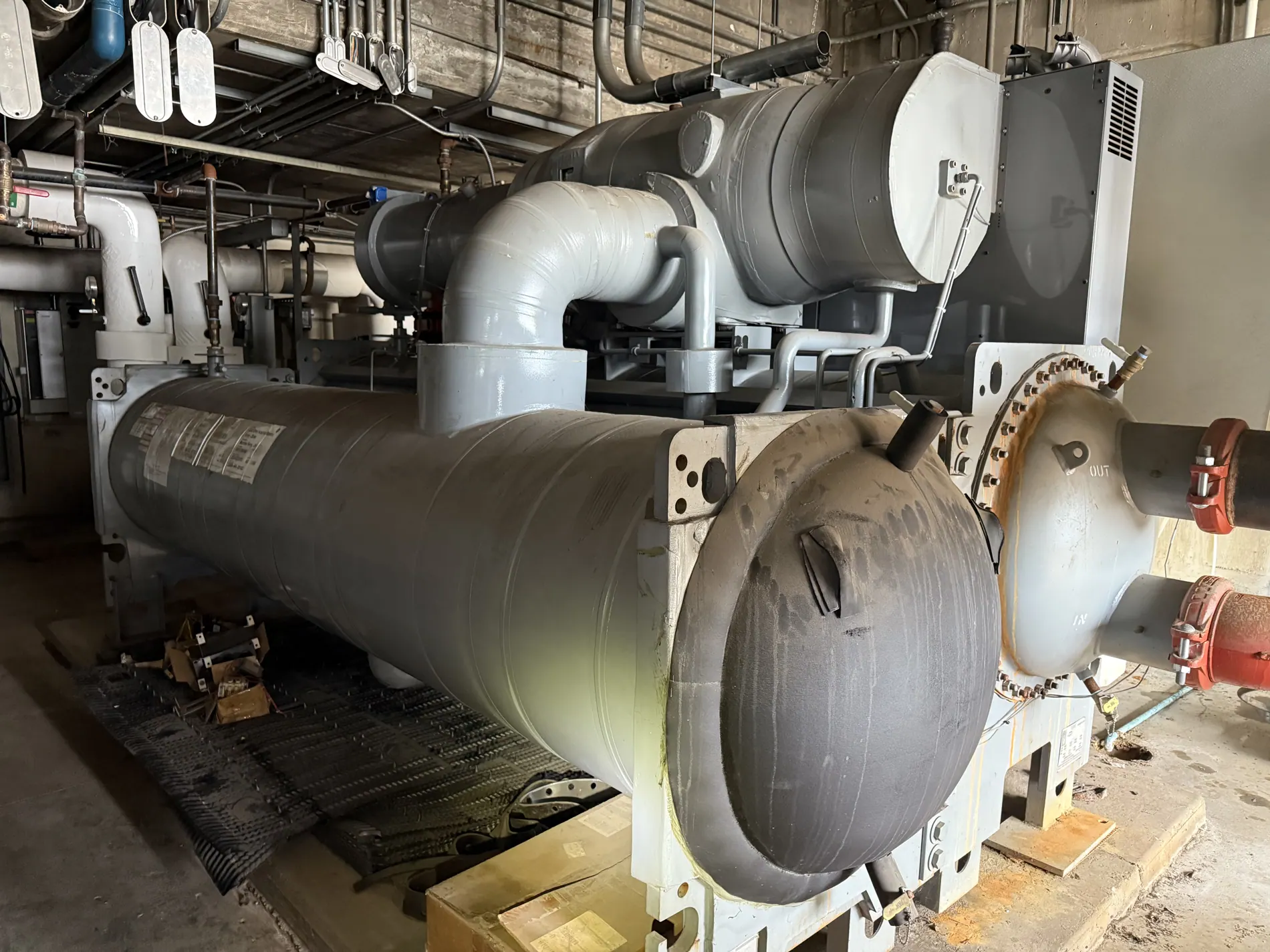
We buy chillers marked R-12 in Midland, Texas, with cash offers and upfront payment when a purchase is agreed. We handle removal, and the seller does not need to test the equipment.
From first photo to final haul, we take care of the details so you can move forward.
Share a nameplate photo, the location, and whatever you know about your equipment. No testing is required from you.
We review the chiller and your site information, then make an offer. Payment is upfront.
We handle disconnects, refrigerant recovery, crane and rigging, loading, freight and hauling.
A chiller marked R-12 can be worth reviewing even if it has been idle, no longer runs, or comes with a thin service file. We buy used water-cooled and air-cooled industrial or commercial chillers, including centrifugal, screw, and scroll equipment. R-12 is one detail in the assessment; we consider equipment using all refrigerants, subject to review of the actual asset and removal project.
You do not need to power up the unit, prove its capacity, repair a fault, or reopen the refrigerant circuit before describing it. If its history is incomplete, say what is known and identify what is uncertain. A label, old work order, or recollection can be useful, but none should be treated as confirmation if it is not.
Share the manufacturer and model if visible, serial number, cooling capacity, refrigerant label, and any records of conversion or prior service. Photographs of the nameplate and overall machine can help distinguish the offered chiller from neighboring equipment. If the R-12 marking is faded, appears on only one component, or conflicts with paperwork, point that out rather than trying to resolve it yourself.
Do not estimate a remaining refrigerant charge from the label or appearance. The current charge, internal condition, and operating status cannot be established from a photograph alone. Do not vent refrigerant or open the circuit to gather information. Appropriate recovery is coordinated by us with qualified personnel if a purchase is agreed.
Cooling tons describe capacity, not the chiller’s physical weight. If records list weight or dimensions, include them, but identify whether they refer to the complete machine, a shipping configuration, or a separate component. We buy chillers generally ranging from 20 to more than 2,000 cooling tons, while the specific unit and project still determine whether an offer is feasible.
Tell us whether the chiller is on a slab, inside a plant room, above grade, or at another location on the property, if you know. Mention visible access restrictions, such as low clearances, narrow doors, stairs, overhead obstructions, or a long route to the loading area. There is no need to measure near energized equipment or enter a restricted area; information from the authorized site contact is preferable.
For equipment in Midland, explain the practical route from its current position to a place where it can be loaded. Photos taken from safe, permitted locations can show doorways, turning room, ground conditions, and nearby structures. Note whether the surrounding plant must remain in service and whether access, work hours, escorts, permits, or advance notice are controlled by site rules. These details may affect scheduling and the equipment selected for handling.
We coordinate appropriate refrigerant recovery, disconnects, rigging, crane work when needed, loading, freight, and hauling. The work plan depends on the actual chiller, its surroundings, and authorized access; a crane is not assumed for every removal. Our responsibility is the equipment work included in the agreed project. The seller or site representative supplies accurate information, confirms authority to release the asset, explains site requirements, and obtains necessary approvals.
If the chiller is part of a replacement or decommissioning effort, clarify what is included in the proposed sale and what must stay in place. Identify connected piping or services only as far as you know, and flag neighboring equipment or utilities that cannot be disturbed. We review the chiller and removal scope; do not assume unrelated plant work is included unless it is specifically agreed.
Idle equipment can still require planning around residual refrigerant, utility connections, or limited access. You are not expected to test, run, repair, disconnect, or arrange recovery for the chiller before asking us to review it. Keep the unit undisturbed and let the authorized contact explain any isolation or work restrictions before removal is scheduled.
A cash offer depends on the identified asset and review of its condition, configuration, and practical removal scope. An inquiry does not guarantee a purchase or a particular offer. If we agree to buy the chiller, payment is made upfront before pickup on terms agreed in advance. Confirm the exact equipment, included components, payment arrangements, access responsibilities, and planned work before the crew is scheduled.
To begin, send the available identification and a short description of the chiller’s known condition and location. Include photographs where safe, note uncertainties about the R-12 marking or service history, and describe any access constraints or site approvals that may apply. If a detail is unavailable, say so. That gives us a practical basis to review the equipment and discuss whether an offer and coordinated removal make sense.

Air-cooled or water-cooled. Centrifugal, screw or scroll. From single units to large shutdown projects, we buy industrial chillers across Texas.
Send us your chiller details and nameplate photos for a cash offer. Don’t worry if you don’t know every specification—we can start with what you have.
Call or text(614) 715-3047TEXT NAMEPLATE PHOTOS ↗Prefer email?
saleselectricalbuyers@gmail.com