
SEND THE DETAILS
Share a nameplate photo, the location, and whatever you know about your equipment. No testing is required from you.
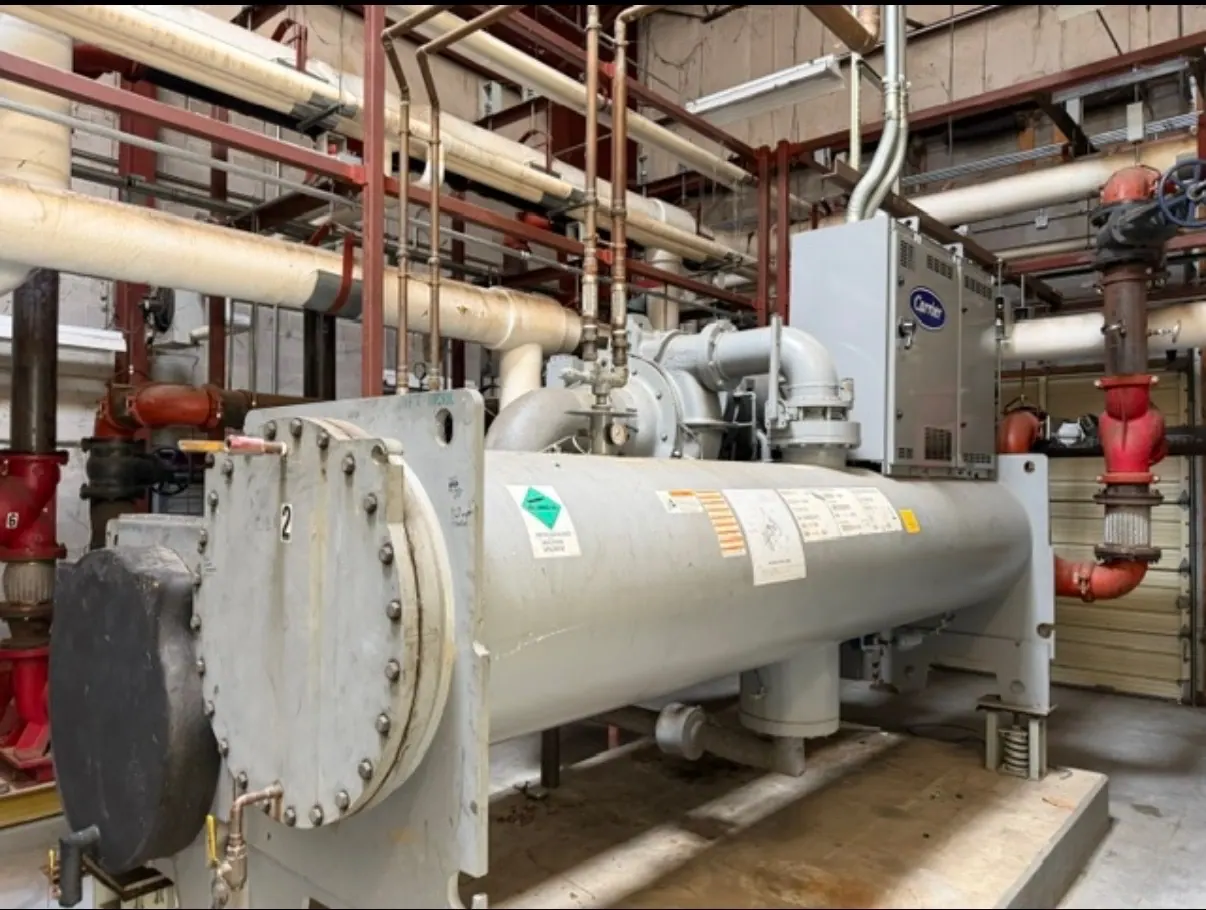
We buy chillers marked R-123 in Fort Worth, Texas, with cash offers and upfront payment when a purchase is agreed. We handle removal, and the seller does not need to test the equipment.
From first photo to final haul, we take care of the details so you can move forward.
Share a nameplate photo, the location, and whatever you know about your equipment. No testing is required from you.
We review the chiller and your site information, then make an offer. Payment is upfront.
We handle disconnects, refrigerant recovery, crane and rigging, loading, freight and hauling.
A chiller marked R-123 may come onto the market during a plant change, a system replacement, or a facility shutdown. The timing can matter as much as the machine: equipment may need to move before a room is repurposed, a contractor begins other work, or access changes. We buy used industrial and commercial chillers, including units marked R-123, subject to reviewing the equipment and the proposed project. A label is useful identification, but it does not by itself confirm what is currently in the circuit or establish condition.
We consider water-cooled and air-cooled equipment, including centrifugal, screw, and scroll chillers, generally from 20 to more than 2,000 cooling tons. Idle and non-running units can be considered; you do not need to restart, test, repair, or clean one to request a review. A cash offer depends on the actual asset and removal scope, so it is not guaranteed simply because the nameplate lists R-123.
Start with one entry per chiller. Record the manufacturer and model if legible, serial number, stated capacity, equipment type, and the refrigerant marking. Note whether the unit is installed, disconnected, idle, or known not to run. If any detail is unreadable or uncertain, say so rather than estimating. A clear nameplate photograph and a wider image showing the complete machine are useful; existing service or retrofit records can add context without requiring new testing.
Also define what is included in the proposed sale. Identify attached or nearby equipment only if it is part of the scope, and distinguish it from systems that must remain. If there are several chillers, a simple numbered photo set or equipment list helps keep each machine, its records, and its removal requirements matched. Cooling tons describe capacity, not shipping weight, so do not use the tonnage as a substitute for verified lifting or transport information.
For equipment in Fort Worth, share the actual pickup location and what you know about access. Useful details may include whether the chiller is in a mechanical room or outdoors, the route to a loading point, door or gate restrictions, overhead obstructions, available staging space, and any limits on truck access. Photos of the room, exit path, and exterior approach can help reveal questions early. Measurements are helpful when already available, but do not guess at clearances or machine weight.
Timing details matter too. Explain the date by which the equipment needs to be removed, any restricted work hours, and whether the site is occupied or other systems must stay in service. These details help assess whether the proposed scope and schedule are workable. The removal plan depends on the actual layout and site rules, not merely the distance from the machine to the nearest exit.
Tell us exactly what the label says and provide any known history of refrigerant changes. A marking may not reflect the current charge if the chiller was altered or serviced, and unknown contents should remain unknown until properly assessed. Do not vent refrigerant or open the circuit to confirm what is inside. If a purchase is agreed, we arrange appropriate refrigerant recovery with qualified personnel as part of the coordinated equipment work.
Disconnects, rigging, crane work when needed, loading, freight, and hauling are handled by the buyer and planned around the equipment and site. The seller does not need to hire a recovery contractor, crane, or hauler just to request an offer. The authorized site contact supplies accurate information, access, applicable site rules, and necessary approvals, and coordinates any facility-specific restrictions.
Before committing, confirm which chiller is being sold, what associated items are included, the access window, and who is authorized to approve the work. Point out hazards or conditions that could affect entry or handling, including restricted areas, adjacent operating equipment, or a route that may be unavailable at certain times. If new information changes the expected scope, raise it before pickup so the plan can be reviewed rather than relying on an outdated assumption.
If a purchase is agreed, payment is made upfront before pickup on the agreed terms. The offer and timing remain subject to review of the actual equipment and project details. No operating test is required from the seller to begin that discussion, and a non-running condition does not automatically rule out consideration.
To start, assemble the inventory, available nameplate and refrigerant-label photos, overall equipment images, known condition, and a short description of the removal route and timing. Include gaps in the information plainly: for example, current charge, exact weight, or access dimensions may not be known. The next step is to provide those details for review and clarify any open questions with the person authorized to coordinate the site. That gives both sides a practical basis to discuss a possible cash offer and, if accepted, plan removal without asking the seller to test or dismantle the chiller.

Air-cooled or water-cooled. Centrifugal, screw or scroll. From single units to large shutdown projects, we buy industrial chillers across Texas.
Send us your chiller details and nameplate photos for a cash offer. Don’t worry if you don’t know every specification—we can start with what you have.
Call or text(614) 715-3047TEXT NAMEPLATE PHOTOS ↗Prefer email?
saleselectricalbuyers@gmail.com