
SEND THE DETAILS
Share a nameplate photo, the location, and whatever you know about your equipment. No testing is required from you.
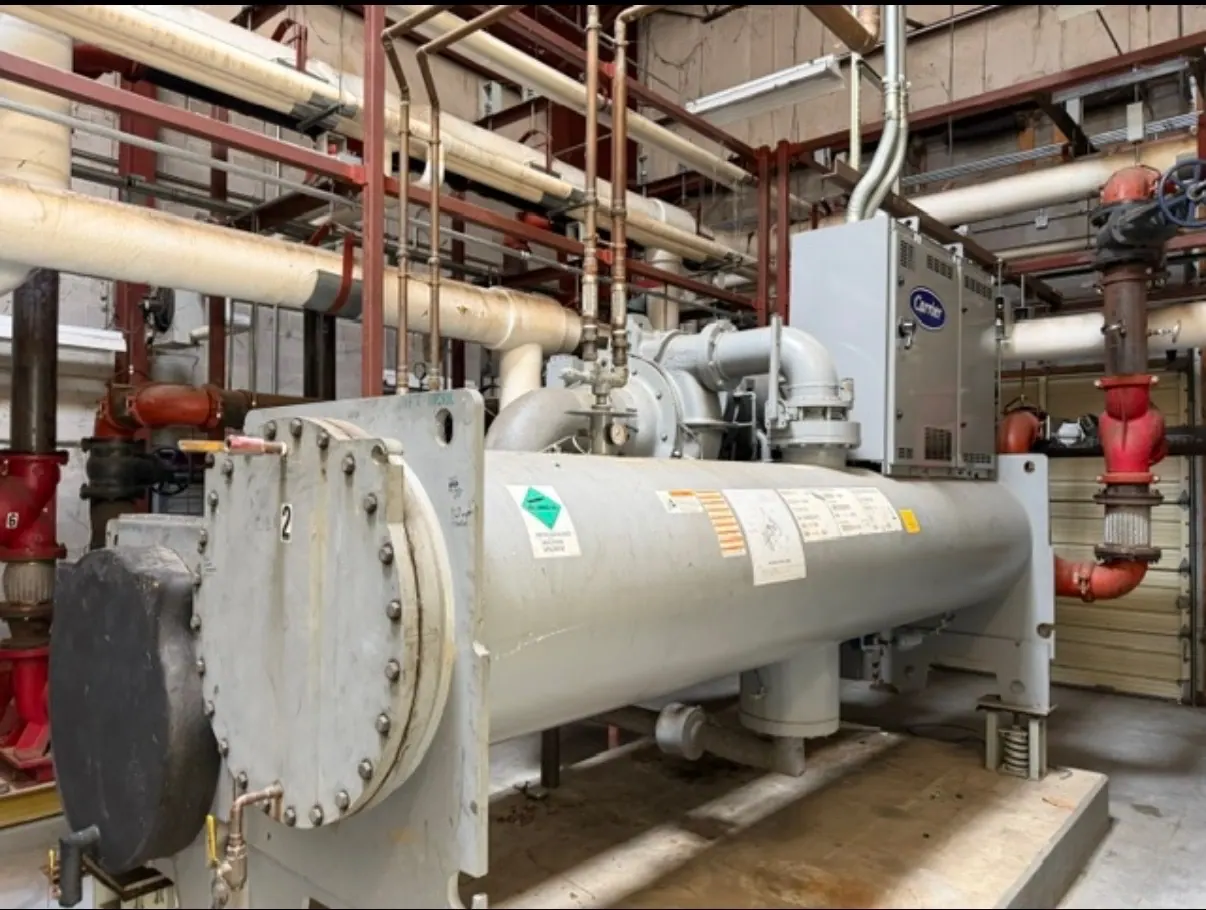
We buy chillers marked R-134a in San Antonio, Texas, with cash offers and upfront payment when a purchase is agreed. We handle removal, and the seller does not need to test the equipment.
From first photo to final haul, we take care of the details so you can move forward.
Share a nameplate photo, the location, and whatever you know about your equipment. No testing is required from you.
We review the chiller and your site information, then make an offer. Payment is upfront.
We handle disconnects, refrigerant recovery, crane and rigging, loading, freight and hauling.
Selling a chiller marked R-134a is a handoff among the equipment owner, the person authorized to speak for the site, and the buyer. Each has a different part: the seller identifies what is being offered and confirms authority to sell; the site contact explains access and work rules; the buyer reviews the asset and coordinates the agreed removal. Establishing those roles early helps prevent confusion over what is included and who can approve work.
We buy used commercial and industrial chillers, including R-134a units, and consider water-cooled and air-cooled equipment in a range of configurations. The refrigerant marking is useful information, but it does not establish the chiller’s present charge, condition, or value. Any offer depends on review of the actual equipment and project; a purchase is not automatic.
Start with what you can observe safely: the manufacturer and model if legible, serial number, capacity rating, approximate location, and photographs of the overall machine and its nameplate. Note whether the chiller is idle, reported non-running, or has an operating history you know. If a label is missing, unclear, or inconsistent with facility records, say so rather than trying to verify the refrigerant yourself.
Do not run the unit, open a refrigerant circuit, vent refrigerant, or arrange repairs just to request a review. The chiller can be considered as it stands, including idle and non-running equipment. If it has already been disconnected or partly dismantled, describe that accurately and identify which parts are included. A short, candid account is more useful than a test or repair that has not been requested.
The person supplying machine information may not be the person who can authorize entry or removal. Before planning a pickup, identify the owner or seller, the authorized site contact, and anyone else whose approval is needed. Confirm who can agree to the equipment scope and who can explain facility procedures. This is particularly helpful when a property manager, contractor, or tenant has a role, but the actual approval chain varies by site.
For the site contact, practical details include where the chiller sits, whether the route to an exit is known, and any access hours, escort rules, work permits, or restricted areas. Flag possible door or aisle limits, changes in elevation, overhead obstructions, shared loading areas, and equipment or utilities that must remain undisturbed. These are planning questions, not a presumption that a particular obstacle exists in San Antonio.
Tell us whether the offer should cover one chiller or several, and what associated items are part of the sale. If nearby pumps, piping, controls, or other plant equipment are not included, make that boundary clear. Photos showing both the machine and its surroundings can help distinguish the offered asset from equipment that stays at the site. Unknown dimensions or weights can be left for review; do not estimate them as confirmed facts.
A cooling-ton rating measures capacity, not shipping weight. It cannot by itself establish what crane, rigging, or transport arrangement will be appropriate. We consider used centrifugal, screw, and scroll chillers, generally from 20 to 2,000 or more cooling tons, but the specific unit and project still determine whether a purchase can be agreed.
If a purchase is agreed, we arrange appropriate refrigerant recovery with qualified personnel, along with disconnects, rigging, crane work when needed, loading, freight, and hauling. The sequence depends on the equipment and the site’s procedures. The buyer is responsible for the equipment work and coordinates it with the authorized site contact; the seller or site supplies accurate information, authorized access, applicable rules, and necessary approvals.
Do not assume the label proves what refrigerant is currently in the system, how much remains, or whether the charge has changed. Share known service or refrigerant history if available, and mark uncertainty plainly. You are not being asked to hire a recovery contractor, isolate utilities, or begin dismantling the machine merely to start the review. Site-specific authorization and safety controls are handled as part of planning the actual work.
A cash offer follows review of the asset and removal project; it is not a promised amount based on refrigerant, age, or tonnage alone. If both sides agree to a purchase, the payment terms, equipment included, access arrangements, and pickup plan should be clear before work begins. Payment is made upfront before pickup on the agreed terms. Do not treat an initial description as a final commitment to buy.
For a useful first review, gather the nameplate and equipment photos, summarize known condition and history, list what is included, and have the authorized site contact add access details and approval requirements. Then provide that information for consideration. No seller-run test, repair, restart, or refrigerant-circuit work is needed before taking that next step.

Air-cooled or water-cooled. Centrifugal, screw or scroll. From single units to large shutdown projects, we buy industrial chillers across Texas.
Send us your chiller details and nameplate photos for a cash offer. Don’t worry if you don’t know every specification—we can start with what you have.
Call or text(614) 715-3047TEXT NAMEPLATE PHOTOS ↗Prefer email?
saleselectricalbuyers@gmail.com