
SEND THE DETAILS
Share a nameplate photo, the location, and whatever you know about your equipment. No testing is required from you.
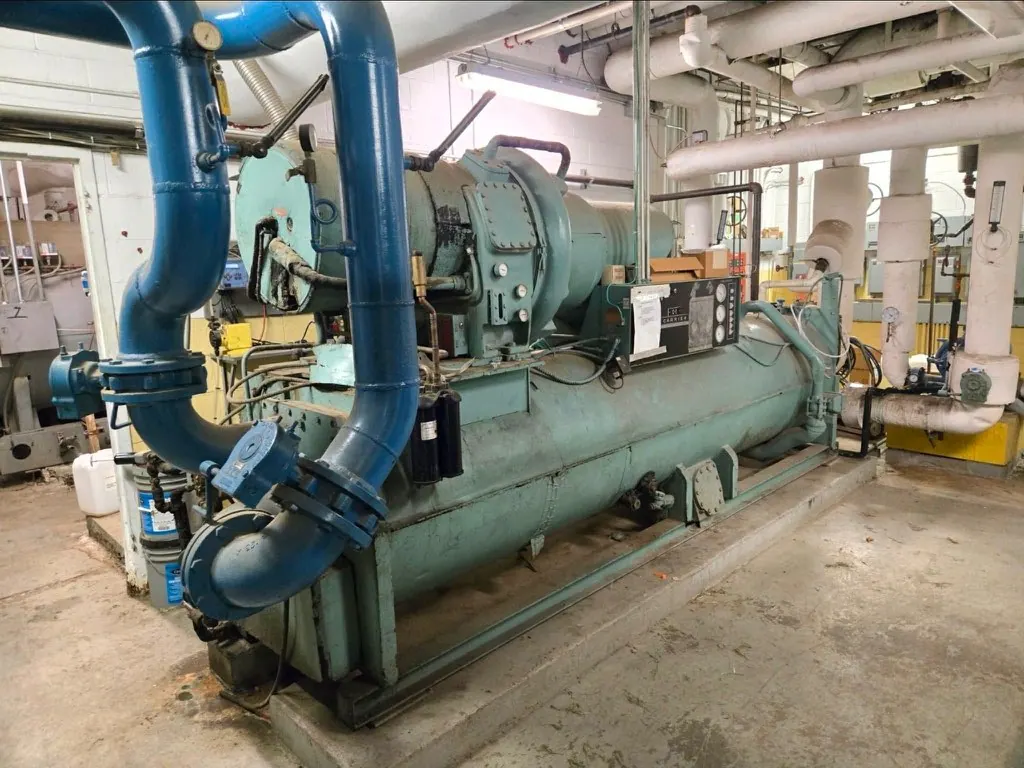
We buy chillers marked R-134a in Fort Worth, Texas, with cash offers and upfront payment when a purchase is agreed. We handle removal, and the seller does not need to test the equipment.
From first photo to final haul, we take care of the details so you can move forward.
Share a nameplate photo, the location, and whatever you know about your equipment. No testing is required from you.
We review the chiller and your site information, then make an offer. Payment is upfront.
We handle disconnects, refrigerant recovery, crane and rigging, loading, freight and hauling.
A chiller marked R-134a can be considered for purchase whether it is operating, idle, or no longer able to run. We buy used industrial and commercial water-cooled and air-cooled chillers, including centrifugal, screw, and scroll machines, generally from 20 to more than 2,000 cooling tons. We consider all refrigerants; the R-134a marking is useful identification, not a promise of value or a stand-alone basis for an offer.
The first practical question is what is actually for sale. Identify the chiller and any components included with it, then distinguish those from pumps, piping, electrical gear, controls, cooling towers, or other equipment that must remain. In a shared plant, those boundaries matter: a buyer should not assume that connected infrastructure is part of the transaction, or that it can be isolated without affecting the facility.
For an initial review, share the nameplate or its readable details, the R-134a label if available, photographs, and what you know about condition and operating history. Mention whether the unit is still connected, already disconnected, or stored, and note any missing parts or changes. If the refrigerant charge or contents are uncertain, say so rather than trying to establish them yourself.
You do not need to restart, test, repair, clean, disconnect, or open the chiller to request a review. Do not vent refrigerant or open the circuit. Cooling tons describe capacity, not the machine’s lifting weight; rigging plans require the actual equipment and site information, not a tonnage-based weight guess.
Removal planning begins with where the chiller sits and how it can reach a loading point. Photos taken from safe, permitted positions can show doors, corridors, roof access, yard routes, overhead obstructions, and possible staging areas. Describe access restrictions, working hours, occupied areas, and any known limits on truck or crane placement. These details help assess the route; they do not establish in advance that a particular method will work.
If the chiller is part of a district or central cooling arrangement, explain which unit is offered and which neighboring systems must stay in service. Shared piping and utilities may make the sequence important. The authorized site contact can clarify operating boundaries, access permissions, shutdown windows, and required approvals. Drawings or site notes can help, but only the actual project review can settle the removal scope.
When a purchase is agreed, we arrange and handle appropriate refrigerant recovery with qualified personnel, along with disconnects, rigging, crane work when needed, loading, freight, and hauling. The work is planned around the specific chiller and the site’s approved procedures. The seller is not expected to hire a recovery contractor, arrange a crane, or prepare the unit for pickup.
Responsibilities still need a clear handoff. We handle the equipment work and coordinate the removal; the seller or site supplies accurate information, authorized access, applicable site rules, and necessary approvals. If a facility requires a defined work window, permits, escorts, or coordination with operations, share those requirements early so they can be considered before collection is scheduled.
A cash offer depends on the asset and the actual project review. Identification, known condition, included components, and the work required to remove the machine may affect the assessment. A label, capacity figure, or photograph alone cannot guarantee that an offer will be made or establish a particular amount. The equipment and collection terms should be agreed with the party authorized to sell it.
If a purchase is agreed, payment is made upfront before pickup, on the terms agreed for that transaction. Confirm which chiller and components are included, how access will be provided, and what work window is authorized before the crew arrives. That advance agreement helps separate the sale from unrelated facility work and avoids treating connected systems as included by default.
Gather the chiller’s available nameplate information, clear photos, known condition, and a short description of its location and removal route. Add anything uncertain—especially refrigerant status, prior changes, or access limits—rather than testing or altering the equipment. With those details, the buyer can review the proposed asset and site scope, then explain whether it is suitable for an offer and what information is needed next.

Air-cooled or water-cooled. Centrifugal, screw or scroll. From single units to large shutdown projects, we buy industrial chillers across Texas.
Send us your chiller details and nameplate photos for a cash offer. Don’t worry if you don’t know every specification—we can start with what you have.
Call or text(614) 715-3047TEXT NAMEPLATE PHOTOS ↗Prefer email?
saleselectricalbuyers@gmail.com