
SEND THE DETAILS
Share a nameplate photo, the location, and whatever you know about your equipment. No testing is required from you.
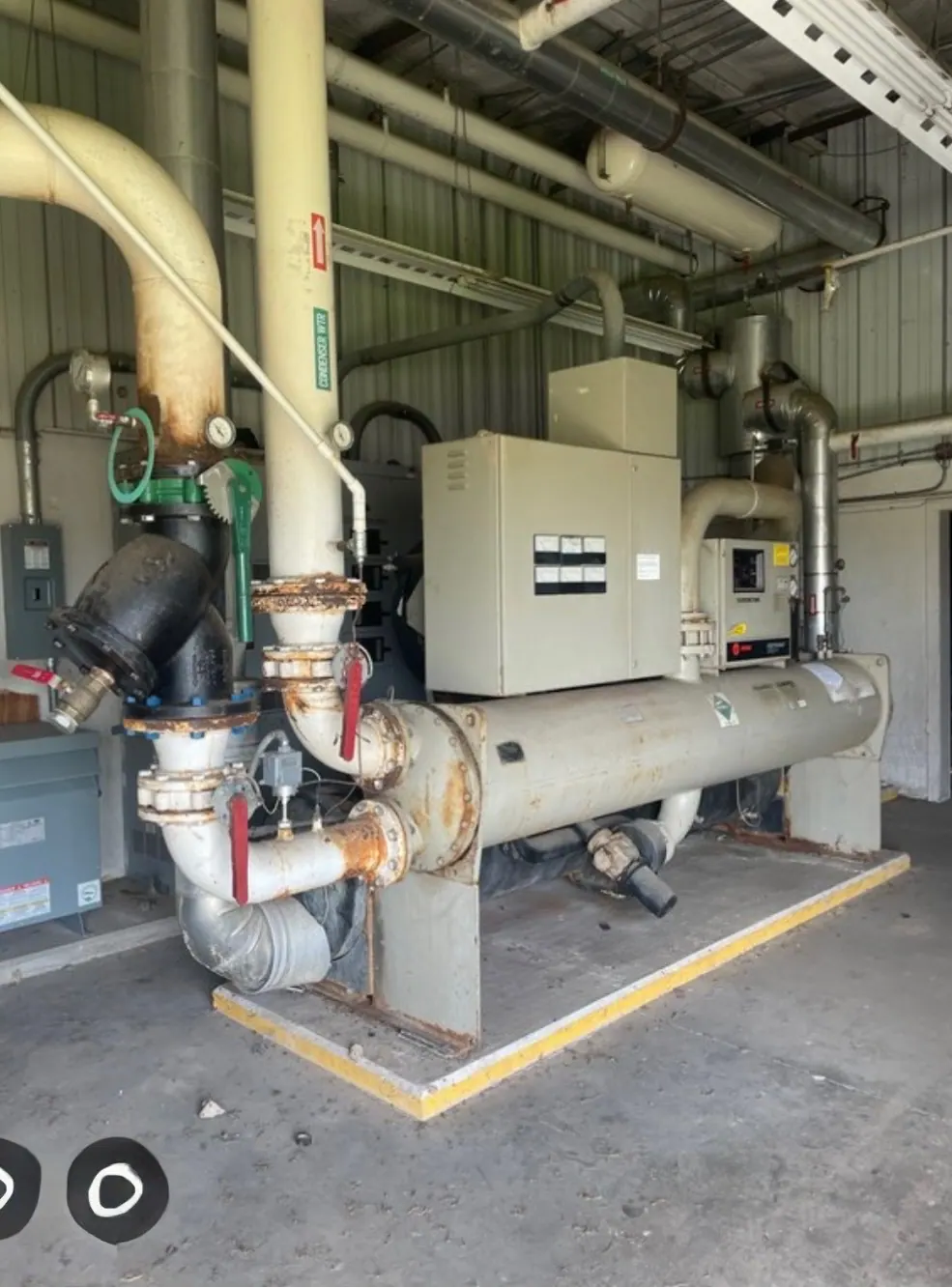
We buy York chillers in El Paso, Texas, with cash offers and upfront payment when a purchase is agreed. We handle removal, and the seller does not need to test the equipment.
From first photo to final haul, we take care of the details so you can move forward.
Share a nameplate photo, the location, and whatever you know about your equipment. No testing is required from you.
We review the chiller and your site information, then make an offer. Payment is upfront.
We handle disconnects, refrigerant recovery, crane and rigging, loading, freight and hauling.
If a York chiller in El Paso is no longer needed, begin with its identification and the facts already available—not a test run. Send the model and serial information from the equipment plate, if it can be photographed safely, along with any records that help identify the unit. A cooling-ton rating describes capacity; it does not tell us the machine’s weight or how it can be removed.
We consider used York chillers across water-cooled and air-cooled configurations, including centrifugal, screw, and scroll units. Equipment is generally within a broad range of 20 to more than 2,000 cooling tons, and all refrigerants can be considered. Idle or non-running equipment may also be reviewed. None of these details by itself guarantees a purchase: the specific asset and proposed removal scope need review.
Along with the plate, share clear photographs of the chiller and its immediate surroundings, taken from safe, accessible positions. Include views that show how the assembly sits in relation to doors, walls, piping, other equipment, and a possible loading area. If a view is unavailable or details are uncertain, say so rather than opening a panel or entering a restricted area.
Tell us what is known about operating condition, missing components, modifications, and whether the refrigerant charge is known. Previous service records or project documents can help explain the history, but gaps in the records are useful to flag too. Do not start, repair, disconnect, or open the refrigerant circuit just to support a review; never vent refrigerant.
Identify exactly what is being offered. A chiller may sit among pumps, controls, piping, or adjacent machines that are not included. Mark the equipment and any accessories intended for sale in the photos, and list what must remain. This gives both sides a shared scope before removal planning begins.
Next, describe the route from the installed location to a place where equipment can be loaded. Note known restrictions such as tight clearances, stairs, roof access, security procedures, limited work windows, or a route that crosses an occupied area—if they apply at this site. Share the target timing and any project milestones, particularly if the chiller is part of a plant changeover. An authorized facility contact can confirm site rules and access details.
We assess the information as a package. Make, configuration, condition, available components, timing, access, and the work required to remove the particular machine can all affect whether a purchase is practical. Tonnage alone is not a reliable basis for an offer: it does not establish physical dimensions, weight, condition, or the complexity of the pickup.
After reviewing the asset and project details, we can discuss a cash offer. An offer is subject to actual review and is not guaranteed before that review. If the equipment or access information is incomplete, the next useful step may be to clarify the scope or arrange a review with the authorized site representative, rather than assume an unverified detail.
If we agree to purchase the chiller, the equipment scope, removal arrangements, timing, and payment terms are established before the pickup. Payment is made upfront before collection, on the agreed terms. The seller does not need to demonstrate that the machine runs, repair it, or restart it to proceed with the review.
Before work is scheduled, the site contact should identify who can authorize access and explain applicable safety procedures, approvals, and restrictions. The seller or site supplies accurate information and provides the necessary authorized access and approvals. Clear communication about isolation rules and nearby systems helps the removal work stay within the agreed boundary.
For an agreed purchase, we arrange and handle appropriate refrigerant recovery with qualified personnel, equipment disconnects, rigging, crane work when needed, loading, freight, and hauling. The actual plan depends on the chiller’s configuration and condition, the facility surroundings, the route, and the approvals required at the site. Sellers do not need to hire a separate crane operator, recovery provider, or hauler for this work.
Before collection, the authorized contact can confirm the access window, check-in process, work boundaries, and any site-specific coordination needed for nearby operations. If conditions differ from the information used to plan the pickup, raise that before work proceeds so the removal scope can be addressed with the site contact.
To begin, gather the equipment-plate details, a few safe photographs, known condition and refrigerant information, the sale boundary, and a brief description of access and timing. Share what is known and clearly label anything uncertain. That gives us a basis to review the York chiller in El Paso and explain whether a purchase and removal plan may be workable—without asking you to run or alter the equipment first.

Air-cooled or water-cooled. Centrifugal, screw or scroll. From single units to large shutdown projects, we buy industrial chillers across Texas.
Send us your chiller details and nameplate photos for a cash offer. Don’t worry if you don’t know every specification—we can start with what you have.
Call or text(614) 715-3047TEXT NAMEPLATE PHOTOS ↗Prefer email?
saleselectricalbuyers@gmail.com