
SEND THE DETAILS
Share a nameplate photo, the location, and whatever you know about your equipment. No testing is required from you.
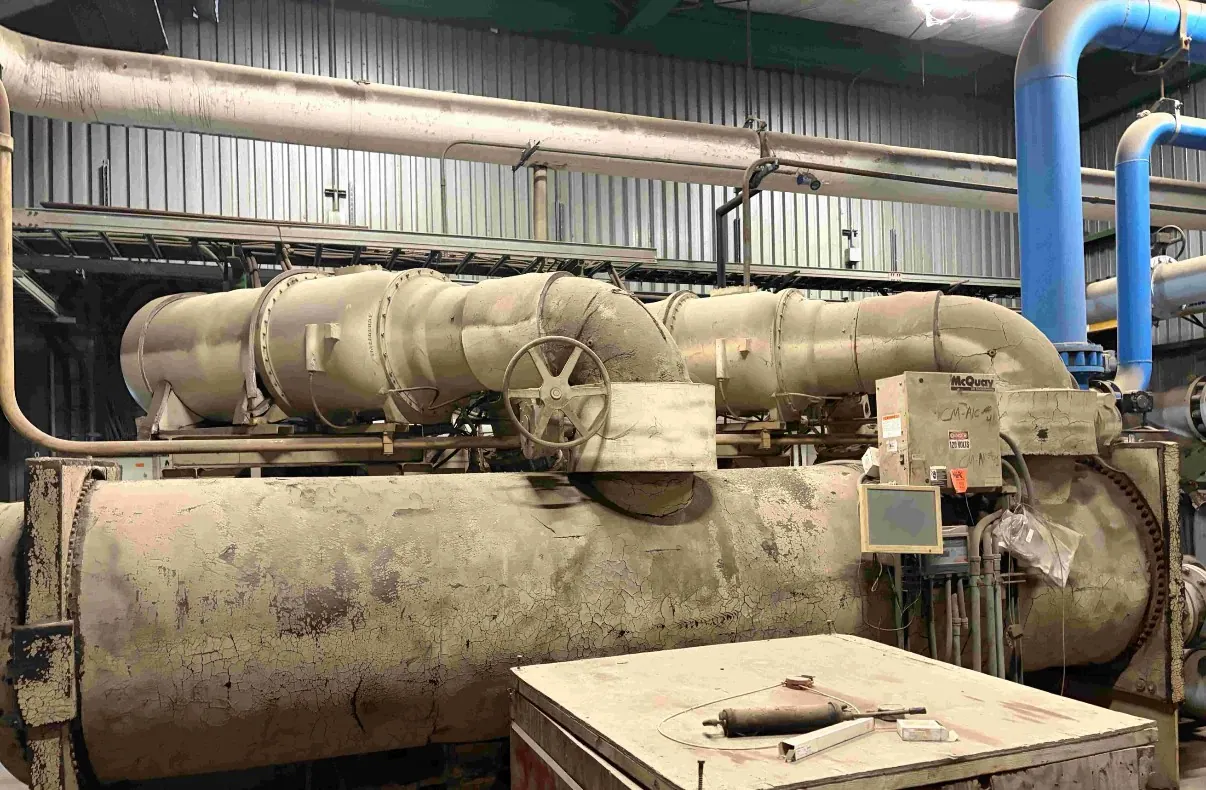
We buy chillers under 100 tons in Austin, Texas, with cash offers and upfront payment when a purchase is agreed. We handle removal, and the seller does not need to test the equipment.
From first photo to final haul, we take care of the details so you can move forward.
Share a nameplate photo, the location, and whatever you know about your equipment. No testing is required from you.
We review the chiller and your site information, then make an offer. Payment is upfront.
We handle disconnects, refrigerant recovery, crane and rigging, loading, freight and hauling.
A chiller below 100 cooling tons may be easier to describe than to move. Its capacity says how much cooling it is rated to provide; it does not tell a buyer its weight, condition, refrigerant charge, or whether it can pass through the route to a truck. For an Austin-area review, useful details answer those separate questions without requiring you to restart the machine.
We buy used water-cooled and air-cooled chillers, including units that are idle or not running. Centrifugal, screw, and scroll equipment may be considered, as may different refrigerants. A purchase is subject to review of the actual equipment and project, so a cash offer is not automatic or guaranteed.
Start with a clear photograph of the equipment label, taken only if it is safely accessible. A readable plate may show the manufacturer, model, serial number, rated capacity, electrical information, and refrigerant type. Those markings help identify what is being offered; they do not establish present condition or confirm what remains in the circuit.
If the plate is faded, blocked, or missing, say so rather than guessing. A wider image showing the complete chiller can help distinguish the main unit from nearby pumps, piping, or other plant equipment. Tell us which items are included in the proposed sale and which must stay. Do not open a panel, handle wiring, or open a refrigerant circuit to gather information.
Take several well-lit views from safe positions: the overall assembly, visible damage or corrosion, accessible connections, and any components known to be missing or modified. Photographs can help a buyer understand visible features, but they cannot prove internal condition or confirm that a non-running unit is repairable. If you know why it was taken out of service, share that history as information, not as a diagnosis.
Keep equipment views distinct from access views. The first help identify the asset; the second show where it sits and what surrounds it. A doorway, stairwell, roof edge, corridor, or loading area may affect removal even when the chiller itself appears compact. Include context rather than cropping every image tightly around the cabinet.
Route information follows the machine from its present position to a feasible loading point. Note the floor or roof level, door and corridor restrictions, turns, overhead obstructions, steps, and any known limits on staging or vehicle access. Measurements are useful when available, but should be recorded safely and identified as approximate if they have not been verified.
A rooftop unit, a basement installation, or equipment in a crowded mechanical room can call for a different handling plan. A lift, crane, specialized rigging, or another method may be appropriate only after the actual route and site conditions are assessed. Photos support that assessment; they do not replace confirmation by the people responsible for access and the work area.
Tell us whether the chiller is connected to services or located near equipment that will remain operating. The authorized site contact can explain access procedures, work hours, loading restrictions, required approvals, and any areas the crew must avoid. Identify the equipment included in the transaction clearly so adjacent assets and active plant systems are not mistaken for part of the removal.
We arrange appropriate refrigerant recovery with qualified personnel, along with disconnects, rigging, crane work when needed, loading, freight, and hauling. The actual scope and timing are coordinated for the site. The seller does not need to test, run, repair, restart, recover refrigerant, or hire a crane or hauler before requesting a review. The site must provide accurate information, authorized access, applicable rules, and necessary approvals.
When you are ready, send the information you have: the nameplate image if available, overall and access photographs, known operating or storage history, current location within the property, and a suitable site contact. You need not fill gaps with estimates presented as facts; flag what is unknown. This gives us a basis to discuss the equipment, pickup constraints, and whether a purchase can be considered.
If both parties agree to a purchase, payment is made upfront before pickup on the agreed terms. The offer and removal plan depend on the specific asset and reviewed project, not capacity alone. Share the available details and ask for an equipment review; there is no need to prepare the chiller for operation before taking that next step.

Air-cooled or water-cooled. Centrifugal, screw or scroll. From single units to large shutdown projects, we buy industrial chillers across Texas.
Send us your chiller details and nameplate photos for a cash offer. Don’t worry if you don’t know every specification—we can start with what you have.
Call or text(614) 715-3047TEXT NAMEPLATE PHOTOS ↗Prefer email?
saleselectricalbuyers@gmail.com