
SEND THE DETAILS
Share a nameplate photo, the location, and whatever you know about your equipment. No testing is required from you.
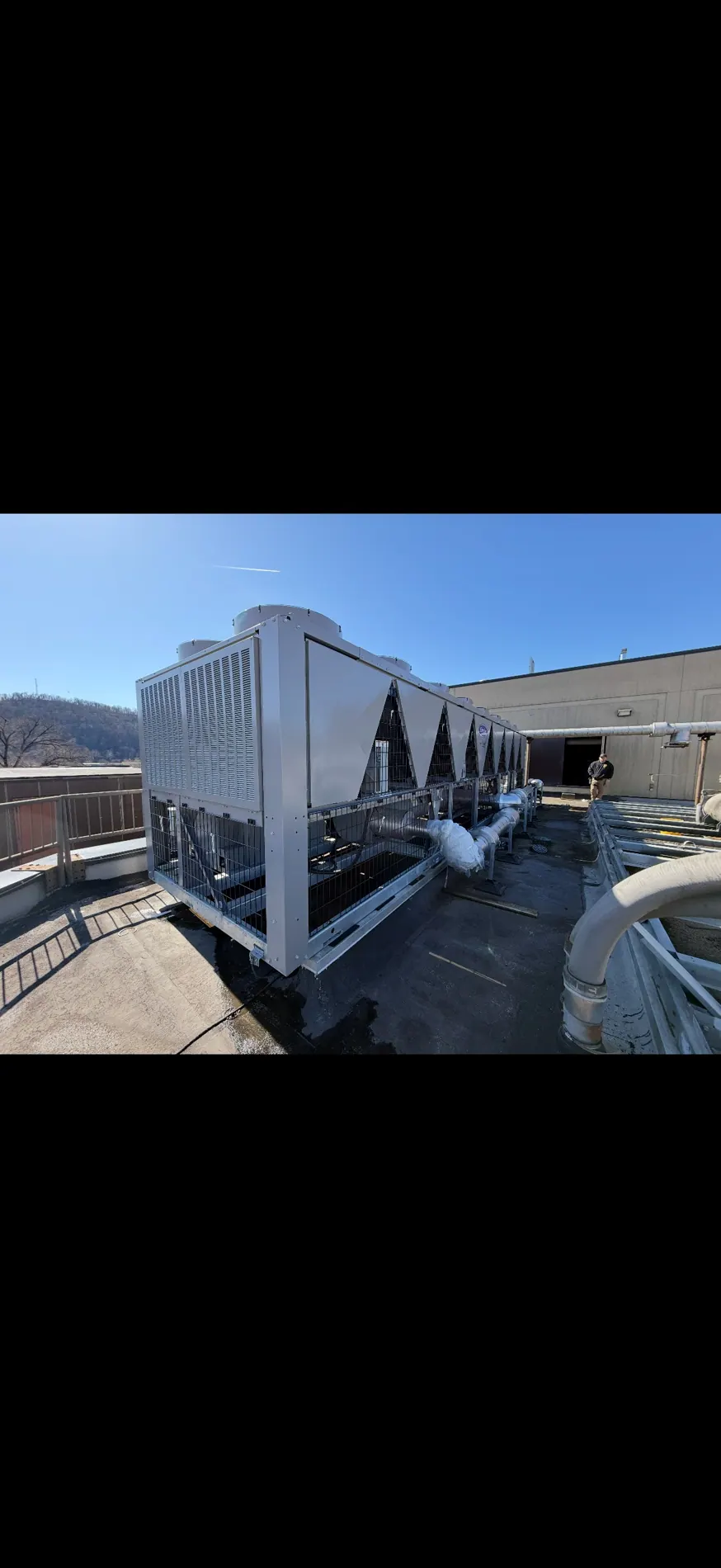
We buy scroll chillers in Houston, Texas, with cash offers and upfront payment when a purchase is agreed. We handle removal, and the seller does not need to test the equipment.
From first photo to final haul, we take care of the details so you can move forward.
Share a nameplate photo, the location, and whatever you know about your equipment. No testing is required from you.
We review the chiller and your site information, then make an offer. Payment is upfront.
We handle disconnects, refrigerant recovery, crane and rigging, loading, freight and hauling.
When a scroll chiller is coming out of service, the facility usually has more to coordinate than the equipment sale alone. Start by identifying which machine is available, what must remain connected or in operation, and when the unit can be released. In Houston, we buy used scroll chillers and review each proposed asset and removal project on its actual details. An idle or non-running unit can be considered; you do not need to restart it to begin the review.
Describe the chiller as it sits today: installed or in storage, accessible or enclosed, and complete or missing components. A clear photograph of the whole unit and a readable equipment nameplate are useful starting points. If available, include compressor labels, service records, or drawings, but do not delay an initial inquiry to assemble a perfect file.
Clarify what is included. A scroll chiller may sit beside pumps, piping, electrical gear, controls, or other cooling equipment that the facility intends to retain. Mark the sale boundary in plain language and identify shared connections or components. That helps prevent confusion during review and keeps the proposed removal focused on the asset being offered.
Useful details include the manufacturer and model, approximate capacity, refrigerant shown on the label, known operating status, and any major changes or repairs you know about. If a label is missing or the unit has been modified, say so. The installed refrigerant information may not establish what is currently in the circuit, and a non-running machine should not be described as operational without a basis.
There is no need to test, run, repair, clean out, or restart the chiller for a review. Do not open refrigerant lines or vent refrigerant. We coordinate appropriate recovery with qualified personnel as part of the work when a purchase is agreed. Share existing information safely; unknowns can be assessed through the project review rather than guessed at.
Explain where the chiller is and how it would leave the property. Depending on the installation, removal may involve a plant room, roof, mezzanine, exterior pad, or storage area; the actual arrangement matters more than a general description. Mention door and route clearances, stairs or elevation changes, overhead obstructions, loading areas, and any known limits on vehicle or crane access.
Houston-area facilities differ, so the plan must be based on the specific site rather than a presumed route or work window. Tell us about access hours, loading restrictions, nearby operations, and site rules that could affect disconnects, rigging, or transport. The authorized site contact can identify required approvals and explain what activities or equipment must remain undisturbed.
If the chiller is part of a replacement or plant change, identify the intended release date and the person controlling the work area. Explain whether other cooling equipment is staying in service and flag any shared piping, controls, or utilities. That context can help sequence removal around the facility’s schedule, without assuming the entire system is being retired or a particular production activity is underway.
We handle the equipment-side work and coordinate disconnects, appropriate refrigerant recovery, rigging, crane work when needed, loading, freight, and hauling. The seller or site representative supplies accurate information, authorized access, applicable site rules, and necessary approvals. If conditions change or a route proves different from the initial description, the removal plan may need review before work proceeds.
Scroll chillers are among the used equipment we consider, generally across approximately 20 to more than 2,000 cooling tons, and we consider all refrigerants. A cooling ton describes capacity; it is not the machine’s weight. For lifting and transport, actual equipment dimensions, configuration, and site conditions matter. If you do not know the capacity, a nameplate image or model information may help identify it.
A cash offer depends on the asset and the removal project as a whole, including known condition, configuration, included components, and access. Providing photos and accurate details helps establish what is being considered, but does not guarantee a purchase or a particular amount. If both sides agree to proceed, payment is made upfront before pickup, on the agreed terms.
To take the next step, gather the equipment identification you can access, a few photographs, a concise description of what is included, and the name or role of the person authorized to discuss the sale and site access. Add any known removal timing or restrictions. We can review those details and determine whether the scroll chiller and its removal scope are suitable for an offer; no testing or seller-arranged hauling is required to start.

Air-cooled or water-cooled. Centrifugal, screw or scroll. From single units to large shutdown projects, we buy industrial chillers across Texas.
Send us your chiller details and nameplate photos for a cash offer. Don’t worry if you don’t know every specification—we can start with what you have.
Call or text(614) 715-3047TEXT NAMEPLATE PHOTOS ↗Prefer email?
saleselectricalbuyers@gmail.com