
SEND THE DETAILS
Share a nameplate photo, the location, and whatever you know about your equipment. No testing is required from you.
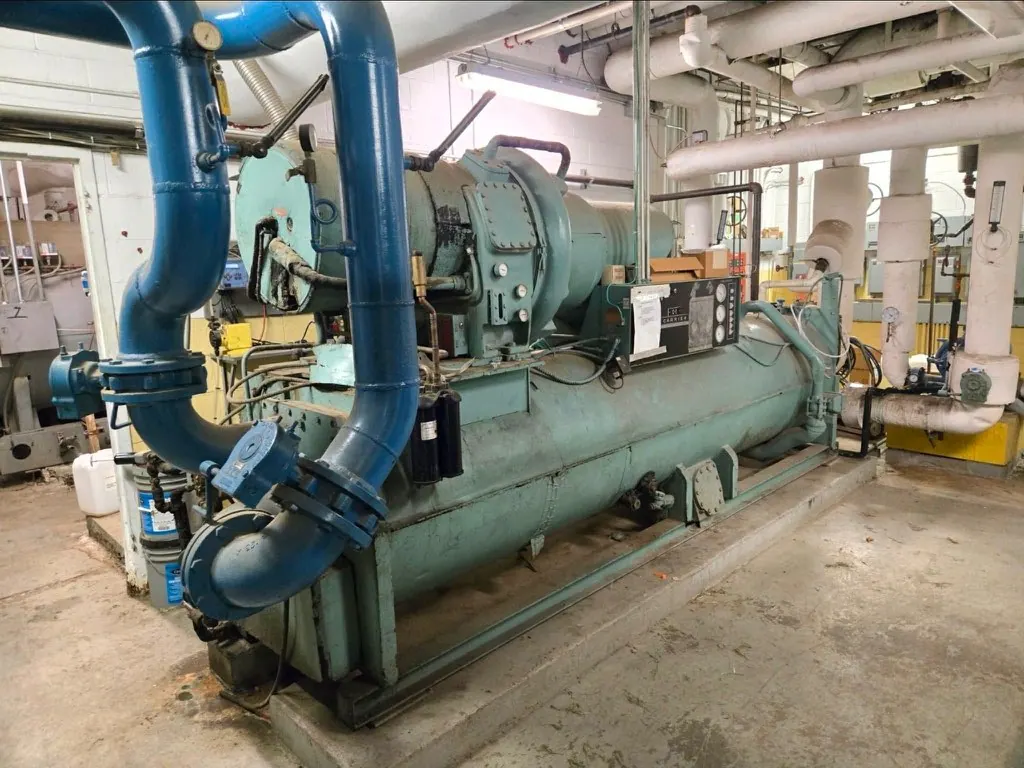
We buy chillers marked R-410A in Fort Worth, Texas, with cash offers and upfront payment when a purchase is agreed. We handle removal, and the seller does not need to test the equipment.
From first photo to final haul, we take care of the details so you can move forward.
Share a nameplate photo, the location, and whatever you know about your equipment. No testing is required from you.
We review the chiller and your site information, then make an offer. Payment is upfront.
We handle disconnects, refrigerant recovery, crane and rigging, loading, freight and hauling.
An R-410A marking is a useful identification clue, but it does not establish the chiller’s full configuration, present charge, operating condition, or removal requirements. Labels can be incomplete or hard to read, and equipment may have been modified. Share what is visible and flag anything uncertain; there is no need to open a refrigerant circuit or run the machine to begin a review.
We buy used commercial and industrial chillers, including units identified as R-410A. We consider air-cooled and water-cooled equipment, as well as centrifugal, screw, and scroll designs, generally from 20 to 2,000+ cooling tons. The rating describes cooling capacity—not shipping weight—so it cannot tell a rigging crew how heavy the machine is or whether a particular route will work.
A clear nameplate photo, a few overall views, and a description of what is included are a practical starting point. If available, add the manufacturer and model, serial number, nominal capacity, and any known service or operating history. Note whether the chiller is idle, non-running, disconnected, or still serving the facility. A seller-run test, repair, or restart is not required.
Be direct about gaps in the information. For example, say if the refrigerant designation is visible but the current charge is unknown, or if the controls have not been checked. We consider idle and non-running equipment, but an offer depends on review of the actual asset and project. The label alone cannot settle that review, and a cash offer is not guaranteed.
Before pickup planning, identify the chiller being offered and distinguish it from equipment, piping, electrical gear, or building systems that are staying. This matters especially where multiple machines share a plant room or where the unit is connected to equipment that remains in service. Photos with the sale boundary marked can help prevent confusion, but the authorized site contact should confirm what may be removed.
Utilities and process connections need careful coordination. We arrange and handle the chiller work, including disconnects and appropriate refrigerant recovery by qualified personnel. The facility’s authorized representatives must identify site systems, explain operating restrictions, and provide required access and approvals. Do not vent refrigerant or open the circuit; do not assume a line, conduit, or shared service is included just because it reaches the chiller.
For a Fort Worth property, describe the actual pickup setting rather than assuming a standard route. Is the machine outdoors or indoors? Could trucks reach the loading area? Are there gates, overhead obstructions, narrow turns, stairs, low-clearance doors, or restricted work hours? If the route passes through occupied space or an active plant, note what must remain accessible and when work may take place.
Send photographs of the chiller and its path out, including access openings, ramps, corridors, staging areas, and the intended loading point. Mention known floor or structural restrictions and whether a crane might be needed, if you know. These details help assess handling; they do not mean the seller must arrange a crane, rigging crew, freight, or refrigerant recovery. We coordinate appropriate recovery, handling, crane work when needed, loading, freight, and hauling for an agreed purchase.
The person who knows the equipment may not control access, utility isolation, or contractor approvals. Identify the authorized site contact and explain who can approve entry, work windows, and removal boundaries. The contact can also share property rules, check-in procedures, required protective measures, and any restrictions on vehicle placement or noise. Requirements vary by facility, so the pickup plan should follow the actual site’s instructions.
If the chiller is near operating equipment, spell out what cannot be interrupted and which areas are off limits. If the property is being cleared or transferred, share the relevant access deadline and whether the building will remain staffed or secured. A workable schedule depends on the asset and site review; avoid promising a pickup date before the scope and approvals are settled.
If a purchase is agreed, payment is made upfront before pickup, on terms agreed with the seller. Confirm the equipment included, the agreed amount and payment method, access arrangements, and removal scope before work starts. The buyer is responsible for the equipment work. The seller or site supplies accurate information, authorized access, site rules, and necessary approvals.
To begin, gather the nameplate and refrigerant-marking photos, overall equipment pictures, a short note about known condition, and images or a description of the route to loading. Include the property location in Fort Worth and the authorized contact for site coordination. If some details are unavailable, say so rather than testing, repairing, disconnecting, or opening the chiller; we can review the information and determine what questions remain.

Air-cooled or water-cooled. Centrifugal, screw or scroll. From single units to large shutdown projects, we buy industrial chillers across Texas.
Send us your chiller details and nameplate photos for a cash offer. Don’t worry if you don’t know every specification—we can start with what you have.
Call or text(614) 715-3047TEXT NAMEPLATE PHOTOS ↗Prefer email?
saleselectricalbuyers@gmail.com