
SEND THE DETAILS
Share a nameplate photo, the location, and whatever you know about your equipment. No testing is required from you.
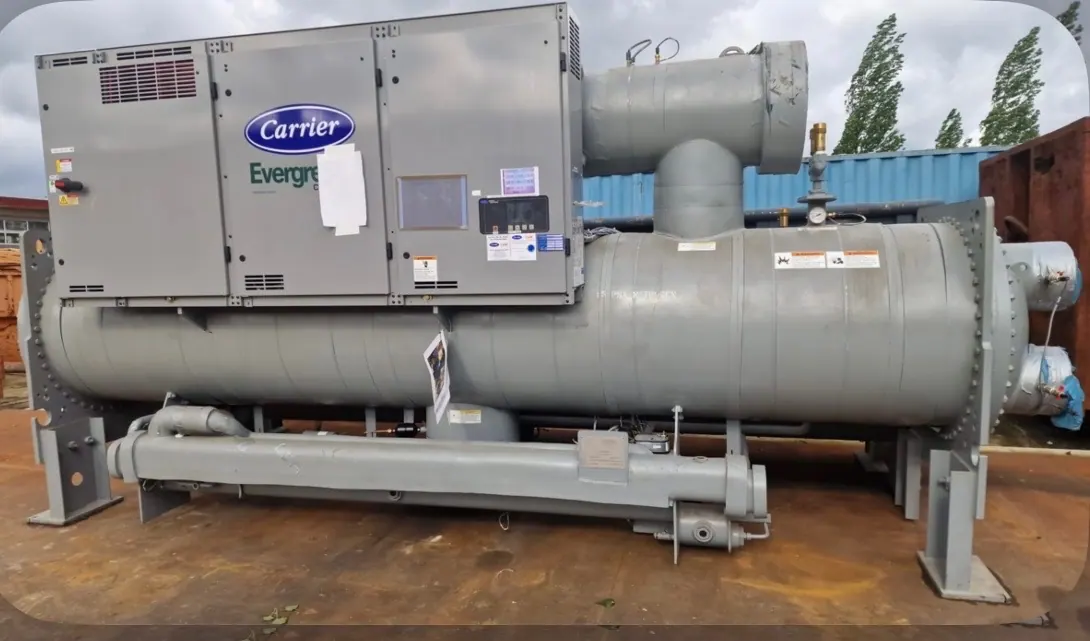
We buy screw chillers in Houston, Texas, with cash offers and upfront payment when a purchase is agreed. We handle removal, and the seller does not need to test the equipment.
From first photo to final haul, we take care of the details so you can move forward.
Share a nameplate photo, the location, and whatever you know about your equipment. No testing is required from you.
We review the chiller and your site information, then make an offer. Payment is upfront.
We handle disconnects, refrigerant recovery, crane and rigging, loading, freight and hauling.
Before discussing removal, decide which screw chiller you are offering and what belongs with it. A machine may stand beside pumps, cooling-tower equipment, piping, electrical gear, or another chiller; proximity does not make those items part of the sale. Mark the proposed boundary as clearly as you can, especially if neighboring systems will remain in service.
Then make a short inventory of items intended to go with the chiller: for example, a control panel, starter, loose components, or documented accessories. Note anything known to be missing. A clear scope helps avoid confusion about what is being purchased and what the facility expects to retain. We consider screw chillers across a broad range of sizes and refrigerants, including idle and non-running equipment, but each proposed purchase is subject to review.
Share the manufacturer and model, serial number, capacity if known, and nameplate information. A legible nameplate photo and a few overall views can often establish a helpful starting point. Include photos of the compressor area, controls, connections, and any visible damage when practical. There is no need to create a formal inspection report before asking us to review the equipment.
Describe the chiller’s known history without guessing: whether it is operating, idle, disconnected, or incomplete; when it was last used, if known; and whether components have been removed. If the refrigerant or remaining charge is uncertain, say so. Do not start the machine just to improve the description, and do not open or vent its refrigerant circuit.
The machine’s condition is only part of the review. Tell us where it sits—indoors, outdoors, on a roof, or in another installed position—and what is known about its route out. A narrow doorway, stairs, limited headroom, overhead obstructions, distance to a loading area, or restricted vehicle access could affect handling. The actual arrangement must be confirmed with the authorized site contact; a photograph or description is useful, but does not replace project review.
For a Houston facility, share the access rules and practical limits that apply at that location rather than assuming a standard pickup setup. Mention any required check-in, operating hours, restricted areas, or approval steps if they apply. If other plant equipment must remain available, identify the boundary and the work window the facility can approve. That lets the removal scope be discussed around real site conditions instead of an assumed shutdown.
Identify known electrical, water, and refrigerant connections, along with services that must remain untouched. The seller does not need to disconnect the chiller or hire a recovery contractor, rigger, crane, or hauler. If a purchase is agreed, we coordinate and handle appropriate refrigerant recovery with qualified personnel, disconnects, rigging, crane work when needed, loading, freight, and hauling.
Those tasks still require coordination with the site. The authorized contact supplies accurate information, arranges permitted access, communicates site rules, and obtains necessary approvals. If the chiller shares a room or route with operating equipment, flag that early. The work plan can then address boundaries and restrictions before the crew arrives.
A cash offer is based on the asset and the actual project review, not solely on tonnage or the fact that the unit is a screw chiller. Identification, included components, reported condition, refrigerant information, and the work needed to collect it may all be relevant. A cooling ton measures capacity; it is not the chiller’s weight or a lifting estimate. No offer is guaranteed until the equipment and proposed scope have been reviewed.
If both sides agree to a purchase, payment is made upfront before pickup on the agreed terms. Confirm which equipment and accessories are included, who is authorized to sell them, and the collection arrangements before work is scheduled. This keeps the handoff tied to the agreed scope rather than an informal understanding.
Send the information already available: equipment identification, photos, known condition, the proposed sale boundary, and a brief description of access and site requirements. Include what remains connected and whether neighboring systems need to stay in service. If a detail is unknown, label it as unknown rather than trying to verify it by restarting equipment or disturbing a refrigerant circuit.
We can review that starting information, clarify the equipment and removal scope, and determine whether to discuss an offer. You do not need to repair, test, clean, or restart the chiller first. If the project appears workable, the next discussion can cover the authorized contact, site approvals, timing, and the conditions for pickup. Any purchase remains subject to review and agreement.

Air-cooled or water-cooled. Centrifugal, screw or scroll. From single units to large shutdown projects, we buy industrial chillers across Texas.
Send us your chiller details and nameplate photos for a cash offer. Don’t worry if you don’t know every specification—we can start with what you have.
Call or text(614) 715-3047TEXT NAMEPLATE PHOTOS ↗Prefer email?
saleselectricalbuyers@gmail.com