
SEND THE DETAILS
Share a nameplate photo, the location, and whatever you know about your equipment. No testing is required from you.
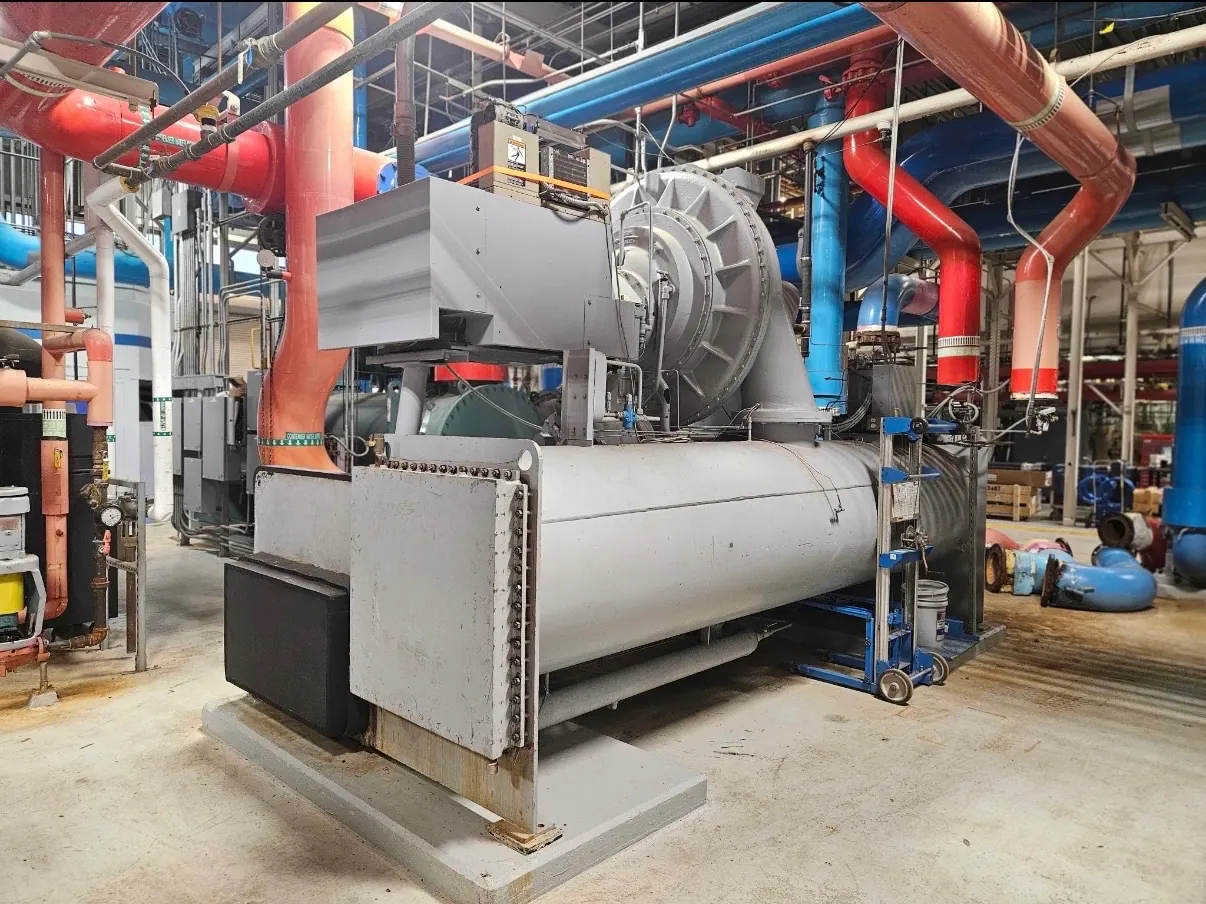
We buy chillers in restricted-access sites in Dallas, Texas, with cash offers and upfront payment when a purchase is agreed. We handle removal, and the seller does not need to test the equipment.
From first photo to final haul, we take care of the details so you can move forward.
Share a nameplate photo, the location, and whatever you know about your equipment. No testing is required from you.
We review the chiller and your site information, then make an offer. Payment is upfront.
We handle disconnects, refrigerant recovery, crane and rigging, loading, freight and hauling.
A chiller behind a controlled gate or deep inside a building can be reviewed for purchase. Restricted access changes the collection plan, so describe both the equipment and the path a removal crew would need to follow. There is no need to test, restart, repair, or prepare the machine before the initial review.
We buy used industrial and commercial chillers, including water-cooled and air-cooled centrifugal, screw, and scroll units. Equipment generally ranges from 20 to more than 2,000 cooling tons, and all refrigerants are considered. Idle or non-running units can also be reviewed. A cooling ton measures capacity; it does not tell us the machine’s weight or determine how it can be moved.
Begin with the manufacturer and model, capacity if known, serial number, approximate age, and any information about operating condition or service history. Photos of the nameplate and overall unit are useful, as are pictures of the immediate work area. If a label is missing or details are uncertain, say so rather than trying to fill in the gaps.
Identify which chiller is for sale and what, if anything, is included with it. Controls, pumps, piping, electrical gear, and neighboring equipment may serve the wider plant but fall outside the proposed sale. Point out what must remain, what may be included, and whether the unit is still connected. An accurate boundary helps keep the offer and eventual removal scope aligned.
For a restricted-access site in Dallas, explain the entry process and any known limits on access hours, escorts, permits, or contractor approval. The route matters as much as the entrance: note narrow doors, stairs, elevators, loading docks, low ceilings, tight turns, overhead obstructions, or distance to a truck staging area if they apply. Photographs or a simple marked-up site image can help clarify the route.
Also share known lifting or handling constraints, such as nearby live equipment, occupied areas, floor limitations, or a requirement to use a designated loading zone. These conditions may affect the approach, schedule, or equipment needed, but the actual plan depends on the unit and site. An authorized site contact should identify applicable rules and approvals; do not assume a machine can be moved by the most direct route.
We review the equipment information, proposed sale boundaries, and access conditions to determine whether to make an offer and what removal scope may be appropriate. A cash offer depends on the asset and the actual project review, so it is not guaranteed. Missing service history, a non-running condition, or a constrained route does not automatically prevent review, but unknowns can affect the assessment.
If the unit’s refrigerant, charge, connections, or condition are uncertain, report what is known and leave the system closed. Do not vent refrigerant or open the circuit to identify its contents. The refrigerant on an old label may not establish what is currently in the equipment; handling requirements are assessed as part of the agreed project.
Before collection, both sides should agree on the chiller being sold, any included components, the purchase terms, and the site’s access arrangements. The authorized seller and site contact can clarify ownership authority, required approvals, work rules, and the available pickup window. If building operations or other equipment must stay in service, identify those boundaries early so the removal plan can account for them.
If a purchase is agreed, payment is made upfront before pickup, on the agreed terms. The seller does not need to deliver the chiller or arrange a test to qualify for payment. Keep the sale scope clear in writing, especially where several machines or shared plant components occupy the same room.
For an agreed purchase, we arrange and handle appropriate refrigerant recovery with qualified personnel, equipment disconnects, rigging, crane work when needed, loading, freight, and hauling. The seller is not expected to hire a recovery contractor, crane company, or carrier. The work is planned around the actual chiller, route, and approved access rather than an assumed standard configuration.
The buyer is responsible for the equipment work. The seller or site supplies accurate information, authorized access, applicable site rules, and necessary approvals, and coordinates with the designated contact. Utility isolation and boundaries around equipment that remains in service must be resolved before work begins. The collection date and method should be confirmed with the site contact once the scope is settled.
To begin, gather the unit identification you have, a few clear photos, a short condition note, and the main access restrictions. Add the name or role of the person authorized to discuss the sale and the site contact who can explain entry requirements. If information is unavailable, note that plainly. This gives the buyer enough to review the asset and removal conditions without asking you to run, repair, disconnect, or open the chiller.

Air-cooled or water-cooled. Centrifugal, screw or scroll. From single units to large shutdown projects, we buy industrial chillers across Texas.
Send us your chiller details and nameplate photos for a cash offer. Don’t worry if you don’t know every specification—we can start with what you have.
Call or text(614) 715-3047TEXT NAMEPLATE PHOTOS ↗Prefer email?
saleselectricalbuyers@gmail.com