
SEND THE DETAILS
Share a nameplate photo, the location, and whatever you know about your equipment. No testing is required from you.
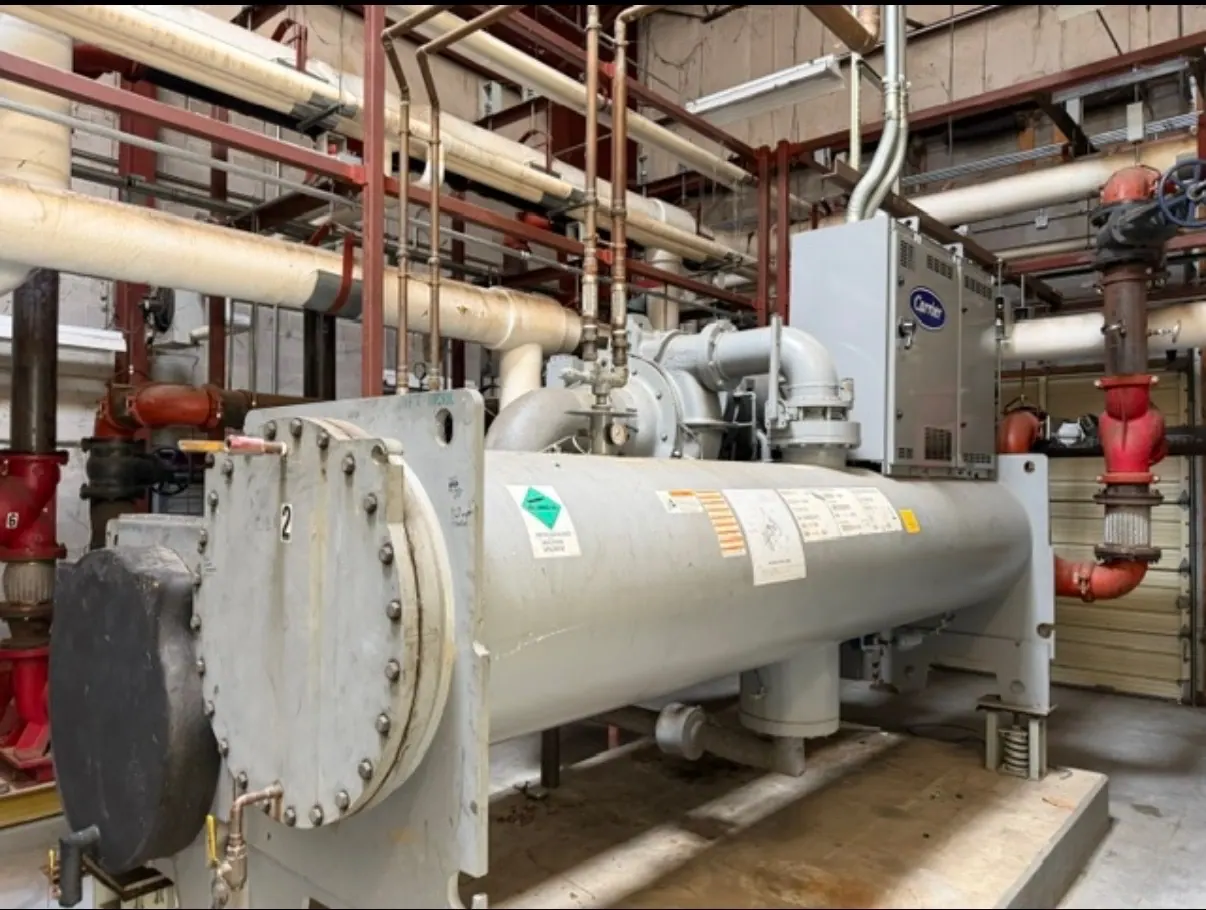
We buy chillers marked R-410A in Dallas, Texas, with cash offers and upfront payment when a purchase is agreed. We handle removal, and the seller does not need to test the equipment.
From first photo to final haul, we take care of the details so you can move forward.
Share a nameplate photo, the location, and whatever you know about your equipment. No testing is required from you.
We review the chiller and your site information, then make an offer. Payment is upfront.
We handle disconnects, refrigerant recovery, crane and rigging, loading, freight and hauling.
When a facility in Dallas is preparing to retire a chiller marked R-410A, the first useful step is to describe the asset without losing sight of what must keep operating around it. Tell us which unit is being offered, what is known about its status, and what access or timing limits may affect removal. We buy used industrial and commercial chillers, including units that are idle or not running; a label alone does not establish condition, configuration, or purchase fit.
A clear photograph of the equipment nameplate and refrigerant marking is a practical starting point. Add wide views showing the chiller, nearby piping or electrical connections, and the route toward a loading area. If the plate is hard to read or the refrigerant information is uncertain, say so. Do not open a refrigerant circuit or try to confirm the charge yourself.
Useful details include the manufacturer and model when visible, approximate age if known, whether the unit is operating, and any known repairs, modifications, or missing components. You do not need to produce a performance test or restart equipment for us to consider it. Cooling tonnage describes capacity, not the chiller’s weight, so capacity figures cannot substitute for a removal assessment.
We consider chillers using R-410A and other refrigerants, along with centrifugal, screw, and scroll equipment generally ranging from 20 to more than 2,000 cooling tons. The marking helps identify the unit, but the purchase review also depends on the actual asset, its condition, and the work involved in removing it. A refrigerant label does not confirm what is currently charged in the system.
If the chiller is part of a larger plant, identify what will remain in service and what must be isolated before the unit can be moved. Conditions vary: piping may serve other equipment, work areas may be shared, or access may be limited by facility operations. The authorized site contact can clarify those boundaries without asking the seller to perform the disconnection.
Removal planning follows the path from the chiller’s installed position to the point where it can be loaded. Note door and ceiling clearances, turns, stairs or elevators, loading-dock limits, overhead obstructions, and any restricted work hours that are relevant. Photos of the route can help show details that a model number cannot.
Dallas sites can differ in layout and access controls, so the plan must reflect the property involved rather than a standard assumption. If escorts, advance notice, permits, safety orientations, or a specific delivery entrance may apply, share that information early. We coordinate the removal with the authorized site representative and work within the site’s stated requirements and necessary approvals.
If a purchase is agreed, we arrange and handle appropriate refrigerant recovery with qualified personnel, along with the equipment disconnects, rigging, crane work when needed, loading, freight, and hauling covered by the agreed scope. The actual recovery and lifting approach depends on the verified unit and site conditions. The seller does not need to test, repair, restart, recover refrigerant, hire a crane, or arrange a hauler.
The site’s role is to provide accurate information, authorized access, applicable rules, and necessary approvals. Share known utility connections and point out nearby systems or activities that the work must avoid. Our team coordinates the equipment work with the authorized contact; the isolation and removal plan is established for the actual installation before work proceeds.
A cash offer depends on the specific equipment and a review of the project, including its condition and removal requirements. An inactive unit may still be considered, but a purchase is not guaranteed. If the available information is incomplete, say what is unknown rather than filling gaps with a guess; we can identify what further details are useful for review.
Before pickup, the parties agree on the equipment included, purchase terms, access plan, and authorized seller. If a purchase is agreed, payment is made upfront before pickup on those agreed terms. No payment amount can be inferred from tonnage alone, because the asset and project must be reviewed together.
To begin, gather the identification-plate image, a few overall and access-route photos, the unit’s known operating status, and the name or role of the person authorized to coordinate site access. Add any known schedule restrictions or connections that could affect surrounding equipment. You can submit what is available without cleaning, repairing, testing, or disconnecting the chiller. A straightforward description gives us a basis to review the R-410A unit and discuss whether a purchase and removal plan can be agreed.

Air-cooled or water-cooled. Centrifugal, screw or scroll. From single units to large shutdown projects, we buy industrial chillers across Texas.
Send us your chiller details and nameplate photos for a cash offer. Don’t worry if you don’t know every specification—we can start with what you have.
Call or text(614) 715-3047TEXT NAMEPLATE PHOTOS ↗Prefer email?
saleselectricalbuyers@gmail.com