
SEND THE DETAILS
Share a nameplate photo, the location, and whatever you know about your equipment. No testing is required from you.
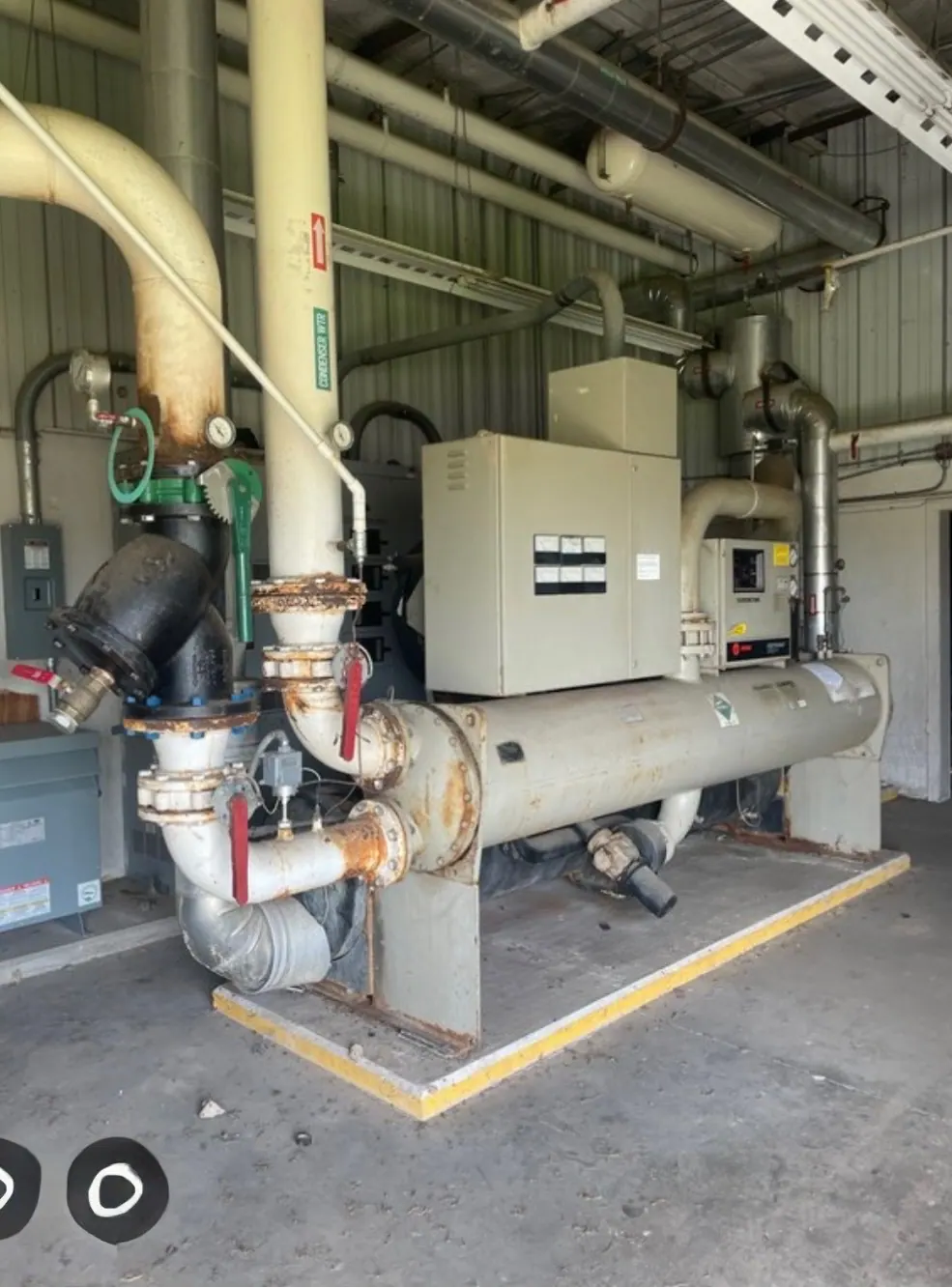
We buy data center chillers in Fort Worth, Texas, with cash offers and upfront payment when a purchase is agreed. We handle removal, and the seller does not need to test the equipment.
From first photo to final haul, we take care of the details so you can move forward.
Share a nameplate photo, the location, and whatever you know about your equipment. No testing is required from you.
We review the chiller and your site information, then make an offer. Payment is upfront.
We handle disconnects, refrigerant recovery, crane and rigging, loading, freight and hauling.
A retired data-center chiller may have a clear equipment tag and an incomplete history. Controls could be locked out, the unit may have been idle for years, or old service records may not follow it through a facility change. That uncertainty is useful to disclose, not a reason to restart the machine just to prepare it for sale. We consider operating, idle, and non-running chillers, subject to review of the specific asset and removal project.
For a first assessment, share what is actually known: manufacturer and model if legible, serial number, nominal capacity, refrigerant if documented, and any known reason the unit was taken out of service. A missing plate, unknown charge, or uncertain condition can simply be noted as unknown. Do not open the refrigerant circuit or vent refrigerant to identify what is inside.
Data centers may have several cooling systems serving different loads, and a seller’s records may not make the boundary obvious. Identify which chiller is being offered, what accessories are included, and what must remain in place. If it is part of a larger plant retirement or upgrade, distinguish the outgoing machine from equipment that is staying. This helps keep an equipment purchase from being mistaken for a broader facility scope.
We buy used water-cooled and air-cooled industrial or commercial chillers, including centrifugal, screw, and scroll units. Our general range is about 20 to more than 2,000 cooling tons, and we consider all refrigerants. Cooling tons describe capacity, not the machine’s weight; lifting and transport planning depend on the actual equipment and route.
There is no requirement for the seller to test, run, repair, or restart the chiller. If it cannot be powered, say so. If there are known issues such as a control fault, leak history, missing components, or damage, include those details without trying to diagnose beyond the available evidence. Photographs of the nameplate, overall unit, and visible condition can make the initial review more useful.
A cash offer depends on the actual equipment, available information, and project review; it is not guaranteed for every machine. If a purchase is agreed, payment is made upfront before pickup on the terms agreed with the seller. The equipment and any included components should be clearly identified in that agreement before removal is scheduled.
In an active data center, a chiller may sit near equipment that must remain online. The authorized site contact can identify the isolation boundary, approved work window, access rules, and required approvals. If shared piping, electrical feeds, controls, or a common service route are involved, flag that early so the removal scope can be reviewed against the site’s actual requirements. No cooling load or system boundary should be assumed from the chiller’s location alone.
Access details matter as much as the machine’s condition. Note known limits such as controlled gates, escorts, restricted hours, low clearances, narrow doors, stairs, overhead obstructions, or constraints on staging trucks. If the route is not yet confirmed, say that. The plan can be refined with the site representative rather than relying on guesswork.
If a purchase proceeds, we arrange and handle appropriate refrigerant recovery with qualified personnel, along with equipment disconnects, rigging, crane work when needed, loading, freight, and hauling. The seller does not need to hire a recovery contractor, crane, or carrier for this work. Recovery requirements and the handling plan depend on the chiller and site conditions; leave refrigerant work to the qualified personnel coordinating the job.
Before pickup, the buyer and authorized site contact coordinate the agreed work and access. The site supplies accurate information, communicates its rules, provides authorized access, and secures necessary approvals. The removal crew’s equipment work is planned around those requirements, including any protections or restrictions that apply to neighboring systems and occupied areas.
To begin, send the available equipment identification, a short description of known condition, photographs, and the chiller’s location within the facility. Add what is included, whether the unit is idle or non-running, any known refrigerant information, and the best authorized contact for access and project coordination. Missing records do not need to be filled in by testing the machine. With that starting information, the asset and removal scope can be reviewed before anyone commits to a purchase or pickup plan.

Air-cooled or water-cooled. Centrifugal, screw or scroll. From single units to large shutdown projects, we buy industrial chillers across Texas.
Send us your chiller details and nameplate photos for a cash offer. Don’t worry if you don’t know every specification—we can start with what you have.
Call or text(614) 715-3047TEXT NAMEPLATE PHOTOS ↗Prefer email?
saleselectricalbuyers@gmail.com