
SEND THE DETAILS
Share a nameplate photo, the location, and whatever you know about your equipment. No testing is required from you.
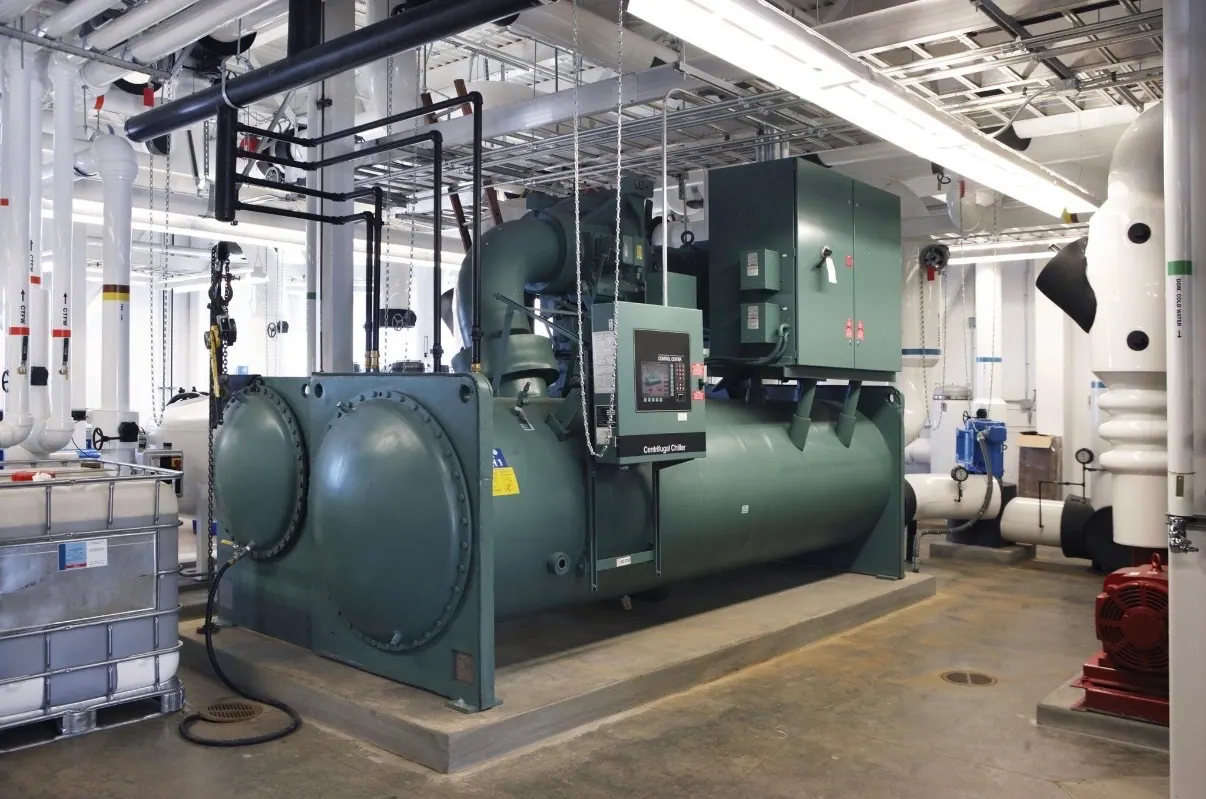
We buy warehouse chillers in Dallas, Texas, with cash offers and upfront payment when a purchase is agreed. We handle removal, and the seller does not need to test the equipment.
From first photo to final haul, we take care of the details so you can move forward.
Share a nameplate photo, the location, and whatever you know about your equipment. No testing is required from you.
We review the chiller and your site information, then make an offer. Payment is upfront.
We handle disconnects, refrigerant recovery, crane and rigging, loading, freight and hauling.
A warehouse chiller can be straightforward to identify yet difficult to remove—or look accessible in a single photograph while presenting a challenge farther along the route. For a Dallas-area sale, useful information answers two separate questions: what equipment is being offered, and what would a pickup involve? Clear photos and a practical route description let us review both without asking you to start or test the unit.
We buy used industrial and commercial water-cooled and air-cooled chillers, including centrifugal, screw, and scroll units. We generally consider equipment from 20 to 2,000-plus cooling tons and review all refrigerants. Idle and non-running machines can be considered, subject to review of the asset and project details.
Begin with the manufacturer and model information, serial number if legible, capacity marking, and refrigerant label. A photograph of the complete nameplate is more useful than a typed guess, particularly when characters are worn or hard to distinguish. Include a wider view of the entire chiller so the label can be matched to the right piece of equipment if a warehouse has several units.
Labels can help identify the equipment, but they do not prove what refrigerant is currently in the circuit or whether the chiller operates. Share what you know about its history, missing components, prior shutdown, or present connections; mark uncertain details as unknown. There is no need to restart it, arrange a performance test, make repairs, or open the refrigerant circuit.
Take one image that establishes where the unit sits in relation to nearby walls, doors, dock areas, or other equipment. Then photograph the space around it from several angles, including the side where rigging or lifting might need room. For a rooftop or exterior installation, show the approach to the unit as well as its position. These views help distinguish the chiller itself from the work area needed to remove it.
Photographs cannot reliably establish weight, structural capacity, or every clearance. If you have equipment records or know of a weight limit, narrow opening, restricted elevator, overhead obstruction, or floor concern, pass that information along. If not, say so; the removal approach must be based on the actual equipment and site rather than a visual estimate.
A useful route note follows the chiller outward: its current room or pad, the openings and turns between it and the exit, then the path to the loading point. Mention stairs, ramps, service elevators, dock doors, gate controls, or shared warehouse aisles only when they apply. If forklifts, trucks, or receiving activity could affect access, identify the relevant timing or operating limits for the site.
Flag the unusual part of the route early. A machine in a mechanical room might have to pass through a narrow doorway; an outdoor unit might have an unobstructed path to a yard—or a lift constraint that is not visible from the ground. These details do not decide whether we will buy the equipment, but they can affect how a proposed pickup is reviewed and coordinated.
Identify which chiller is for sale and whether related components are included. If the property is changing hands, being vacated, or continuing to operate, explain the deadline or access window you are working with. Confirm who has authority to sell the equipment and name the site representative who can approve access and explain applicable site rules.
We coordinate appropriate refrigerant recovery with qualified personnel, along with disconnects, rigging, crane work when needed, loading, freight, and hauling. The seller or site contact supplies accurate information, authorized access, necessary approvals, and applicable site procedures. Do not vent refrigerant or attempt to recover it yourself.
Cooling tons describe a chiller’s capacity; they are not its weight. A capacity marking helps identify the machine, but it does not tell a lifting crew what the equipment weighs or whether it fits through a particular opening. Provide any available equipment documentation and route measurements, while leaving the handling plan to review of the actual installation and pickup conditions.
Send the identification details, label and equipment photographs, known condition, and a short route description. Include the current location within the property, the proposed loading area, any operating restrictions, and who can authorize the sale and access. If a detail is missing, note that rather than estimating.
We review the asset and actual project before making a cash offer; an offer is not guaranteed. If a purchase is agreed, payment is made upfront before pickup on the agreed terms. The seller does not need to test, run, repair, or restart the chiller. Your next step is to gather the clearest available label and route information and submit it for review.

Air-cooled or water-cooled. Centrifugal, screw or scroll. From single units to large shutdown projects, we buy industrial chillers across Texas.
Send us your chiller details and nameplate photos for a cash offer. Don’t worry if you don’t know every specification—we can start with what you have.
Call or text(614) 715-3047TEXT NAMEPLATE PHOTOS ↗Prefer email?
saleselectricalbuyers@gmail.com