
SEND THE DETAILS
Share a nameplate photo, the location, and whatever you know about your equipment. No testing is required from you.
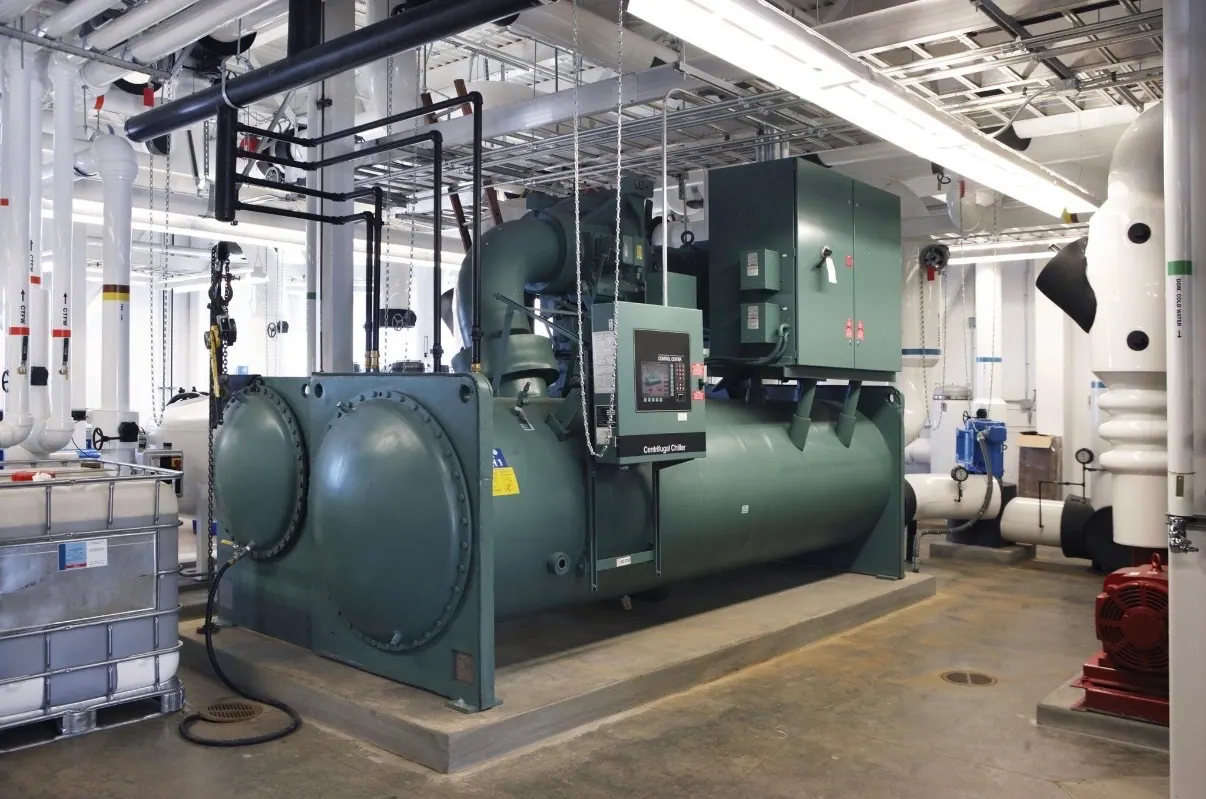
We buy chillers marked R-22 in Midland, Texas, with cash offers and upfront payment when a purchase is agreed. We handle removal, and the seller does not need to test the equipment.
From first photo to final haul, we take care of the details so you can move forward.
Share a nameplate photo, the location, and whatever you know about your equipment. No testing is required from you.
We review the chiller and your site information, then make an offer. Payment is upfront.
We handle disconnects, refrigerant recovery, crane and rigging, loading, freight and hauling.
A nameplate or service label showing R-22 is a useful lead, not a complete refrigerant history. A chiller may have been converted, serviced, partially dismantled, or left idle since that marking was applied. When describing equipment in Midland, share what the label says and mention any known refrigerant changes or uncertainty. Do not open the circuit or vent refrigerant to check.
We consider used industrial and commercial chillers across refrigerant types, including units identified as R-22. Centrifugal, screw, and scroll machines are within the equipment categories we review, generally from 20 to 2,000+ cooling tons. That figure describes cooling capacity, not the machine’s weight or the lifting capacity a removal plan will require.
For an initial review, gather the manufacturer and model, serial number, capacity if available, photographs of the equipment and identification plates, and a brief account of its known condition. Include whether it is installed or already disconnected, and whether it is operating, idle, or non-running. Existing maintenance notes or conversion records can help, but a complete service file is not necessary to begin.
If information is missing, say that plainly rather than estimating. We consider idle and non-running equipment, and you do not need to test, repair, restart, or prove the chiller’s performance. A clear description helps establish what asset is being considered; an offer, if appropriate, follows review of the actual machine and project.
A chiller rarely sits in isolation from the rest of a facility. Before discussing removal, identify which machine and related items are included, and which piping, wiring, controls, supports, or neighboring equipment are to remain. If the unit shares connections or space with active systems, a site representative should explain what must stay in service and where work is permitted.
We coordinate and handle the equipment work, including appropriate refrigerant recovery with qualified personnel and necessary disconnects. The actual sequence depends on the chiller’s configuration and the facility’s isolation procedures. The authorized site contact supplies accurate information, explains site rules, and obtains the approvals needed for access and work. The seller does not need to arrange recovery or disconnects independently.
Removal planning depends on how the machine can leave its current position, not just on its rated tons. A unit on an open pad may present a different scope from one inside a building or elevated above grade. Doorways, overhead clearance, floor or ground conditions, nearby utilities, and space for staging may affect rigging, crane needs, loading, and freight. These details should be assessed for the actual property rather than assumed from a photograph or a general description.
Send available pictures of the chiller, its surroundings, and the likely path to a loading area. Note known access limits, security procedures, permitted work hours, traffic restrictions, or operational conflicts. If a lift may be needed, the site’s rules and the proposed crane and staging locations must be reviewed. We arrange crane work when needed and handle rigging, loading, freight, and hauling as part of an agreed purchase scope.
For equipment in Midland, the useful local detail is the property’s actual access and approval process. Tell us whether the chiller is at an operating facility, a vacant building, or another setting, if known; identify the person authorized to coordinate entry; and flag any planned work window or restricted area. A move tied to a plant changeover may also need coordination with the facility representative or contractor responsible for the schedule.
These details help the parties agree on a workable pickup plan without treating a site as cleared simply because the equipment is surplus. The facility remains responsible for communicating accurate boundaries and securing necessary permissions. We coordinate the equipment removal with that authorized contact and work within the agreed site requirements.
A cash offer depends on the asset and review of the actual project, including known condition, configuration, access, and removal scope. It is not guaranteed, and the fact that a machine is marked R-22 does not establish its current charge or determine its value by itself. If a purchase is agreed, payment is made upfront before pickup on the agreed terms. The equipment scope and handoff should be clear before removal is scheduled.
To take the next step, send the identification details and photographs you already have, describe the known condition and refrigerant history, and provide the site’s access and coordination information. Include uncertainties rather than trying to resolve them by running the chiller or disturbing its refrigerant circuit. That gives us a practical basis to review the equipment and discuss whether a purchase can be agreed.

Air-cooled or water-cooled. Centrifugal, screw or scroll. From single units to large shutdown projects, we buy industrial chillers across Texas.
Send us your chiller details and nameplate photos for a cash offer. Don’t worry if you don’t know every specification—we can start with what you have.
Call or text(614) 715-3047TEXT NAMEPLATE PHOTOS ↗Prefer email?
saleselectricalbuyers@gmail.com