
SEND THE DETAILS
Share a nameplate photo, the location, and whatever you know about your equipment. No testing is required from you.
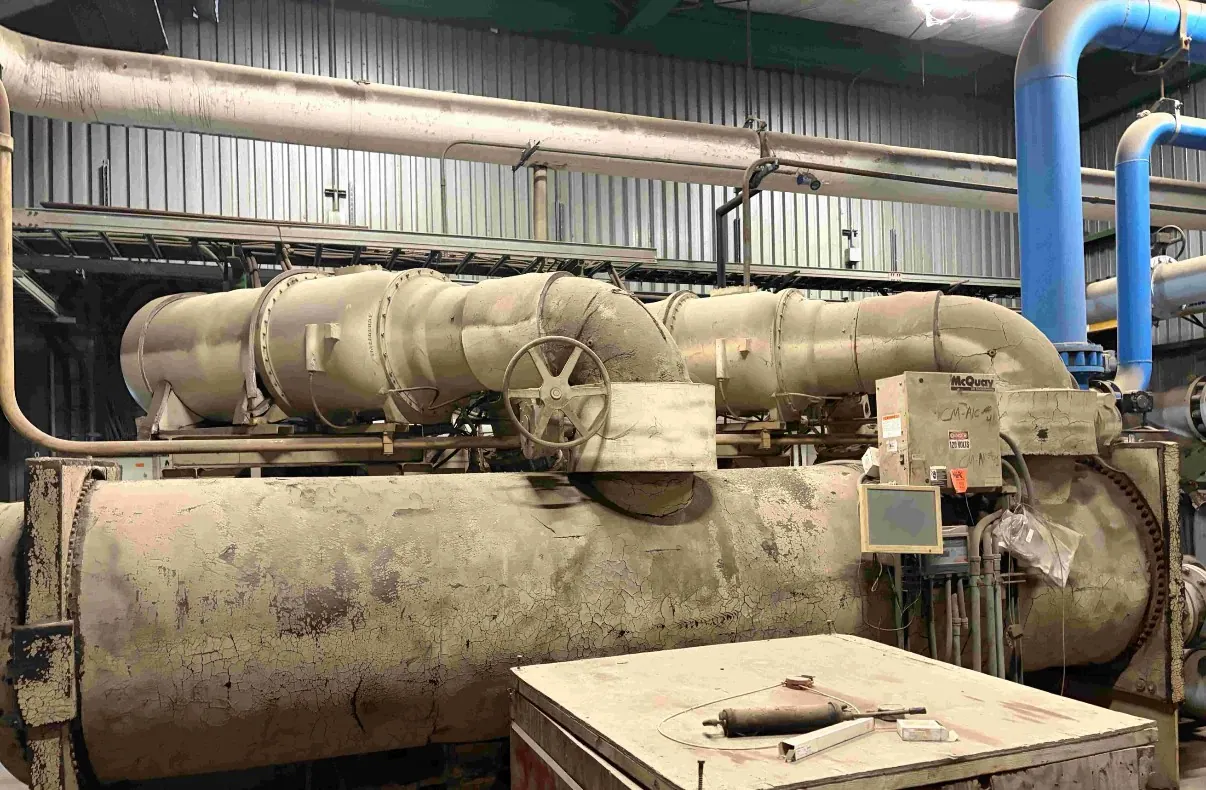
We buy Daikin chillers in Texas for projects involving non-running equipment. We offer upfront payment, handle removal, and do not require seller testing.
From first photo to final haul, we take care of the details so you can move forward.
Share a nameplate photo, the location, and whatever you know about your equipment. No testing is required from you.
We review the chiller and your site information, then make an offer. Payment is upfront.
We handle disconnects, refrigerant recovery, crane and rigging, loading, freight and hauling.
A Daikin chiller that will not run can still be considered for purchase. We review idle and non-running equipment in Texas without requiring you to test, repair, or restart it. A shutdown may reflect a known fault, missing components, an unresolved alarm, or simply a unit whose operating history is unavailable. Share what you know, and label uncertainty as uncertainty; there is no need to diagnose the machine for us.
We buy used commercial and industrial chillers, including Daikin centrifugal, screw, and scroll equipment. Capacity is one useful identifier, but it is not a proxy for weight or a removal plan. The actual configuration, condition, refrigerant, included components, and access all need review before a purchase decision can be made.
Photographs, labels, and route details answer separate questions. An overall photograph helps establish what equipment is present and how it relates to nearby machinery. A nameplate image can identify the model and capacity, along with other information visible on that particular label. Route information helps assess how the machine might be disconnected, lifted, and moved out.
One image rarely answers all three. If practical, send a clear wide view, close-ups of available identification labels, and views of the access path from the chiller toward the loading point. Keep the images grounded in what is visible; do not open panels or enter restricted areas to get a better shot. If a label is unreadable or inaccessible, say so rather than guessing.
Chiller rooms often contain equipment that may or may not be included in a proposed sale. Use photographs or a short written inventory to distinguish the Daikin unit from adjacent chillers, pumps, controls, piping, or other items. Note which accessories are included and which must remain. Clear boundaries help keep the purchase review and removal scope aligned.
Also describe the non-running status as accurately as you can. For example, say whether the unit is disconnected, known to have a fault, or simply not operated recently. Mention missing parts or visible damage if known. Do not energize the equipment to fill in gaps, and do not disturb refrigerant lines or fittings.
A machine’s location matters as much as its nameplate when planning removal. If the chiller is inside a plant room, below grade, on a roof, or behind other equipment, show the relevant openings, turns, stairs, ramps, and transitions to the loading area where safely accessible. Include overhead obstructions and available staging space if you know them.
Route photographs help indicate geometry; they do not establish floor capacity, lifting points, structural limits, or verified weight. Share known restrictions and site rules, such as access windows, security procedures, or areas that must stay clear. If those details are not yet confirmed, say what still needs review. The handling method, including whether crane work is needed, depends on the actual site and chiller.
If a purchase is agreed, we arrange the equipment-side work: appropriate refrigerant recovery by qualified personnel, disconnects, rigging, crane work when needed, loading, freight, and hauling. The sequence is coordinated with the authorized site contact and the property’s requirements. You are not expected to hire a recovery contractor, crane, or hauler to begin a review.
Do not vent refrigerant or open the circuit to prepare the unit. Current charge and condition are not known until the equipment is reviewed, and a non-running chiller may still contain refrigerant. The seller or site contact supplies accurate information, authorized access, applicable site rules, and necessary approvals; we coordinate and handle the agreed equipment work.
A cash offer depends on the asset and project details, including the equipment information and practical removal conditions. It is not guaranteed, and capacity alone does not establish value. We consider a range of used water-cooled and air-cooled chillers, generally from 20 to more than 2,000 cooling tons, and consider all refrigerants. A cooling ton measures capacity, not the machine’s weight.
If both sides agree to a purchase, payment is made upfront before pickup, on the agreed terms. Before work is scheduled, confirm the equipment included, who is authorized to approve the sale, site access requirements, and the expected removal window. That gives everyone a shared scope without asking you to get the chiller running first.
To start, gather the clearest available nameplate image, an overall view of the Daikin chiller, a few safe photographs of its route, and a brief account of what is known about its condition. Identify included and excluded equipment, note any access constraints, and flag unknown details plainly. With that information, we can review the unit and removal scope and discuss whether an offer makes sense. Leave testing, repair, refrigerant handling, and physical disconnection to the agreed process.

Air-cooled or water-cooled. Centrifugal, screw or scroll. From single units to large shutdown projects, we buy industrial chillers across Texas.
Send us your chiller details and nameplate photos for a cash offer. Don’t worry if you don’t know every specification—we can start with what you have.
Call or text(614) 715-3047TEXT NAMEPLATE PHOTOS ↗Prefer email?
saleselectricalbuyers@gmail.com