
SEND THE DETAILS
Share a nameplate photo, the location, and whatever you know about your equipment. No testing is required from you.
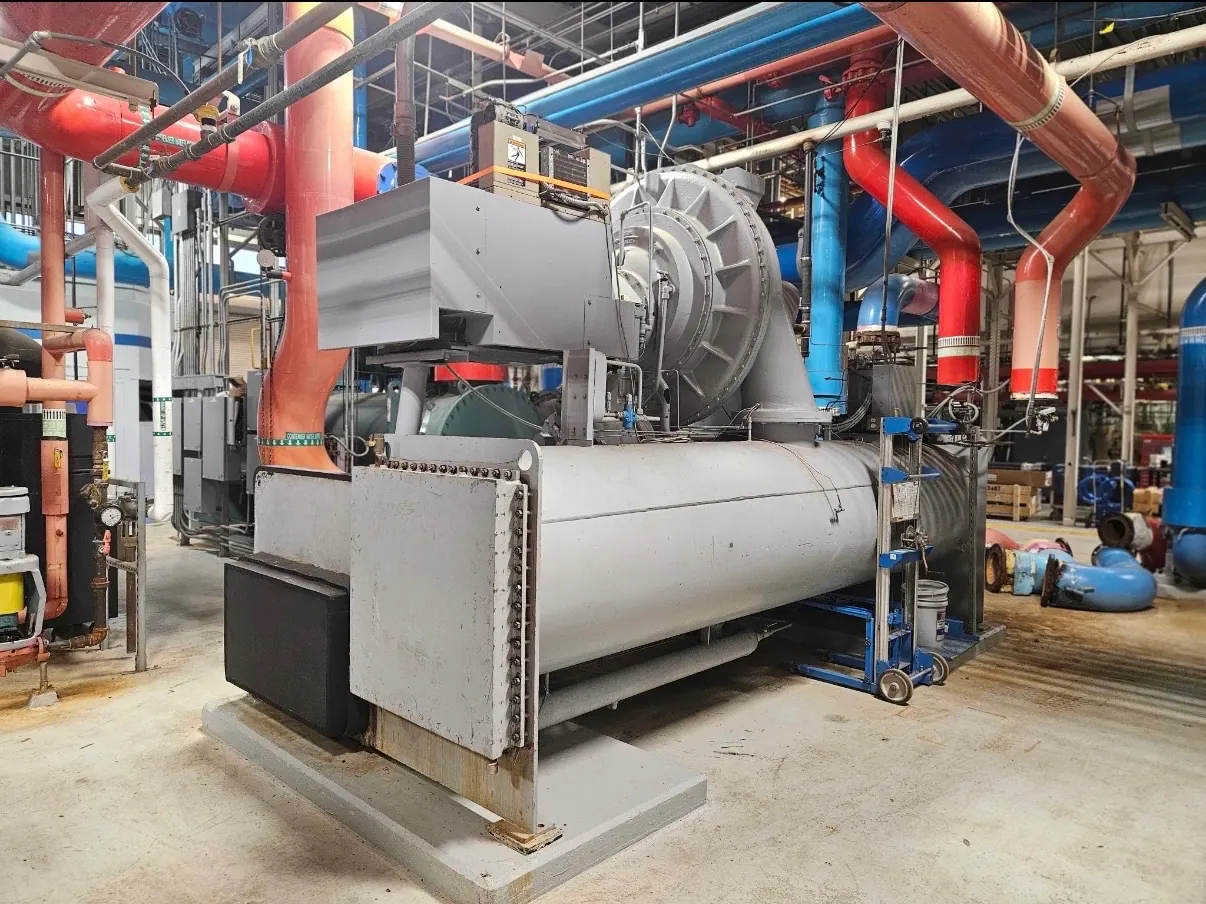
We buy Carrier chillers in Texas for projects involving facility closure. We offer upfront payment, handle removal, and do not require seller testing.
From first photo to final haul, we take care of the details so you can move forward.
Share a nameplate photo, the location, and whatever you know about your equipment. No testing is required from you.
We review the chiller and your site information, then make an offer. Payment is upfront.
We handle disconnects, refrigerant recovery, crane and rigging, loading, freight and hauling.
A shutdown schedule often has fixed milestones: production ends, utilities are isolated, the building changes hands, and remaining assets must be cleared. A Carrier chiller can be considered for purchase even if it is idle or no longer runs. The useful first move is to establish exactly which equipment is included and how much time the site can allow for removal—not to restart the system before the property is ready.
We buy used industrial and commercial chillers, including Carrier units, for review in Texas. A manufacturer name by itself does not establish the machine’s model, condition, refrigerant, or value. Equipment details and the removal project both matter, so an offer follows review of the specific asset and site rather than a standard assumption about the brand.
Cooling capacity is usually described in tons, but a cooling ton is a measure of capacity, not the machine’s weight. It does not tell a rigging crew whether the chiller will pass through a doorway, fit on a freight route, or need to be lifted out of a mechanical space. For review, share the capacity shown on available records or the nameplate, but treat it as one equipment detail among several.
Useful identification can include the Carrier model and serial number, the equipment type, compressor or control labels, and any known changes to the original configuration. Photos taken from safe, accessible positions can help clarify what is present. If labels are unreadable, components are missing, or the machine has been stored, say so plainly; do not guess or dismantle anything to find information.
Share whether the unit is operating, idle, incomplete, or non-running, along with any known service or storage history. Testing, repairs, and restarting are not required to begin a review. If the refrigerant or current charge is unknown, report that uncertainty rather than trying to verify it yourself. We consider different refrigerants, subject to the asset and project review.
It also helps to confirm who owns the equipment and who is authorized to approve its sale and site work. During a closure, a property owner, facility manager, asset team, and contractor may have different responsibilities. Identify the authorized site contact and note any approvals or internal decisions still needed before a pickup can be scheduled.
Describe the chiller’s current position and the likely route to a loading point: for example, whether it is indoors or outdoors, on a roof or floor, behind controlled entry, or near other equipment that must remain. Mention dimensions or clearances only when known. A narrow access opening, overhead obstruction, limited staging area, or restricted work window could affect the removal plan, but the actual requirements depend on the property.
If the building will still be occupied or other operations will continue, flag relevant access hours, escorts, permits, shared docks, and areas that must stay clear. For a replacement project, identify the equipment being sold separately from pipes, controls, or other systems that remain. Photos of the route and loading area can supplement a short written description without requiring anyone to enter an unsafe area.
If a purchase is agreed, we arrange appropriate refrigerant recovery with qualified personnel and coordinate disconnects, rigging, crane work when needed, loading, freight, and hauling. The method and sequence depend on the chiller’s configuration and the approved site conditions. You do not need to hire a recovery contractor, crane, or hauler on our behalf, or prepare the equipment for a seller-run test.
The site still has an important role: provide accurate equipment and access information, communicate applicable safety rules, and secure necessary approvals through the authorized contact. Electrical, piping, and property procedures should be coordinated with the people responsible for the facility. Do not vent refrigerant or open a refrigerant circuit to prepare the chiller for review.
A cash offer is not automatic or guaranteed. It depends on the equipment and the actual project review, including condition, included components, access, and removal scope. If a purchase is agreed, the amount, equipment included, payment terms, access arrangements, and pickup window should be settled with the seller in advance. Payment is made upfront before pickup, on the agreed terms.
To start, assemble whatever is available rather than delaying for a complete maintenance file: identification or label photos, the unit’s known status, location within the property, route and access notes, the closure or clearance timing, and the name or role of the authorized site contact. State what remains unknown. That information gives the equipment and removal project a grounded basis for review without asking the seller to run, repair, disconnect, or recover the chiller.

Air-cooled or water-cooled. Centrifugal, screw or scroll. From single units to large shutdown projects, we buy industrial chillers across Texas.
Send us your chiller details and nameplate photos for a cash offer. Don’t worry if you don’t know every specification—we can start with what you have.
Call or text(614) 715-3047TEXT NAMEPLATE PHOTOS ↗Prefer email?
saleselectricalbuyers@gmail.com