
SEND THE DETAILS
Share a nameplate photo, the location, and whatever you know about your equipment. No testing is required from you.
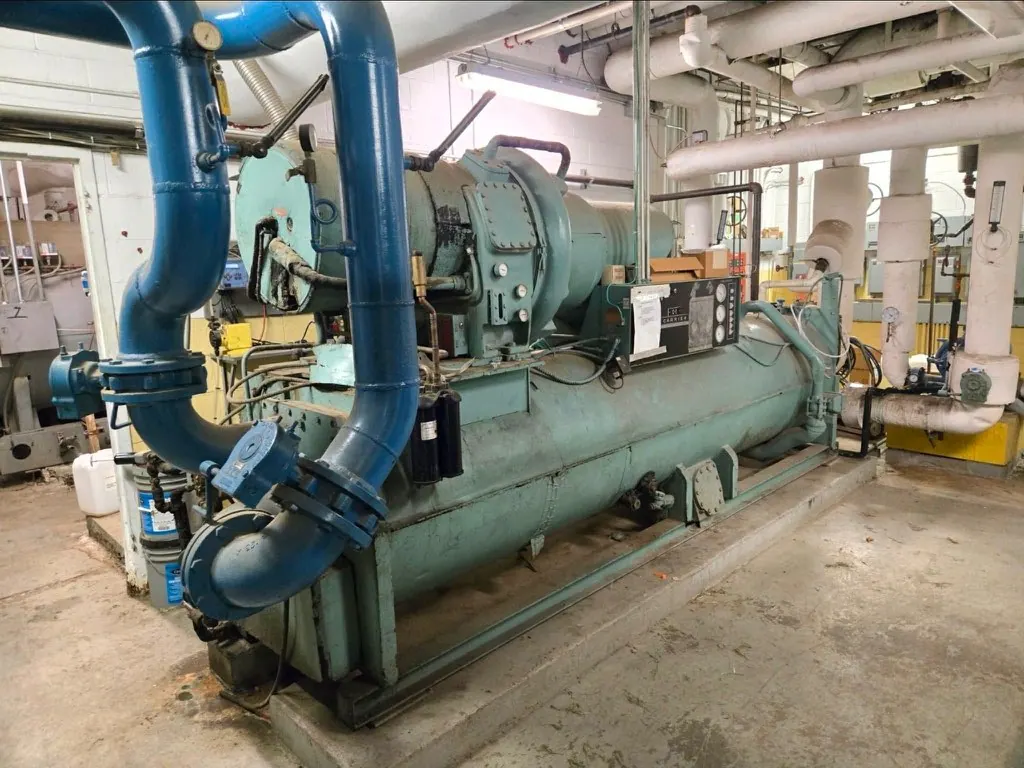
We buy chillers marked R-123 in Midland, Texas, with cash offers and upfront payment when a purchase is agreed. We handle removal, and the seller does not need to test the equipment.
From first photo to final haul, we take care of the details so you can move forward.
Share a nameplate photo, the location, and whatever you know about your equipment. No testing is required from you.
We review the chiller and your site information, then make an offer. Payment is upfront.
We handle disconnects, refrigerant recovery, crane and rigging, loading, freight and hauling.
If a chiller in Midland is marked R-123, that label is useful for an initial review, but it does not establish what is presently in the circuit or whether the machine runs. We buy used industrial and commercial chillers, including equipment that is idle or non-running, and consider different refrigerants. There is no need to start the unit, arrange a test, repair it, or open its refrigerant circuit to begin a discussion.
We consider water-cooled and air-cooled centrifugal, screw, and scroll chillers, generally from 20 to 2,000 or more cooling tons. Tonnage describes cooling capacity, not the machine’s weight; lifting and transport plans depend on the actual equipment and site. Whether an R-123 unit is a candidate for purchase depends on review of the asset and project, not its label alone.
Send the information already available rather than commissioning new tests. A clear nameplate photo can help identify the manufacturer, model, serial number, and rated capacity. Include a photo of the refrigerant marking, if accessible without disturbing the system, plus wider views showing the chiller’s configuration and location. Existing service or retrofit records may help clarify its history, but missing paperwork does not prevent an initial review.
Describe what is known about condition: for example, whether it is operating, idle, incomplete, or known to have a fault. Distinguish confirmed details from uncertainty. If the stated R-123 charge is based only on an old tag or record, say so; do not vent refrigerant or disconnect piping to find out. Mention whether accessories or related equipment are included, and identify items that will remain with the facility.
Next, explain where the chiller sits and how a removal crew could reach it. It may be indoors, outdoors, on a roof, in a mechanical room, or in an equipment yard; the actual arrangement matters more than a standard pickup assumption. Photos of the route from the machine to a loading point can reveal doors, turns, overhead clearance, stairs, columns, or other potential constraints. Measurements are helpful when available, but should not require entry into restricted areas or unsafe access.
Note site rules, operating restrictions, and any work window the authorized contact already knows about. Active electrical or piping services, limited staging space, occupied areas, ground conditions, or nearby equipment could affect sequencing or the handling method. These are matters to review for the specific site, not reasons to presume a particular crane, route, or schedule. The person authorized to represent the property should provide access details and communicate required approvals.
With the identification, known condition, included assets, and site information in hand, we can review whether to make an offer and what removal scope would apply. The equipment’s configuration, refrigerant status, accessibility, and handling requirements all matter. A cash offer is not automatic or guaranteed; it follows review of the actual asset and project. If the information is incomplete, say what remains unknown so the review can account for it.
Before proceeding, confirm the equipment included in the sale, the agreed terms, access arrangements, and the scope of collection with the authorized seller or site contact. If a purchase is agreed, payment is made upfront before pickup, on the agreed terms. This sequence lets both sides settle the transaction and coordinate work before equipment is moved.
For an agreed purchase, we arrange and handle appropriate refrigerant recovery using qualified personnel, along with equipment disconnects, rigging, crane work when needed, loading, freight, and hauling. The method depends on the machine, its lifting points and verified handling needs, and the conditions at the site. No single removal setup fits every installation. The seller does not need to hire a separate recovery provider, crane operator, or hauler for the work included in the agreed scope.
The site still has an important coordination role: provide accurate information, authorized access, applicable site rules, and necessary approvals. The authorized facility contact should identify restrictions affecting utilities, work areas, traffic, or other operations so the removal can be planned accordingly. Responsibilities for equipment work and property access should be clear before collection is scheduled.
Gather a nameplate and refrigerant-label photo if safely accessible, several views of the machine and its route out, and a short note on known condition, location, access, and what is included. Share what you know about the R-123 marking and flag any uncertainty. That is enough to start a review without testing, restarting, repairing, disconnecting, or opening the chiller. Any purchase and removal plan can then be discussed against the actual equipment and site.

Air-cooled or water-cooled. Centrifugal, screw or scroll. From single units to large shutdown projects, we buy industrial chillers across Texas.
Send us your chiller details and nameplate photos for a cash offer. Don’t worry if you don’t know every specification—we can start with what you have.
Call or text(614) 715-3047TEXT NAMEPLATE PHOTOS ↗Prefer email?
saleselectricalbuyers@gmail.com