
SEND THE DETAILS
Share a nameplate photo, the location, and whatever you know about your equipment. No testing is required from you.
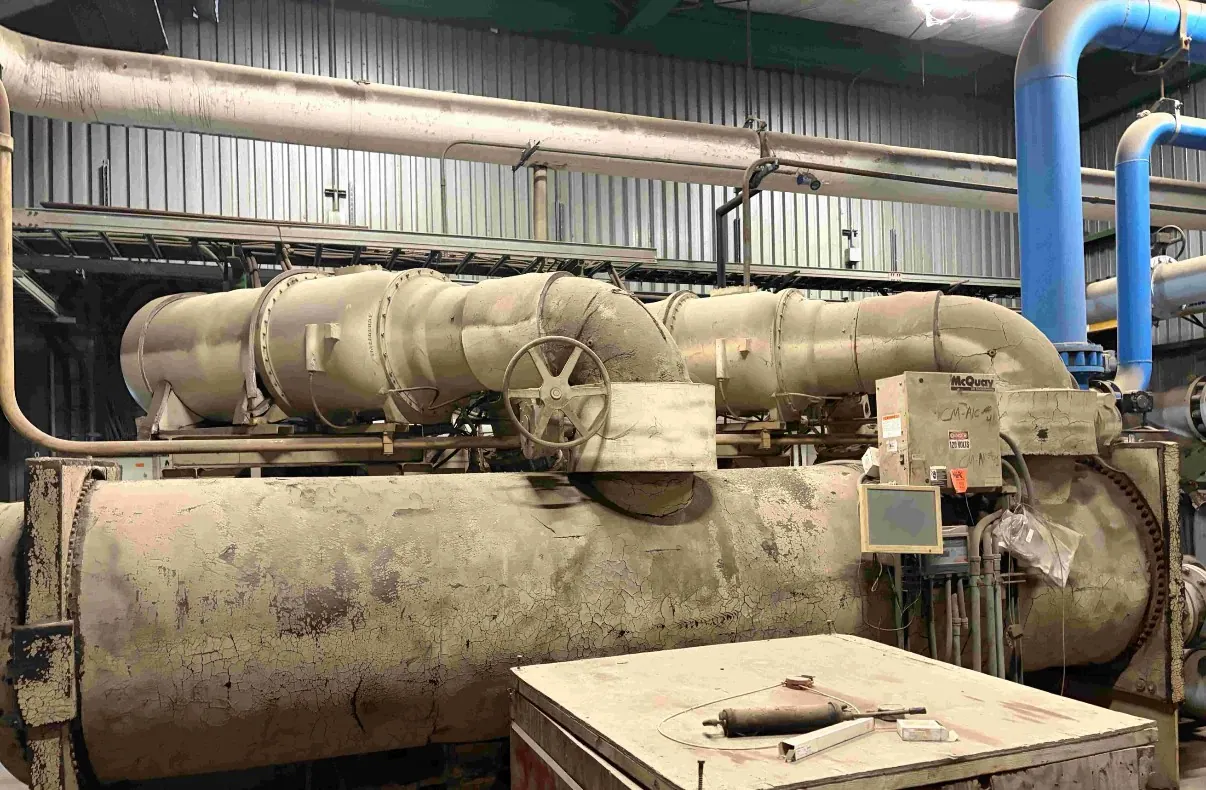
We buy office building chillers in San Antonio, Texas, with cash offers and upfront payment when a purchase is agreed. We handle removal, and the seller does not need to test the equipment.
From first photo to final haul, we take care of the details so you can move forward.
Share a nameplate photo, the location, and whatever you know about your equipment. No testing is required from you.
We review the chiller and your site information, then make an offer. Payment is upfront.
We handle disconnects, refrigerant recovery, crane and rigging, loading, freight and hauling.
An office building chiller may be idle, disconnected, or still serving part of the property when a replacement or building change makes it available. We buy used commercial and industrial water-cooled and air-cooled chillers, including centrifugal, screw, and scroll units. We consider equipment generally from 20 to more than 2,000 cooling tons, across refrigerants, and review non-running machines. You do not need to run, test, repair, or restart a chiller to ask about selling it.
For a San Antonio property, the first review can begin with what is already visible. A few clear photographs, readable identification, and a plain description of what is known—and what is not—are more useful than guesses about performance or condition. Do not open the refrigerant circuit or attempt to vent refrigerant.
A close, legible image of the equipment nameplate helps identify the manufacturer, model, serial number, capacity, and listed refrigerant when those details are shown. Photograph the whole chiller as well, including its general configuration and any components offered with it. Labels and overall views answer different questions: one helps identify the asset; the other shows what is physically included.
Then photograph the route rather than only the machine. Useful views may show the equipment-room doorway, turns in a corridor, changes in floor level, service elevators, loading areas, and the route out to a possible truck position. These images help reveal clearances and handling constraints. They do not establish exact dimensions, machine weight, lifting capacity, or whether a crane can be positioned safely; those details need site review. Cooling tons describe capacity, not the chiller’s weight.
If possible, send views that trace the path from the chiller to the proposed loading point, with enough overlap to show how one section connects to the next. Include gates, stairs, overhead obstructions, narrow turns, nearby equipment, or areas that must remain open when they affect that route. For a rooftop unit, include the roof access, likely lifting area, and ground-level surroundings. Weather exposure, obstruction, ground support, and approved crane access may all affect the plan, so photographs support review rather than replace it.
Tell us where the unit is now and whether it remains connected, has been disconnected, or is in storage, if you know. Note any known missing parts, past damage, or operating history without presenting uncertain information as fact. If building operations, tenant access, deliveries, or shared loading areas limit work hours or access, mention that too. The relevant conditions depend on the actual property.
Equipment information is only part of the review. Identify the party authorized to sell the chiller and the site contact who can arrange access and explain property rules. There may be separate people for those roles. Let us know about required orientations, escorts, permits, approved work windows, security procedures, or restrictions on staging, if applicable. Site approvals and access must be provided by the authorized party; the removal plan is coordinated with that contact.
For occupied office buildings, a route may pass through areas that need protection or remain accessible. Flag nearby services and equipment that must stay in place. If you have drawings, service records, or dimensions, they can help clarify the scope, but you can begin with the information and photographs available. Mark uncertain details as unknown rather than arranging a test to fill the gap.
A cash offer depends on the specific asset and review of the project. Identification, condition, included components, refrigerant information when known, and the effort needed to recover and remove the unit may all be relevant. An offer is not guaranteed, and no single description or capacity establishes value. If a purchase is agreed, payment is made upfront before pickup on the terms agreed for that transaction.
We arrange and handle appropriate refrigerant recovery with qualified personnel, utility disconnects, rigging, crane work when needed, loading, freight, and hauling. The seller does not need to hire a recovery contractor, crane company, or hauler. The work is planned for the agreed scope and actual site. The site supplies accurate information, authorized access, applicable rules, and necessary approvals; our responsibility is the equipment work covered by the agreement.
Send the equipment label, an overall chiller photo, a short sequence of route photographs, the current location and known condition, and any access limits. Include who can approve the sale and who can coordinate entry. You do not need a polished survey or complete records to start. We can review what is available, ask about gaps that matter, and discuss whether the equipment and removal project merit an offer. Leave recovery, testing, and restart work to the appropriate personnel; do not alter the machine simply to prepare it for review.

Air-cooled or water-cooled. Centrifugal, screw or scroll. From single units to large shutdown projects, we buy industrial chillers across Texas.
Send us your chiller details and nameplate photos for a cash offer. Don’t worry if you don’t know every specification—we can start with what you have.
Call or text(614) 715-3047TEXT NAMEPLATE PHOTOS ↗Prefer email?
saleselectricalbuyers@gmail.com