
SEND THE DETAILS
Share a nameplate photo, the location, and whatever you know about your equipment. No testing is required from you.
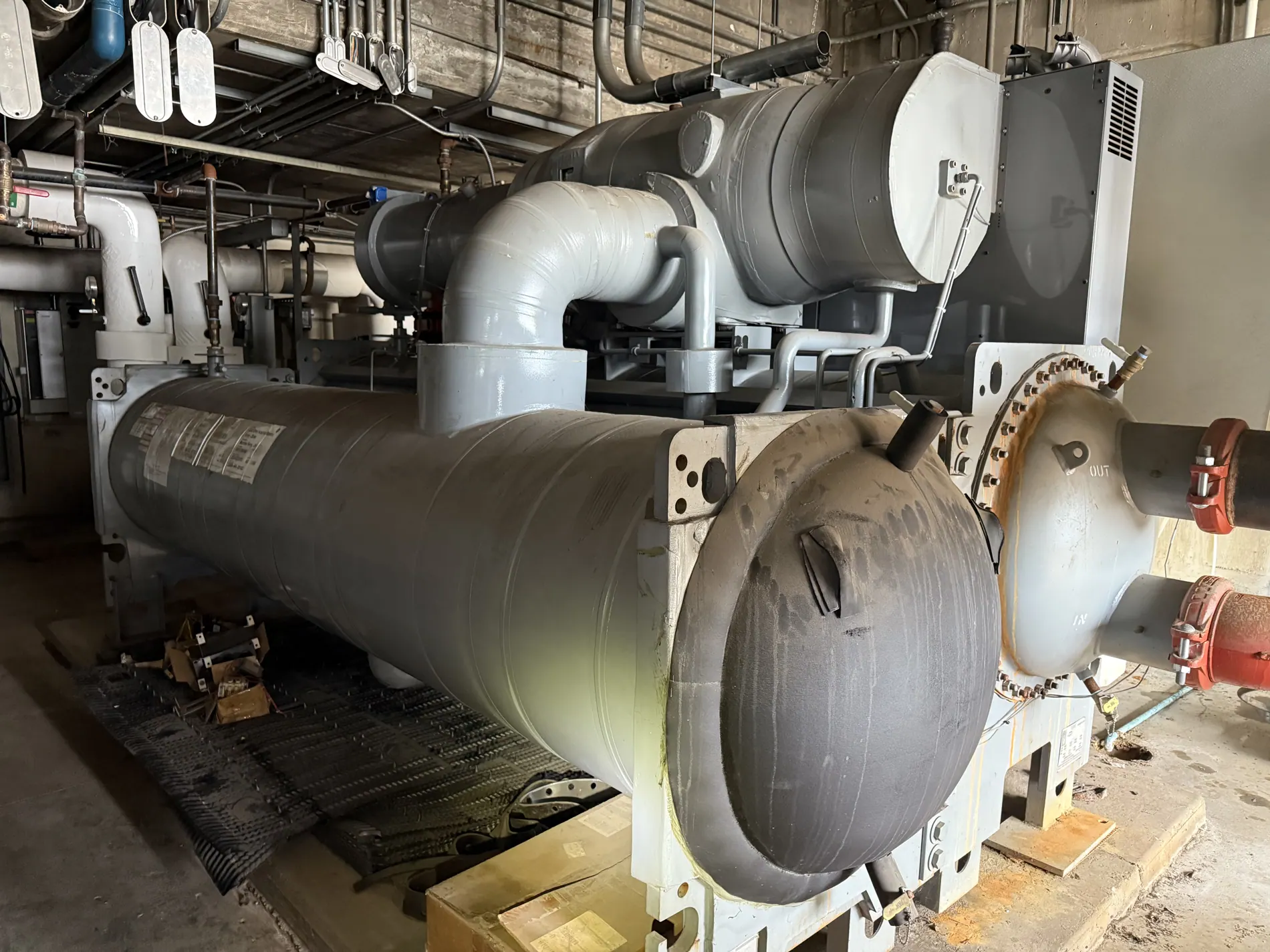
We buy chillers marked R-410A in Austin, Texas, with cash offers and upfront payment when a purchase is agreed. We handle removal, and the seller does not need to test the equipment.
From first photo to final haul, we take care of the details so you can move forward.
Share a nameplate photo, the location, and whatever you know about your equipment. No testing is required from you.
We review the chiller and your site information, then make an offer. Payment is upfront.
We handle disconnects, refrigerant recovery, crane and rigging, loading, freight and hauling.
An R-410A marking is a useful starting point when describing a chiller in Austin, but it does not define the whole removal job. First identify the equipment being offered: the chiller itself, any components intended to stay with it, and the nearby systems that are not part of the sale. This simple boundary matters most when the unit sits in a shared mechanical room or beside plant equipment that must keep operating.
We buy used commercial and industrial water-cooled and air-cooled chillers, including centrifugal, screw, and scroll units. R-410A equipment can be considered along with units marked for other refrigerants. We also review idle and non-running machines; you do not have to restart, test, repair, or open the refrigerant circuit to begin a discussion.
To start a review, send the information available to you: a readable equipment plate, the refrigerant marking, photographs of the full unit, and a short account of its known condition. Include the approximate cooling capacity if you know it, plus any known modifications or missing components. If a detail is uncertain, say so rather than guessing. The label alone cannot confirm the current charge or whether the machine has been altered.
Capacity helps identify a chiller, but it is not a measure of shipping weight. The cooling tonnage shown in equipment records should not be used to choose rigging or estimate a lift. Actual configuration, dimensions, verified weight, condition, and route all matter when planning removal. A cash offer depends on review of the asset and the project scope; it is not guaranteed by the refrigerant designation or capacity.
If the unit shares piping, electrical feeds, controls, or access routes with equipment that will remain, point out those boundaries early. A site representative can identify which connections belong to the chiller and which services must remain undisturbed. Where a replacement project is underway, the proposed handoff date and the contractor or facility contact authorized to coordinate access can help shape a workable sequence.
We coordinate the chiller’s required disconnects as part of an agreed removal. The site supplies accurate information, authorized access, applicable site rules, and necessary approvals. If the plant is occupied, the facility may also need to define permitted work hours, protection requirements, or a route that avoids disrupting normal operations. Those details should be confirmed for the actual site, not inferred from the unit’s nameplate.
A chiller may be at grade, inside an enclosed plant, below ground, or on a roof; each location can call for a different sequence. Tell us where the unit sits and how equipment or loads normally reach that area. Photos of doors, corridors, stairs, service openings, roof access, and the intended staging area can reveal questions that a close-up of the chiller cannot answer.
We plan and handle appropriate rigging, crane work when needed, loading, freight, and hauling. The proposed route and lift must be assessed against actual clearances, obstructions, ground support, staging space, and facility restrictions. A crane is not assumed to be necessary, and a photograph or building description alone cannot establish that a lift is feasible. The authorized site contact helps confirm what access and work areas are available.
R-410A on a plate identifies the stated refrigerant, but the actual charge and system history are not known until verified. Do not vent refrigerant or open the circuit to provide information for a review. If a purchase is agreed, we arrange appropriate recovery with qualified personnel, based on the equipment and conditions encountered. The seller does not need to hire a separate recovery crew as a prerequisite to discussing a sale.
Likewise, you do not need to disconnect, lift, load, or haul the chiller yourself. Equipment work is the buyer’s responsibility under the agreed scope; the site’s role is to provide truthful information, approvals, and safe, authorized access. Any site-specific limits should be raised before collection so the removal plan can account for them.
After reviewing the chiller and removal requirements, we can discuss whether to make an offer. The decision depends on the particular asset, its condition and included components, and the practical work required to remove it. If a purchase is agreed, payment is made upfront before pickup on the terms confirmed with the authorized seller. No purchase or offer is guaranteed until the review and agreement are complete.
Gather the nameplate and refrigerant-marking photos, a few wide views, the unit’s location, known condition, and a brief description of nearby systems that must remain. Add any access restrictions or likely scheduling constraints, and identify who can approve the work at the site. That is enough to begin a practical review of an R-410A chiller in Austin without running it, altering it, or assuming the surrounding plant is included.

Air-cooled or water-cooled. Centrifugal, screw or scroll. From single units to large shutdown projects, we buy industrial chillers across Texas.
Send us your chiller details and nameplate photos for a cash offer. Don’t worry if you don’t know every specification—we can start with what you have.
Call or text(614) 715-3047TEXT NAMEPLATE PHOTOS ↗Prefer email?
saleselectricalbuyers@gmail.com