
SEND THE DETAILS
Share a nameplate photo, the location, and whatever you know about your equipment. No testing is required from you.
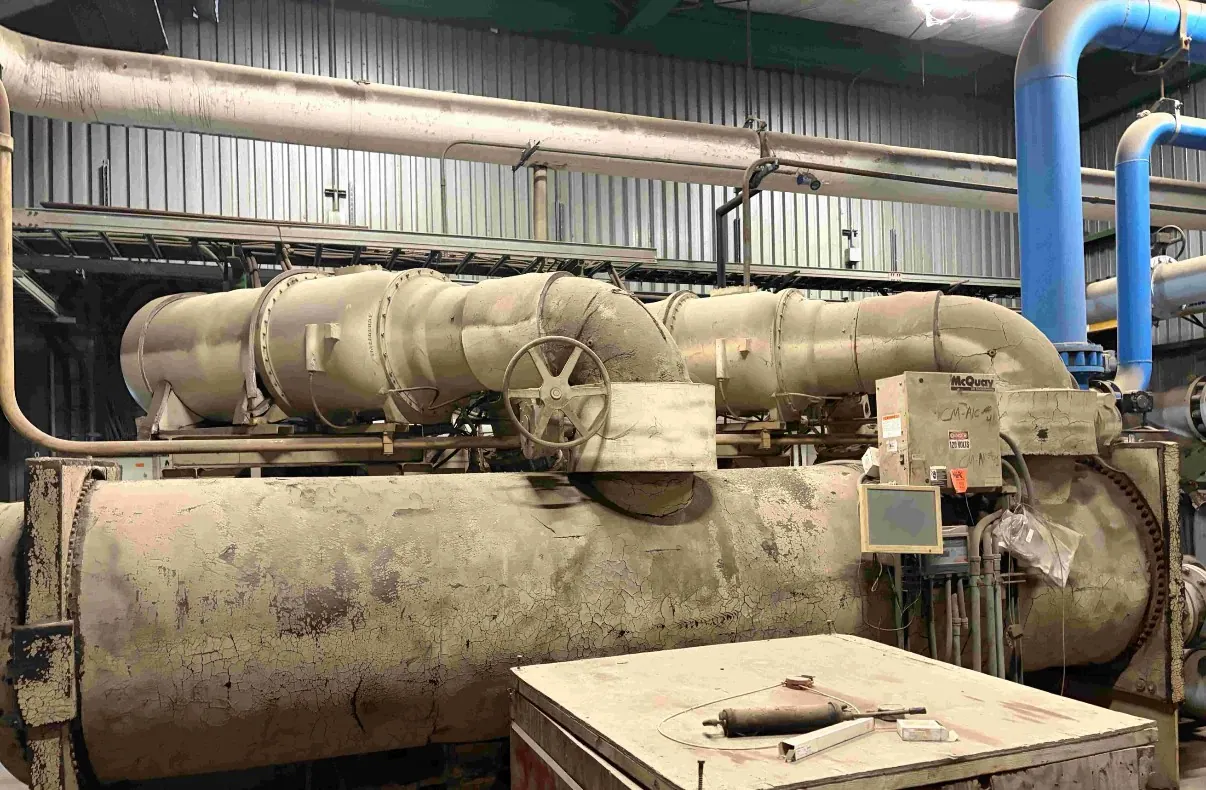
We buy Carrier chillers in Austin, Texas, with cash offers and upfront payment when a purchase is agreed. We handle removal, and the seller does not need to test the equipment.
From first photo to final haul, we take care of the details so you can move forward.
Share a nameplate photo, the location, and whatever you know about your equipment. No testing is required from you.
We review the chiller and your site information, then make an offer. Payment is upfront.
We handle disconnects, refrigerant recovery, crane and rigging, loading, freight and hauling.
A Carrier nameplate is a useful starting point, but the model and brand do not tell the whole story. For an initial review, share a clear photo of the main identification plate and, if safely visible, labels on the compressor or controls. Include the stated capacity and refrigerant type when available. A cooling-ton rating describes capacity; it does not tell us the machine’s shipping weight or how it can be removed.
We buy used industrial and commercial chillers, including Carrier equipment, across a broad range of configurations and refrigerants. Idle and non-running units can be considered. You do not need to restart, test, repair, or open the refrigerant circuit to describe what you have. If the plate is missing, unreadable, or inconsistent with what you know, say so rather than guessing.
Photos of the complete unit, its surroundings, and any equipment included in the sale help distinguish the chiller from connected plant equipment. Note known changes, missing components, storage conditions, or damage. If service records or a recent decommissioning summary are already available, they may help; assembling a history or arranging a new inspection is not a prerequisite to asking for a review.
Be candid about what remains uncertain. The original refrigerant listed on a label may not establish what is currently in the system, particularly after repairs or changes. Do not vent refrigerant or open the circuit to check. Current charge, actual condition, and configuration can be confirmed only through appropriate review and handling.
Before removal planning, identify exactly which equipment is being offered. In a central plant, a chiller may share piping, power, controls, or supports with pumps and machinery that will stay. Point out the boundary and flag any connection whose purpose is unclear. That helps prevent the removal scope from being mistaken for permission to disturb adjacent assets.
If other cooling equipment must keep running, tell us what cannot be interrupted and who can approve the work window. The authorized site contact should explain operating restrictions and required approvals. The disconnect and removal sequence depends on the actual system and agreed scope; it should not be inferred from the Carrier model alone.
Where the chiller sits matters as much as its identification. Tell us whether it is indoors, outdoors, on a roof, or below grade, and describe the route from its position to a loading area. Door dimensions, stairs, overhead obstructions, turning space, and access restrictions can all affect the plan. Photos from safe locations are often more useful than a rough description alone.
For a rooftop or tightly enclosed installation, the lift and staging area need assessment against the real property. Crane access, ground support, clearance, work hours, weather exposure, and site rules may affect timing or feasibility. No particular lift method should be assumed before the unit and route are reviewed. Share known restrictions and let the removal plan be coordinated with the site contact.
Buildings and plant layouts differ, so provide the rules that apply at your Austin site: sign-in or escort requirements, loading-area reservations, delivery traffic, permitted work hours, and any contractor approvals. If the site is occupied or a project schedule is changing, explain the relevant dates and constraints. This allows the proposed pickup to be discussed around actual access rather than an assumed open route.
The seller or owner’s representative supplies accurate equipment information, authorized access, site requirements, and necessary approvals. We arrange and handle the equipment work covered by an agreed purchase, including appropriate refrigerant recovery with qualified personnel, disconnects, rigging, crane work when needed, loading, freight, and hauling. The seller does not need to hire a recovery crew, crane, or transporter for that scope.
A cash offer depends on review of the specific asset and removal project; it is not automatic for every unit. If a purchase is agreed, confirm the amount, payment method, equipment included, access arrangements, and removal scope with the authorized parties. Payment is made upfront before pickup on the agreed terms. The physical handoff should follow those terms and the approved site plan.
To begin, gather the identification-plate photo, a few safe views of the chiller and access route, the known condition and refrigerant information, and the name of the person authorized to coordinate the property. Send what is available, clearly mark unknowns, and mention any operating equipment or access deadlines. That gives us a practical basis to review the Carrier chiller and discuss whether a purchase and removal can be agreed.

Air-cooled or water-cooled. Centrifugal, screw or scroll. From single units to large shutdown projects, we buy industrial chillers across Texas.
Send us your chiller details and nameplate photos for a cash offer. Don’t worry if you don’t know every specification—we can start with what you have.
Call or text(614) 715-3047TEXT NAMEPLATE PHOTOS ↗Prefer email?
saleselectricalbuyers@gmail.com