
SEND THE DETAILS
Share a nameplate photo, the location, and whatever you know about your equipment. No testing is required from you.
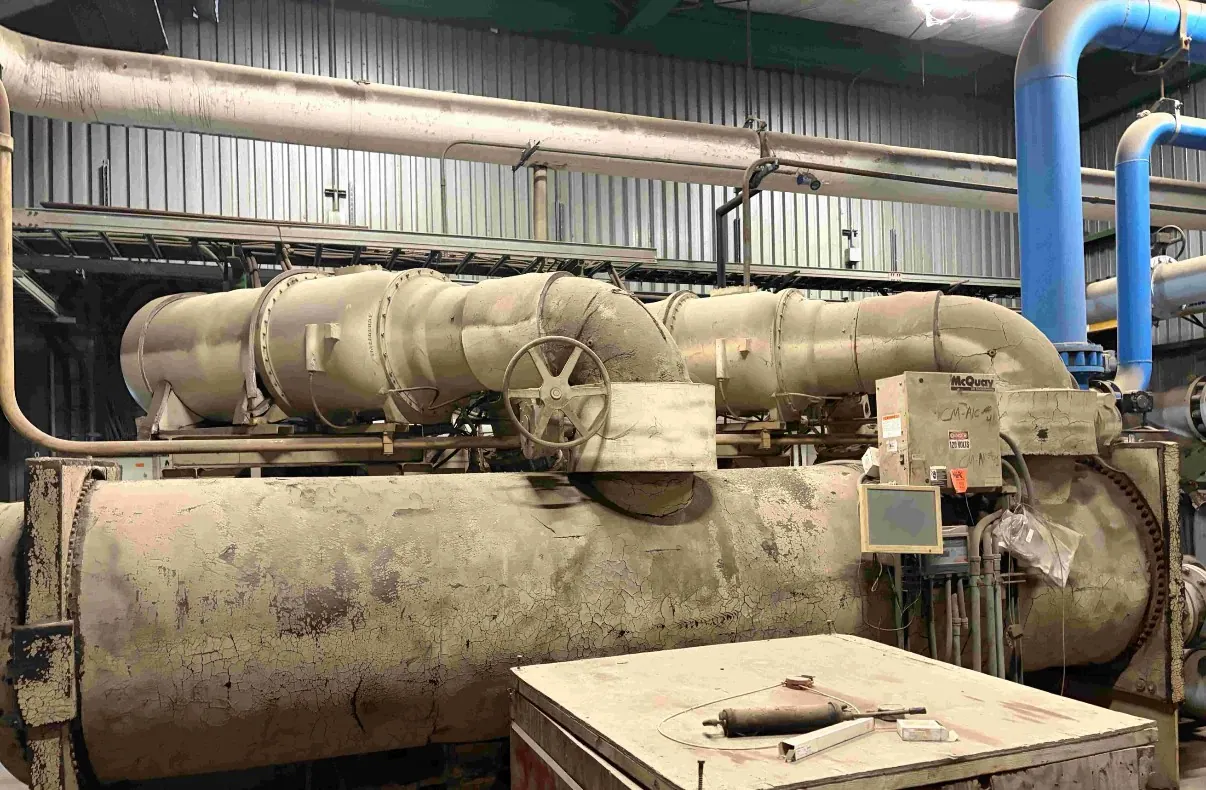
We buy scroll chillers in Corpus Christi, Texas, with cash offers and upfront payment when a purchase is agreed. We handle removal, and the seller does not need to test the equipment.
From first photo to final haul, we take care of the details so you can move forward.
Share a nameplate photo, the location, and whatever you know about your equipment. No testing is required from you.
We review the chiller and your site information, then make an offer. Payment is upfront.
We handle disconnects, refrigerant recovery, crane and rigging, loading, freight and hauling.
When you are considering a sale of a scroll chiller in Corpus Christi, the first useful question is not whether it can be started. It is what equipment is actually there, what belongs with it, and how it can be reached. We buy used commercial and industrial scroll chillers, including idle and non-running units, subject to review of the asset and pickup project. You do not need to test, restart, repair, or open the refrigerant circuit to request consideration.
A cooling-ton rating describes capacity, not the machine’s weight. Scroll chillers vary in arrangement and size, and a label alone cannot establish what lifting or transport will require. We consider equipment generally from 20 to more than 2,000 tons and consider all refrigerants; the actual configuration and removal scope still need to be reviewed.
Take one clear photograph showing the complete chiller in place, then add closer views of its control panel, visible compressor labels, and connections where these can be photographed safely. A full-unit view helps distinguish the machine from adjacent equipment; close-ups can reveal model and serial information, capacity, voltage, or refrigerant markings. Do not remove panels or reach into the equipment to obtain a picture.
Photographs answer questions about appearance and surroundings, but they do not prove operating condition or confirm what is inside a sealed circuit. Note whether a unit is intact, idle, disconnected, or known to be non-running, and separate what you know from what is uncertain. If a label is damaged or unreadable, a straight-on picture may still help us identify what information is available.
Share the equipment nameplate and any accessible compressor or refrigerant labels as separate images. Include legible model and serial numbers when available. These details help us review the specific asset rather than infer its identity from a general description. If several scroll chillers are involved, label the photographs by unit or location so that details do not get assigned to the wrong machine.
Tell us whether the proposed sale includes only the chiller or also particular accessories or associated components. Controls, pumps, piping, or nearby equipment should not be assumed to be included just because they appear in the same photograph. A short written list can define what should leave and what must remain, especially if multiple systems share a mechanical area.
Route information answers a different question: how could the equipment be removed? Send photographs from the unit toward the loading point, including doorways, corridors, stairs, overhead clearance, outdoor travel, and the likely truck or crane position when visible. State whether the chiller is indoors, on a roof, on an exterior pad, or in storage. These are planning details, not reasons to assume a particular method before the site is reviewed.
For a Corpus Christi property, describe the actual exposure and condition rather than relying on a general assumption about the setting. If the chiller sits outdoors or near the coast, visible corrosion or weathering may matter to handling. Photos of accessible lifting points, supports, and surrounding obstructions can inform review, but they do not replace a site-specific assessment. Do not climb, move guards, or approach unsafe areas to improve the images.
The person coordinating access can explain site rules, approved work hours, loading restrictions, security steps, and any routes that must stay open. Mention active operations or other contractors if they could affect access. Accurate information and necessary approvals come from the seller or authorized site representative; our team coordinates the equipment work with that contact. If a crane, rigging, or special loading arrangement appears possible, the route and working area need review before pickup is scheduled.
If a purchase is agreed, we coordinate appropriate refrigerant recovery with qualified personnel, disconnects, rigging, crane work when needed, loading, freight, and hauling. The plan depends on the actual machine, refrigerant status, connections, access, and site conditions. Do not vent refrigerant or open a circuit. You are not required to hire a recovery contractor, arrange a crane, or prepare the chiller by testing or restarting it.
To start, provide the available nameplate and compressor-label photos, a full-unit view, photographs of the removal route, the location within the property, and a brief account of known condition and included equipment. Add any relevant access restrictions and identify the authorized person who can discuss site requirements. Missing details are fine; mark them as unknown rather than guessing. We can review the information and discuss whether to make an offer. Any cash offer depends on the asset and actual project review and is not guaranteed. If we agree to purchase, payment is made upfront before pickup on the agreed terms.

Air-cooled or water-cooled. Centrifugal, screw or scroll. From single units to large shutdown projects, we buy industrial chillers across Texas.
Send us your chiller details and nameplate photos for a cash offer. Don’t worry if you don’t know every specification—we can start with what you have.
Call or text(614) 715-3047TEXT NAMEPLATE PHOTOS ↗Prefer email?
saleselectricalbuyers@gmail.com