
SEND THE DETAILS
Share a nameplate photo, the location, and whatever you know about your equipment. No testing is required from you.
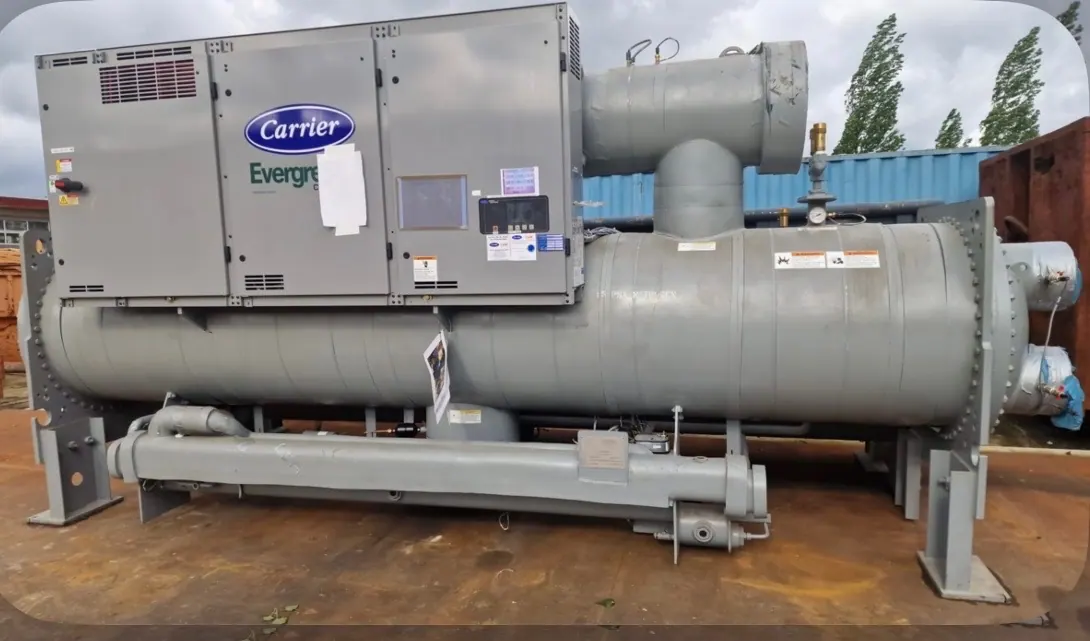
We buy McQuay chillers in Texas for projects involving surplus equipment. We offer upfront payment, handle removal, and do not require seller testing.
From first photo to final haul, we take care of the details so you can move forward.
Share a nameplate photo, the location, and whatever you know about your equipment. No testing is required from you.
We review the chiller and your site information, then make an offer. Payment is upfront.
We handle disconnects, refrigerant recovery, crane and rigging, loading, freight and hauling.
A McQuay nameplate identifies a manufacturer, but it does not establish the chiller’s present condition, configuration, refrigerant, or value. Those details matter when surplus equipment is reviewed. We buy used industrial and commercial water-cooled and air-cooled chillers, including McQuay centrifugal, screw, and scroll units. Equipment is considered across a broad range of capacities, including units that are idle or no longer run. A cooling ton measures capacity; it does not tell you how much the machine weighs or how it can be moved.
If a unit is part of an upgrade, a mothballed plant, or a change in cooling demand, describe what is actually available rather than trying to make it sound operational. Non-running equipment can still be reviewed. You do not need to test, restart, repair, or clean it for an initial assessment.
Useful starting information includes a clear photo of the equipment plate, overall views of the chiller, and any service records or documents already on hand. Share the model and serial details if readable, the approximate capacity if known, and whether the machine is installed or in storage. If the plate is damaged or information is missing, say so; do not guess or open the refrigerant circuit to identify it.
Set out what is included in the proposed sale. Controls, pumps, motors, loose parts, or nearby equipment may be separate from the chiller, and the intended boundary should be clear in writing and in photographs. Note known modifications, missing components, leaks, or damage, while distinguishing observed facts from information you have not confirmed.
The removal plan follows the equipment’s actual path out of the facility: from its mechanical room, pad, or storage position to a loading point and then to the truck. A unit may need to pass through doors, corridors, a service elevator, a roof opening, or an exterior staging area; the relevant route depends on the property. Mention known dimensions, overhead obstructions, tight turns, stairs, floor or roof limits, and access windows where they apply.
Also identify where a truck could stand and whether a crane or other lifting method might need room to work. Ground conditions, overhead lines, building activity, occupied spaces, and site traffic can affect planning if present. Photos of the chiller, route, and potential loading area help explain the layout. The actual handling method is selected after the equipment and site conditions are reviewed, not assumed from the McQuay label.
Before work is scheduled, the authorized site contact should identify the chiller being sold, the agreed work area, and any services or nearby assets that must remain. Share facility access rules, required approvals, contractor procedures, and any limits on working hours or route use. If the machine is connected, the isolation boundary needs coordination so removal does not affect equipment that is staying. The seller or site provides accurate information, authorized access, and necessary approvals; the buyer handles the equipment work.
Refrigerant type and charge can be uncertain, especially when records are incomplete or the unit has been altered. Share labels and service information if available, and identify what is unknown. We arrange and handle appropriate refrigerant recovery with qualified personnel, along with necessary disconnects, rigging, crane work when needed, loading, freight, and hauling. Sellers should not vent refrigerant or open the circuit, and do not need to hire a recovery contractor, crane, or hauler for the planned removal.
Timing and equipment choices depend on the reviewed project. A rooftop installation, confined mechanical room, or difficult truck approach may require a different plan from a chiller already staged outdoors. Those are site-dependent possibilities, not requirements for every Texas facility. Any lift must account for verified weight, suitable lifting points, clearance, support, and approvals before the work proceeds.
A cash offer depends on the specific asset and the removal project, including condition, configuration, included items, and access. Submitting information does not guarantee a purchase or a particular amount. If we agree to buy the equipment, payment is made upfront before pickup on the terms agreed with the seller. Confirm the equipment boundary, payment arrangement, site contact, and removal scope before scheduling.
Gather the plate photo, several clear equipment and route images, any records you have, and a short note on operating status, included components, refrigerant information, and access constraints. Send what is available for review and flag gaps instead of arranging a test or dismantling work. That gives the buyer a practical basis to assess the McQuay chiller and discuss whether an offer and coordinated pickup make sense.

Air-cooled or water-cooled. Centrifugal, screw or scroll. From single units to large shutdown projects, we buy industrial chillers across Texas.
Send us your chiller details and nameplate photos for a cash offer. Don’t worry if you don’t know every specification—we can start with what you have.
Call or text(614) 715-3047TEXT NAMEPLATE PHOTOS ↗Prefer email?
saleselectricalbuyers@gmail.com