
SEND THE DETAILS
Share a nameplate photo, the location, and whatever you know about your equipment. No testing is required from you.
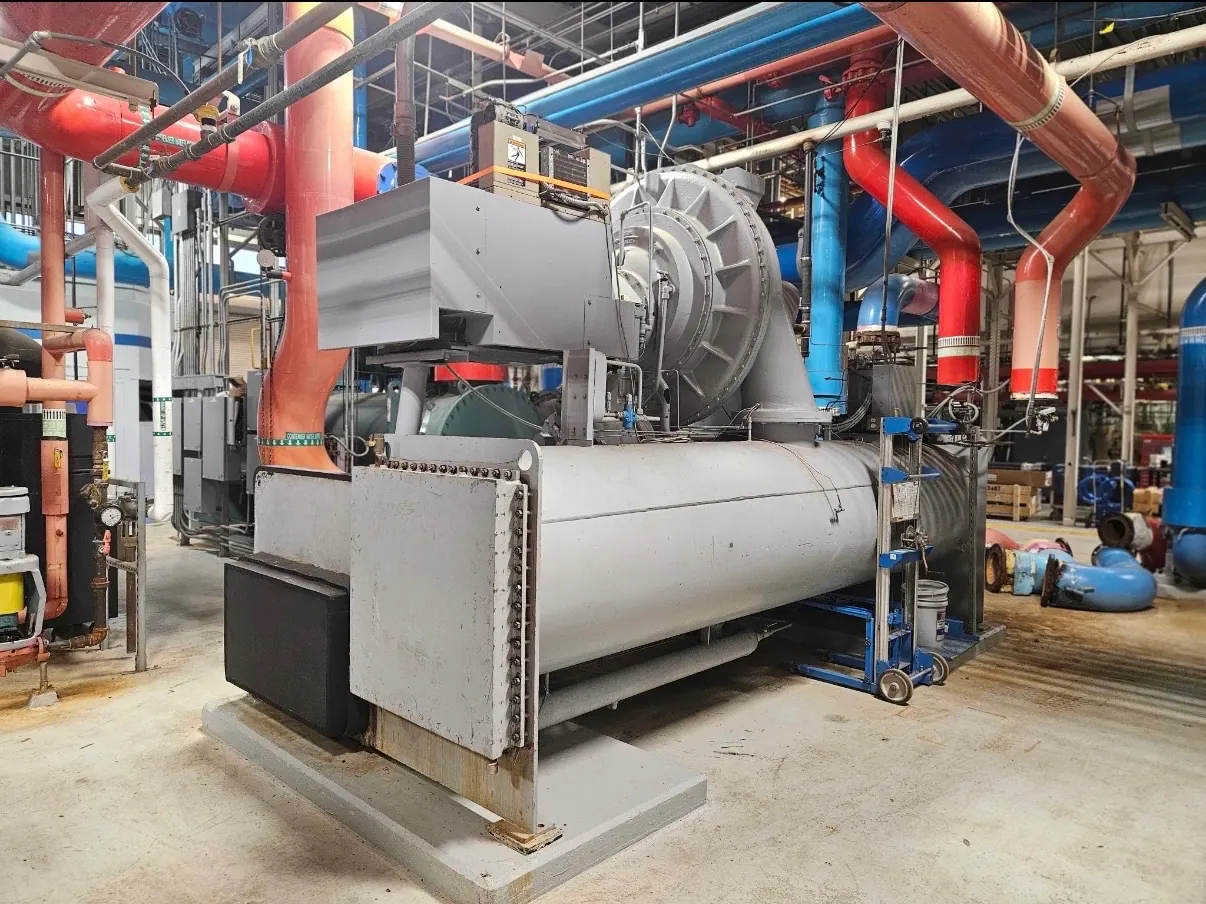
We buy McQuay chillers in Texas for projects involving cash offers. We offer upfront payment, handle removal, and do not require seller testing.
From first photo to final haul, we take care of the details so you can move forward.
Share a nameplate photo, the location, and whatever you know about your equipment. No testing is required from you.
We review the chiller and your site information, then make an offer. Payment is upfront.
We handle disconnects, refrigerant recovery, crane and rigging, loading, freight and hauling.
When a McQuay chiller is due to leave service, its removal can affect the schedule for replacement equipment, building access, and any systems that must keep running. Start by identifying which unit is being sold and when the space needs to be clear. We buy used McQuay water-cooled and air-cooled chillers in Texas, including idle and non-running equipment. A model name alone does not establish condition, value, or whether a purchase is workable; each unit and collection scope is reviewed individually.
If several chillers or associated components are involved, list what is included and what must remain. That distinction helps keep the proposed purchase and removal scope aligned with the facility’s plans.
Begin with information already available: model and serial numbers, cooling capacity, refrigerant markings, approximate age if known, and any service records or control details. A clear nameplate photograph can help identify the machine. Add wide photographs showing the full unit and close views of visible damage, removed panels, or missing parts. If a plate is unreadable or records are incomplete, say so rather than guessing.
Describe the known operating history plainly. Note whether the chiller is running, idle, shut down, or non-running, and mention known leaks, alarms, repairs, or changes to its configuration. You do not need to restart, test, clean, repair, or open the refrigerant circuit to request a review. Do not vent refrigerant.
Cooling capacity, commonly stated in tons, measures refrigeration output; it does not indicate the machine’s weight. The actual dimensions, construction, shipping arrangement, and route out of the building all matter to handling. Share available drawings or equipment dimensions, but mark estimates as estimates. Avoid relying on capacity alone to judge whether a chiller will fit through a doorway or what equipment removal will require.
Collection planning starts at the installed position and follows the path to the loading area. Tell us whether the unit sits in a mechanical room, on a roof, outdoors, or in storage, and describe doors, corridors, stairs, floor changes, overhead clearance, and the distance to a truck-accessible area. Photos taken from safe, permitted positions can make the route easier to understand.
Conditions at the property may affect the method and timing. A narrow opening, elevated installation, limited staging space, shared dock, active production area, or restrictions on truck access could require additional coordination. Identify operating hours, delivery periods, required escorts, and any areas that must remain clear. The authorized site contact can confirm access rules and approvals before a collection window is agreed.
Tell us what utilities and piping remain connected, which nearby equipment must stay in service, and whether shutdowns need approval. Do not disconnect the chiller or arrange refrigerant handling on our behalf unless that is part of separately agreed terms. For an agreed purchase, we coordinate appropriate refrigerant recovery with qualified personnel, as well as disconnects, rigging, crane work when needed, loading, freight, and hauling.
The buyer is responsible for the equipment work within the agreed scope. The seller or site supplies accurate information, an authorized contact, permitted access, applicable site rules, and necessary approvals. Actual recovery and removal procedures depend on the equipment and property. If access or operating limits are uncertain, flag them early so the plan can be checked before scheduling.
A cash offer depends on the specific chiller and the project after review; it is not automatic or guaranteed. Condition, included components, refrigerant information, access, handling requirements, and transport all help shape the assessment. We consider a range of used industrial and commercial equipment, generally from 20 to more than 2,000 cooling tons, and consider all refrigerants. Those ranges do not promise that every unit will be purchased.
Before work begins, confirm which equipment is included, the agreed amount and payment terms, the removal responsibilities, and the collection window with the authorized seller. If a purchase is agreed, payment is made upfront before pickup under the agreed terms. No payment or collection arrangement should be assumed until both sides have confirmed it.
Gather the identification details you have, a few useful photographs, a straightforward condition summary, and a description of the route and site restrictions. Include the Texas location and the name of the person authorized to discuss the equipment and access. If some details are unknown, identify them as unknown; a complete service file is not required to begin. This gives the buyer a practical basis to review the McQuay chiller, clarify open questions, and discuss whether an offer and coordinated removal make sense for the planned changeover.

Air-cooled or water-cooled. Centrifugal, screw or scroll. From single units to large shutdown projects, we buy industrial chillers across Texas.
Send us your chiller details and nameplate photos for a cash offer. Don’t worry if you don’t know every specification—we can start with what you have.
Call or text(614) 715-3047TEXT NAMEPLATE PHOTOS ↗Prefer email?
saleselectricalbuyers@gmail.com