
SEND THE DETAILS
Share a nameplate photo, the location, and whatever you know about your equipment. No testing is required from you.
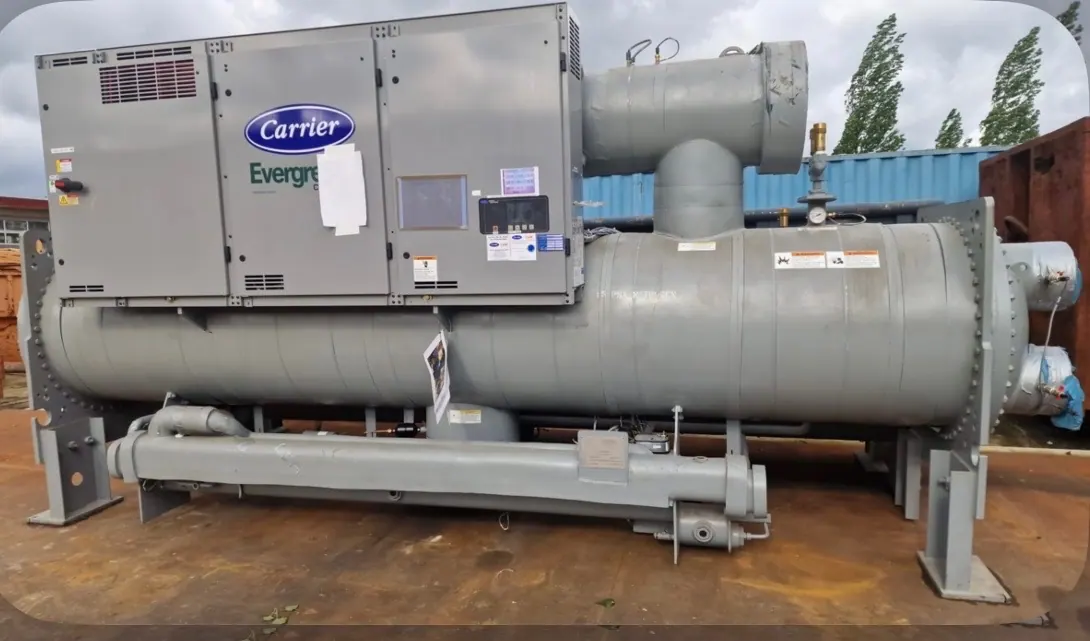
We buy McQuay chillers in Texas for projects involving non-running equipment. We offer upfront payment, handle removal, and do not require seller testing.
From first photo to final haul, we take care of the details so you can move forward.
Share a nameplate photo, the location, and whatever you know about your equipment. No testing is required from you.
We review the chiller and your site information, then make an offer. Payment is upfront.
We handle disconnects, refrigerant recovery, crane and rigging, loading, freight and hauling.
A McQuay nameplate is a useful starting point, not a condition report. Send a clear photo of the plate if it is reachable safely, along with wider views showing the complete chiller and its setting. Model and serial information, approximate capacity, and any records already on hand can help us understand what is being offered. If the plate is unreadable or missing, share what you know; do not remove covers or open the refrigerant circuit to find more information.
We buy used industrial and commercial water-cooled and air-cooled chillers, including McQuay centrifugal, screw, and scroll equipment. Units generally range from 20 to 2,000-plus cooling tons, and we consider all refrigerants. Cooling tons describe capacity, not the machine’s physical weight. Shipping weight and lift requirements need to be established from suitable equipment information, not inferred from tonnage or a photograph.
A chiller that will not start, has been shut down, or is already idle can still be considered. You do not need to run it, arrange a performance test, repair a fault, or restart it for our review. Tell us what is known about its last operating condition, why it was taken out of service if that information is available, and whether components appear to be missing. Distinguish confirmed details from estimates; a short, candid account is more useful than guessing at a diagnosis.
Condition affects the assessment, but a working machine is not the only kind we consider. Information about prior service, modifications, stored parts, or decommissioning can help explain what is present. If records are incomplete, say so and provide current photos from safe viewpoints. We review the actual equipment and project before making any offer; a purchase is not guaranteed.
Before discussing removal, identify exactly what is included. A chiller may sit beside pumps, controls, piping, electrical gear, or another unit, and ownership or project scope may differ for each. Mark the equipment you intend to sell in photos and list accessories you believe belong with it. Also point out nearby items that must remain. This helps keep the purchase discussion and removal plan focused on the same assets.
If the chiller has been partly dismantled or disconnected, describe what has already been done and who authorized the work. Do not assume adjacent equipment is part of the transaction just because it is connected or nearby. Scope should be agreed with the person authorized to represent the property before removal is scheduled.
A useful access description follows the chiller from its present position to the planned loading area. Photos can show doorways, corridors, stairs, overhead clearance, outdoor turns, gates, and the surface where a truck might need to stand. Note known restrictions such as limited access hours, escorts, permits, reserved loading areas, or occupied spaces. These details matter whether the machine is in a mechanical room, on a roof, or already outdoors.
For a difficult route, share available dimensions and explain what is known about the building’s access rules. Do not move the unit or clear a path yourself to make an initial review easier. The appropriate handling plan depends on the actual chiller, route, surroundings, and site requirements; rigging or crane work may be needed in some cases, but that is determined during project review.
A non-running chiller may still contain refrigerant and remain connected to electrical, water, or other services. You do not need to test the machine or arrange refrigerant recovery before asking about a sale. Do not vent refrigerant or open the circuit. If you know whether the unit is charged, partially recovered, or disconnected, include that information; if not, simply say it is unknown.
When a purchase is agreed, we coordinate appropriate refrigerant recovery with qualified personnel and handle the equipment work needed for disconnects, rigging, loading, freight, and hauling. The work sequence depends on the equipment and the site. The seller or site team provides accurate information, authorized access, applicable site rules, and necessary approvals; our team coordinates the removal work with the authorized site contact.
A cash offer depends on the identified asset, known condition, included equipment, and removal requirements. It follows an actual project review, so photos or a preliminary discussion should not be treated as a guaranteed offer. If we agree to purchase the chiller, payment is made upfront before pickup on the terms agreed with the seller.
To begin, gather a nameplate photo if available, several clear views, a brief condition summary, and an outline of the access route and site requirements. Share what is known about refrigerant and connections without disturbing them. We can review that information, clarify the equipment boundary and removal scope, and discuss whether the project is suitable for an offer.

Air-cooled or water-cooled. Centrifugal, screw or scroll. From single units to large shutdown projects, we buy industrial chillers across Texas.
Send us your chiller details and nameplate photos for a cash offer. Don’t worry if you don’t know every specification—we can start with what you have.
Call or text(614) 715-3047TEXT NAMEPLATE PHOTOS ↗Prefer email?
saleselectricalbuyers@gmail.com