
SEND THE DETAILS
Share a nameplate photo, the location, and whatever you know about your equipment. No testing is required from you.
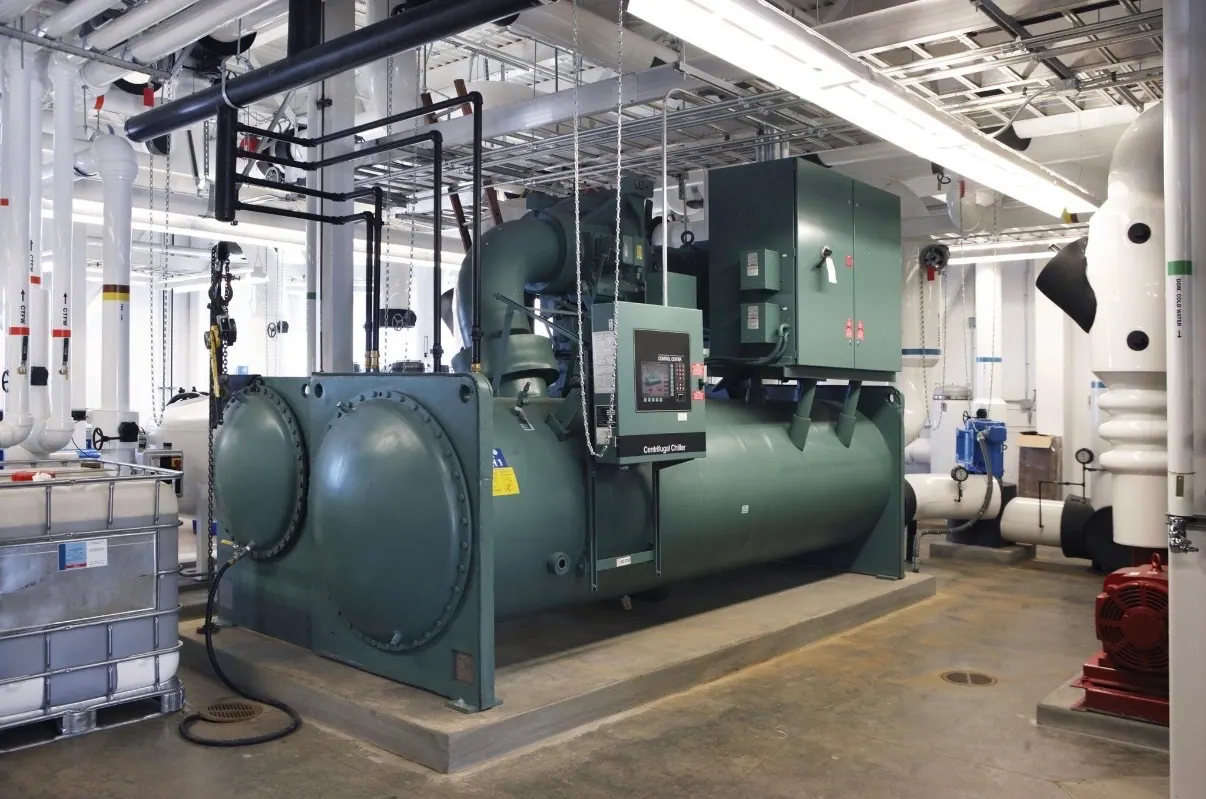
We buy chillers in basement plants in San Antonio, Texas, with cash offers and upfront payment when a purchase is agreed. We handle removal, and the seller does not need to test the equipment.
From first photo to final haul, we take care of the details so you can move forward.
Share a nameplate photo, the location, and whatever you know about your equipment. No testing is required from you.
We review the chiller and your site information, then make an offer. Payment is upfront.
We handle disconnects, refrigerant recovery, crane and rigging, loading, freight and hauling.
A chiller in a basement plant can be saleable even when it is idle or no longer runs. The first useful question is often how the equipment could leave the building: through which opening, along what route, and past which fixed obstacles. A description and photographs can begin a review without requiring a startup, repair, or refrigerant-circuit work.
We buy used industrial and commercial water-cooled and air-cooled chillers, including centrifugal, screw, and scroll units. Equipment generally ranges from 20 to more than 2,000 cooling tons, and all refrigerants are considered. A potential purchase remains subject to review of the specific machine, what is included, and the removal conditions.
In a basement plant, a chiller may sit beside pumps, piping, electrical gear, or other equipment that must remain. Identify exactly which unit is being offered and note any accessories that are included. If the plant serves shared or district cooling, point out connected systems and explain who can authorize isolation. Do not assume that nearby equipment or common infrastructure is part of the sale.
The seller, the authorized site contact, and the equipment buyer may have different responsibilities. The seller should be able to confirm authority to offer the asset; the site contact can explain access, operating restrictions, and required approvals. Accurate information about those boundaries helps establish a workable scope before a pickup is scheduled.
Send clear photos of the chiller’s nameplate, overall condition, and its route toward an exit. Include stairs, ramps, doorways, corridor turns, low ceilings, and any opening or lift that may be part of the route. If dimensions or structural limits are documented, share them; avoid guessing about load capacity or whether a freight elevator can carry the unit.
Basement removal can depend on more than the machine’s footprint. A narrow turn, a change in floor level, limited overhead clearance, or a restricted work window could affect the handling plan. Cooling tons measure capacity, not equipment weight. If verified shipping or lifting weights are available, provide them; otherwise, say they are unknown.
Tell us whether the chiller is operating, idle, disconnected, or known to be damaged, and share any service or storage history you have. Missing records do not prevent an initial conversation. Photographs can document visible corrosion, damaged panels, or loose components without powering up the machine.
Do not run, repair, clean, or restart equipment just to request consideration. Do not vent refrigerant or open the circuit. The actual refrigerant charge and system condition may not be known from a label or an old service record; qualified personnel coordinate appropriate recovery as part of an agreed removal scope.
If a purchase is agreed, payment is made upfront before pickup on terms agreed by both sides. We arrange and handle the equipment work: appropriate refrigerant recovery, disconnects, rigging, crane work when needed, loading, freight, and hauling. The seller does not need to hire a recovery contractor, arrange a crane, or deliver the chiller.
The site still has an important role in making the handoff safe and authorized. The designated contact supplies accurate access information, site rules, required approvals, and coordination with affected facility personnel. Where other plant equipment remains in service, isolation and removal timing should follow the site’s approved procedures. The removal method is determined for the actual machine and route, not assumed in advance.
A useful first package does not have to be elaborate. Provide the equipment identification if available, a few condition photos, the known operating status, and a short description of the route out. Add the name or role of the authorized seller and site contact, whether the chiller is connected, and any known access hours or restrictions.
Also distinguish confirmed facts from open questions. For example, note whether a doorway has been measured or whether its clearance is still unknown. If the building has a deadline for clearing the area, include the date if it is established. That context can help the parties discuss timing without treating an unverified schedule as settled.
A cash offer depends on the particular asset and actual project review; it is not guaranteed. Condition, included components, access, and the work required to remove and haul the unit can all matter. Once the information is reviewed, the next step is to clarify what is included, who can approve the work, and what site conditions must be confirmed before pickup.
To begin, gather the nameplate and route photos, describe what is known about the chiller, and identify the person authorized to coordinate access. You do not need to test the machine or open its refrigerant circuit. Clear early details let the buyer and site contact work toward a practical removal plan for the equipment actually being offered.

Air-cooled or water-cooled. Centrifugal, screw or scroll. From single units to large shutdown projects, we buy industrial chillers across Texas.
Send us your chiller details and nameplate photos for a cash offer. Don’t worry if you don’t know every specification—we can start with what you have.
Call or text(614) 715-3047TEXT NAMEPLATE PHOTOS ↗Prefer email?
saleselectricalbuyers@gmail.com