
SEND THE DETAILS
Share a nameplate photo, the location, and whatever you know about your equipment. No testing is required from you.
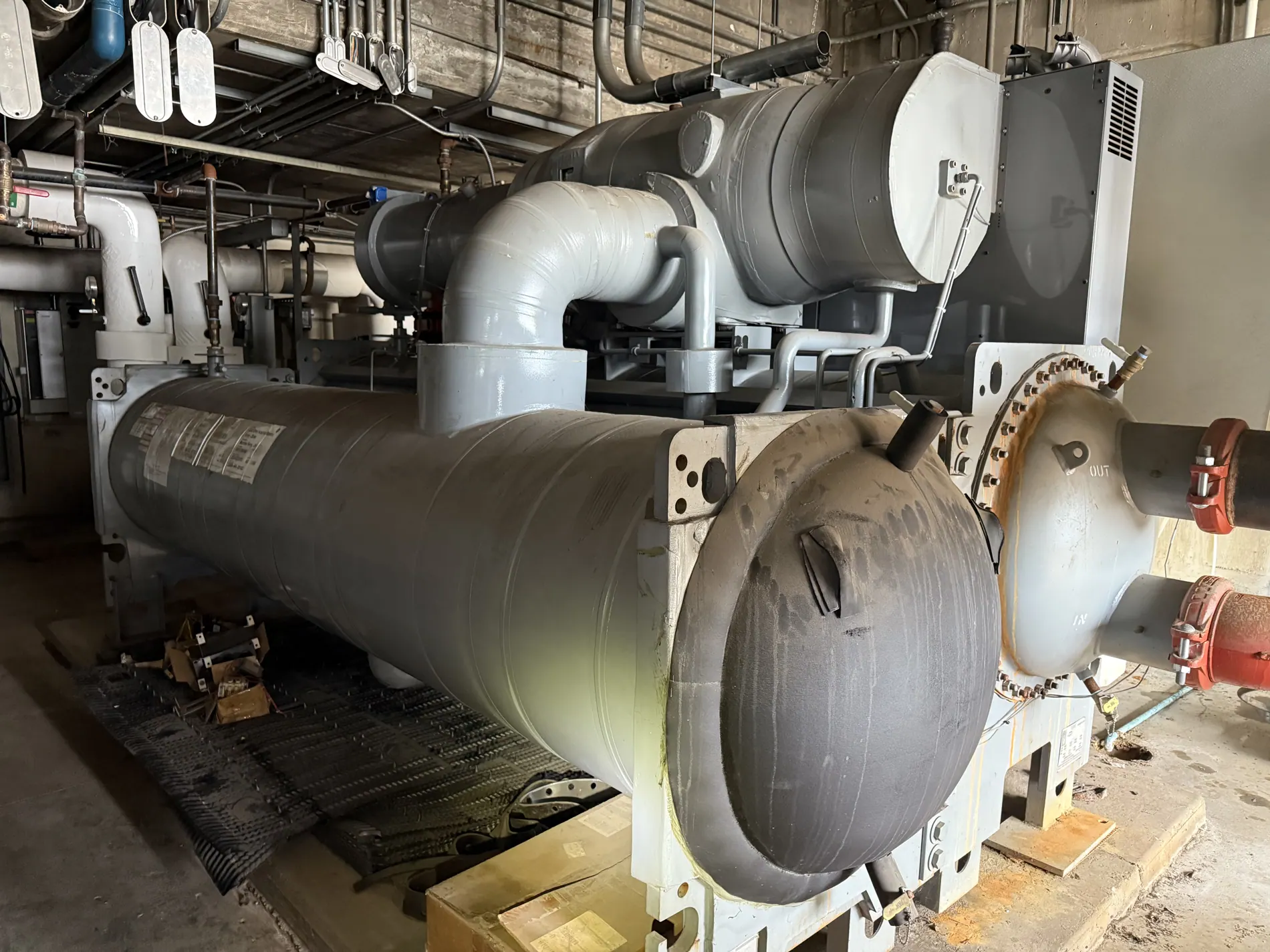
We buy chillers in basement plants in Houston, Texas, with cash offers and upfront payment when a purchase is agreed. We handle removal, and the seller does not need to test the equipment.
From first photo to final haul, we take care of the details so you can move forward.
Share a nameplate photo, the location, and whatever you know about your equipment. No testing is required from you.
We review the chiller and your site information, then make an offer. Payment is upfront.
We handle disconnects, refrigerant recovery, crane and rigging, loading, freight and hauling.
A basement chiller is two things to review: a cooling asset and a piece of equipment that must be removed through a real building. For an initial review, clear photographs help answer those questions without asking your staff to start or test the machine. We buy used commercial and industrial chillers, including basement-installed units in Houston, and consider idle and non-running equipment.
Photograph the manufacturer nameplate straight on, with enough detail to read the model, serial number, capacity, and refrigerant information where shown. Add a wider view of the whole assembly and any separate components that may be included. The label helps identify what the unit is; it does not establish its present condition or confirm what refrigerant remains in the circuit. If any information is unreadable, say so rather than guessing.
Machine photographs and route photographs do different jobs. A close view can show connections, visible damage, missing panels, or attached accessories. Wider views help place the chiller in its room and show nearby obstructions. Route images should trace the likely path outward: the room exit, corridors or ramps, doors and turns, changes in floor level, and the eventual loading area, if known.
Take pictures from safe, accessible positions. Do not climb onto the equipment, move piping, remove guards, or enter a restricted area to improve a photograph. Include a recognizable reference for scale where practical, and mention approximate opening dimensions only if they have been measured. A photograph can reveal a tight turn or low clearance, but it cannot verify floor capacity, equipment weight, or structural suitability.
Along with the images, share the unit’s location within the property, any available records, known operating status, and which components are part of the proposed sale. Note whether the chiller is intact, partly dismantled, modified, or accompanied by items such as pumps or a control panel. Distinguish observations from older records: a past refrigerant entry or service report may not describe the charge or condition today.
There is no need to run the machine, repair it, restart it, or open a refrigerant circuit for review. If its operating history is missing, say that plainly. We consider a range of equipment, generally from 20 to more than 2,000 cooling tons, including centrifugal, screw, and scroll chillers, and consider all refrigerants. Cooling tons describe capacity, not the chiller’s physical weight.
A removal plan depends on the particular machine and its surroundings. The route might involve a service elevator, a ramp, temporary disassembly, a larger opening, or lifting through an exterior access point; none can be assumed from the word “basement.” Elevator dimensions and rated capacity, doorway clearance, turning space, overhead services, and the route to a loading position may all matter. If you have drawings or site restrictions, they can help frame the review, but the actual project determines what is workable.
Tell us whether the route crosses occupied or shared areas, whether access is limited to certain hours, and whether a loading space or lift area needs approval. Mention known floor or structural restrictions without attempting to assess them yourself. Where measurements, lift points, or weight are unknown, identify that uncertainty so the removal approach can be checked before work is scheduled.
If a purchase is agreed, we coordinate the equipment work with the authorized site contact. We arrange appropriate refrigerant recovery using qualified personnel and handle the agreed disconnects, rigging, crane work when needed, loading, freight, and hauling. The specific method depends on the chiller and the site. Do not vent refrigerant or open the circuit; the seller does not need to hire a recovery contractor, crane, or hauler to begin the review.
The site contact supplies accurate information, authorized access, applicable safety rules, and necessary property approvals. A property may require an escort, orientation, permit, isolation procedure, or approved work window; share the requirements that actually apply. Electrical and piping interfaces should be coordinated with the people authorized to manage them at the facility. This keeps the equipment-removal scope distinct from the site’s approval and access responsibilities.
A cash offer is based on review of the specific asset, its known condition, included components, available information, and removal scope. It is not guaranteed, and not every machine will be purchased. If both sides agree to a purchase, payment is made upfront before pickup on the agreed terms. The equipment does not need to be made operational as a condition of starting the conversation.
To take the next step, gather the nameplate image, overall equipment views, route photographs, and a short note about what is included and what is known about the unit. Add any available access drawings or site rules, and identify the authorized person who can discuss the property’s requirements. That gives the buyer a practical starting point to review the chiller and the path out of the basement without asking your team to prepare or test it first.

Air-cooled or water-cooled. Centrifugal, screw or scroll. From single units to large shutdown projects, we buy industrial chillers across Texas.
Send us your chiller details and nameplate photos for a cash offer. Don’t worry if you don’t know every specification—we can start with what you have.
Call or text(614) 715-3047TEXT NAMEPLATE PHOTOS ↗Prefer email?
saleselectricalbuyers@gmail.com