
SEND THE DETAILS
Share a nameplate photo, the location, and whatever you know about your equipment. No testing is required from you.
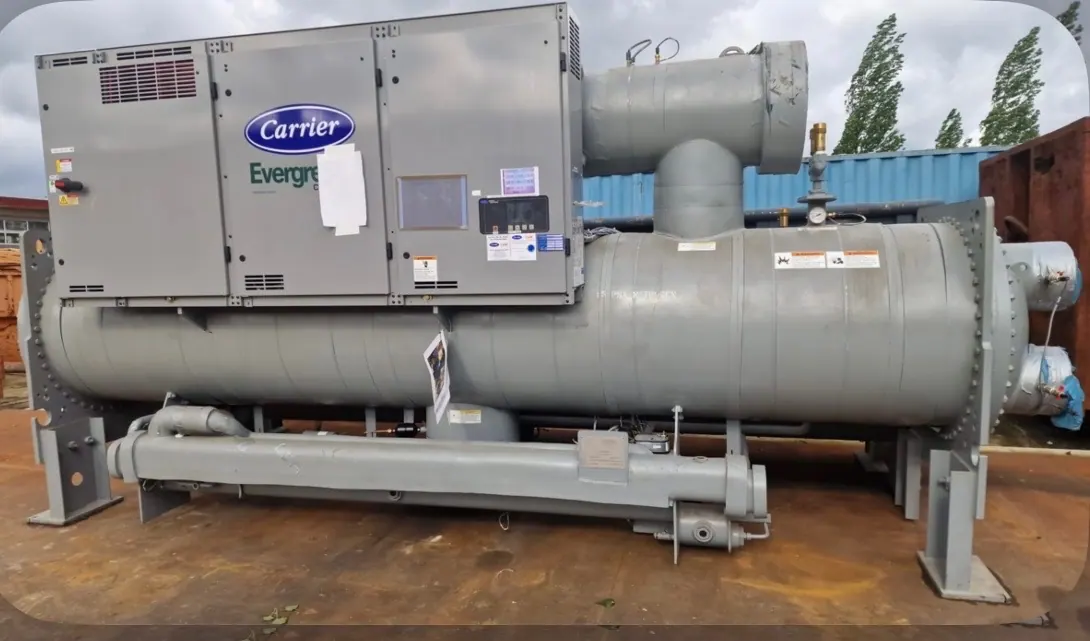
We buy chillers in restricted-access sites in Houston, Texas, with cash offers and upfront payment when a purchase is agreed. We handle removal, and the seller does not need to test the equipment.
From first photo to final haul, we take care of the details so you can move forward.
Share a nameplate photo, the location, and whatever you know about your equipment. No testing is required from you.
We review the chiller and your site information, then make an offer. Payment is upfront.
We handle disconnects, refrigerant recovery, crane and rigging, loading, freight and hauling.
Before arranging access for a chiller review in Houston, identify exactly what you would sell. A water-cooled or air-cooled machine may be offered on its own, or the proposed sale may include components removed with it. Note whether pumps, a starter, a variable-frequency drive, controls, or other equipment are part of the transaction; do not assume connected plant equipment belongs with the chiller.
Record the manufacturer, model, serial number, cooling capacity, and refrigerant if those details are readily available. A label photo can help, but do not open a panel or disturb a refrigerant circuit to find information. We consider centrifugal, screw, and scroll chillers, generally from 20 to 2,000-plus cooling tons, and consider all refrigerants. Capacity is not shipping weight, so tonnage alone cannot establish what removal will involve.
Tell us whether the unit is operating, idle, or known to be non-running. Share what you know about its history, condition, previous repairs, missing parts, and whether it remains connected to utilities. If details are uncertain, say so rather than trying to diagnose the equipment. You do not need to start, test, repair, or restart a chiller to have it considered.
Include clear, current photographs when possible: the whole machine, its identification plate, surrounding clearances, and the route toward the planned exit or loading point. Images should show the setting without requiring anyone to enter a hazardous area. They help with an initial review, but do not replace confirmation of site conditions and access before removal.
“Restricted access” can mean different things from one property to another. Explain the actual rules: gate controls, badging, escorts, permits, approved work hours, advance notice, or limits on vehicle entry, if applicable. Identify the site representative authorized to confirm procedures and approve access. If the chiller is in a secured room, on a roof, or behind other equipment, mention that and describe how the area is reached.
Then trace the proposed route from the machine to a place where freight can be loaded. Door widths and heights, stairs, corridors, overhead obstructions, floor or roof limits, turning room, and exterior staging space may matter. Note shared areas that need to stay open and equipment or operations that cannot be disturbed. A route can look clear in a photograph yet have a restriction that only the site contact can confirm.
If the chiller is part of a larger cooling system, identify its boundary as carefully as the sale boundary. Connections to piping, electrical service, controls, or adjacent equipment may need site coordination; the buyer does not decide which building systems may be shut down. Tell us what must remain in service and who can approve the equipment-side disconnect. The agreed scope should name the machine and any included components, rather than leave those decisions to pickup day.
This is especially useful when a unit is being removed during a plant change or from an occupied facility. Share the target schedule, likely access windows, and any handoff milestones known to the authorized contact. A proposed date is not a confirmed removal plan; timing, permits, access, and handling arrangements must be reviewed against the actual project.
Do not vent refrigerant, open the circuit, or arrange a restart as a condition of requesting review. If a purchase is agreed, we coordinate appropriate refrigerant recovery with qualified personnel, along with disconnects, rigging, crane work when needed, loading, freight, and hauling. The plan depends on the machine’s configuration, condition, surroundings, and the site’s approved procedures, which are not known until details are supplied and reviewed.
The buyer is responsible for the equipment work. The seller or site provides accurate information, authorized access, applicable site rules, and necessary approvals. That division allows the site contact to explain constraints while the removal team plans the physical work. If access requires escorts or a limited work window, those arrangements should be resolved before a pickup is scheduled.
A cash offer depends on the asset and an actual project review; it is not guaranteed by location, capacity, refrigerant, or apparent condition. Equipment details and removal demands are considered together. If both sides agree to a purchase, payment is made upfront before pickup, on the agreed terms. Confirm who can authorize the sale, which items are included, and the agreed access and pickup conditions before work begins.
Gather the label information you have, a few safe photographs, a brief condition description, the equipment boundary, and a practical account of site restrictions and the route out. Add the name or role of the authorized site contact and the timing you hope to meet. With that information, the chiller and removal scope can be reviewed without asking you to test the machine or organize recovery, rigging, or freight.

Air-cooled or water-cooled. Centrifugal, screw or scroll. From single units to large shutdown projects, we buy industrial chillers across Texas.
Send us your chiller details and nameplate photos for a cash offer. Don’t worry if you don’t know every specification—we can start with what you have.
Call or text(614) 715-3047TEXT NAMEPLATE PHOTOS ↗Prefer email?
saleselectricalbuyers@gmail.com