
SEND THE DETAILS
Share a nameplate photo, the location, and whatever you know about your equipment. No testing is required from you.
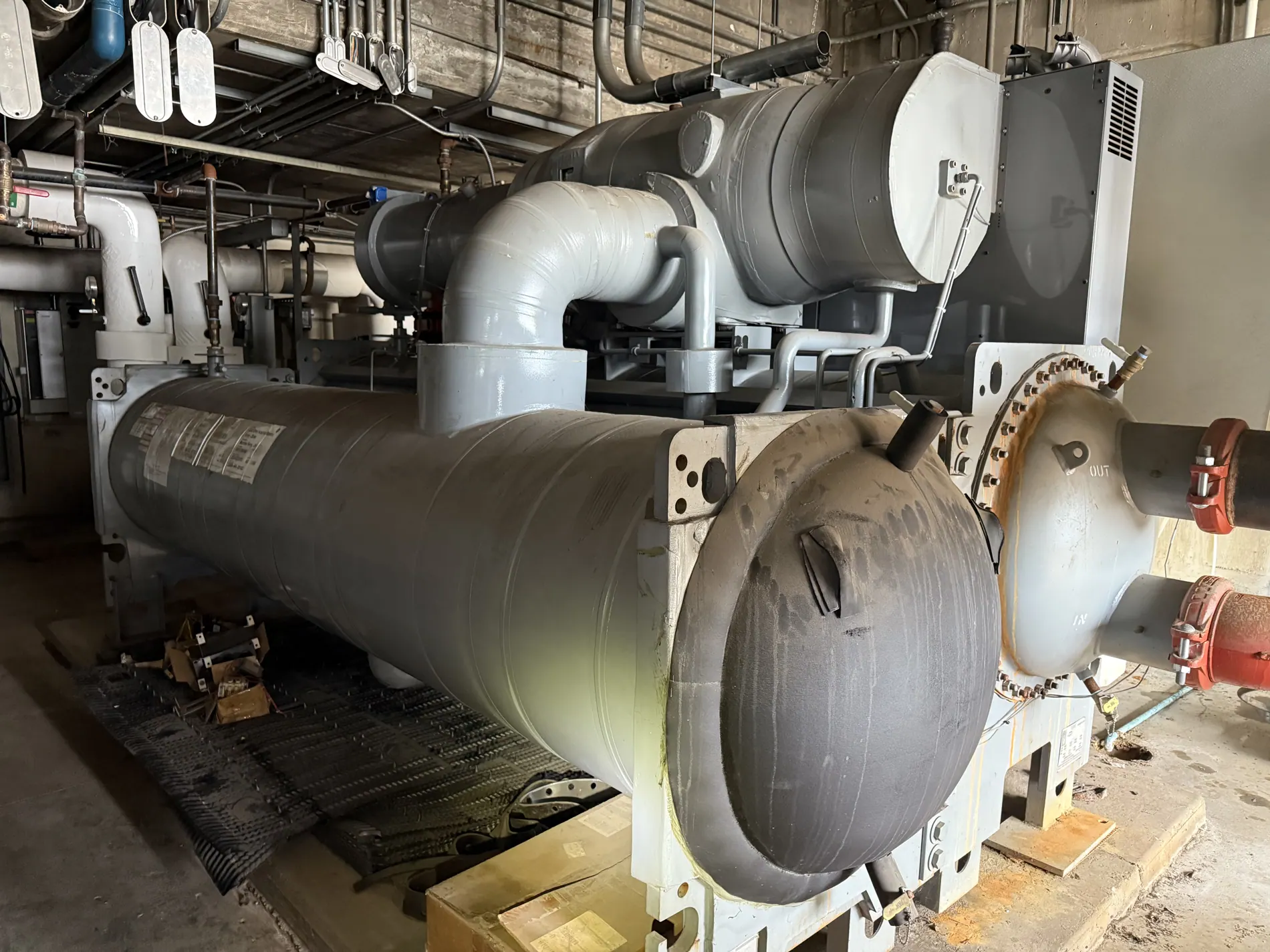
We buy Aaon chillers in Texas for projects involving non-running equipment. We offer upfront payment, handle removal, and do not require seller testing.
From first photo to final haul, we take care of the details so you can move forward.
Share a nameplate photo, the location, and whatever you know about your equipment. No testing is required from you.
We review the chiller and your site information, then make an offer. Payment is upfront.
We handle disconnects, refrigerant recovery, crane and rigging, loading, freight and hauling.
A non-running Aaon chiller can still be considered for purchase. It may be idle, awaiting replacement, or unable to start; none of those conditions requires you to restart or repair it before asking for a review. The first useful step is to identify the specific machine and separate it from equipment that is staying at the property.
Send the model and serial information from the equipment plate if it is accessible, along with any capacity details you already have. A cooling ton describes capacity, not the chiller’s weight, so tonnage alone does not establish what lifting or transport will require. Photos of the complete unit, its connections, and nearby equipment help clarify the scope.
Share the known operating history, reason it stopped running, visible damage, and any parts that have been removed. If the refrigerant type or remaining charge is uncertain, say so rather than guessing. An accurate account of what is known helps us review the asset; gaps in its history do not mean you should run it to find answers.
We consider water-cooled and air-cooled chillers, including centrifugal, screw, and scroll equipment, across a broad range of capacities. Refrigerant type and whether the unit currently runs are part of the review, not automatic reasons to rule it out. Any purchase remains subject to the equipment and project review, and an offer is not guaranteed.
Identify what is included in the proposed sale: the chiller itself, any associated components, and the area or connections involved in removing it. If other machinery shares a skid, pad, room, or piping arrangement, mark what must remain. Clear boundaries help prevent the removal plan from drifting into work on adjacent systems.
Connections and isolation points depend on the actual installation. We coordinate appropriate refrigerant recovery with qualified personnel and arrange the equipment work, including disconnects, rigging, crane work when needed, loading, freight, and hauling. The seller does not need to perform these tasks or hire a separate recovery or removal crew for us.
Do not vent refrigerant or open the chiller’s refrigerant circuit. If the system’s contents or status are unknown, leave it as found and report the uncertainty. The equipment’s condition and charge must be assessed as part of planning; they cannot be safely inferred from the fact that it is not operating.
The authorized site contact is central to coordinating access, work rules, and timing. Provide the applicable check-in process, restricted areas, required approvals, and any limits on when crews or vehicles may enter. If a tenant, property manager, owner, or contractor controls different parts of the work, identify who can approve access and who can authorize the sale.
Removal needs depend on the real route from the chiller to loading. A unit in a mechanical room may have tight doors or overhead obstructions; an exterior installation may have limited room for a truck or crane. Photos of the route, approximate clearances, floor or roof access, and any known lifting restrictions can help establish what needs review without assuming a particular method.
Tell us whether the facility will remain occupied and which equipment, corridors, or work areas must stay available. Site staff supply accurate information, authorized access, applicable rules, and necessary approvals. We coordinate the chiller work around those boundaries and the agreed schedule; the location and removal method are confirmed for the specific project.
A cash offer depends on the asset and the complete project review, including known condition, configuration, access, and removal requirements. It is not a promised amount. Before work begins, the parties should agree on which equipment is being purchased, access arrangements, and the terms of the transaction.
If a purchase is agreed, payment is made upfront before pickup, on the agreed terms. That sequence gives both sides a defined handoff: the seller authorizes the equipment transfer and site access, and the removal proceeds under the coordinated plan. No seller-run test, repair, or restart is needed as a condition of requesting consideration.
To start, gather the plate information, a few clear photographs, what you know about the unit’s condition and refrigerant, and the name or role of the person authorized to coordinate access. Include any deadline or site restriction that could affect scheduling. If a detail is unavailable, note that rather than filling in a guess. Those basics allow us to review the Aaon chiller as it stands and discuss whether the equipment and removal project fit a purchase.

Air-cooled or water-cooled. Centrifugal, screw or scroll. From single units to large shutdown projects, we buy industrial chillers across Texas.
Send us your chiller details and nameplate photos for a cash offer. Don’t worry if you don’t know every specification—we can start with what you have.
Call or text(614) 715-3047TEXT NAMEPLATE PHOTOS ↗Prefer email?
saleselectricalbuyers@gmail.com