
SEND THE DETAILS
Share a nameplate photo, the location, and whatever you know about your equipment. No testing is required from you.
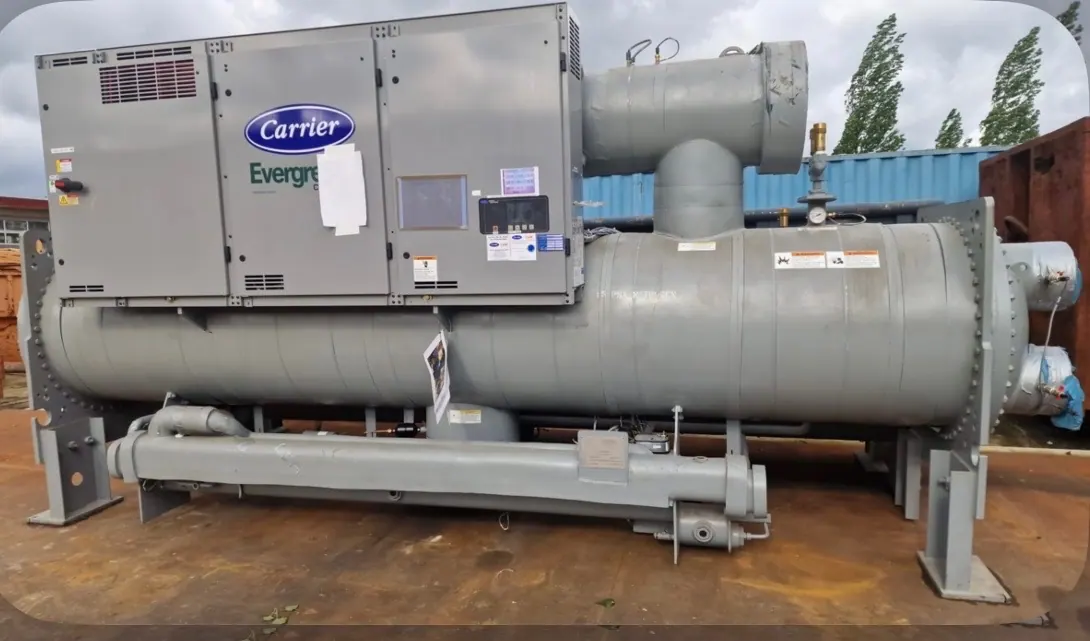
We buy Aaon chillers in Texas for projects involving decommissioning. We offer upfront payment, handle removal, and do not require seller testing.
From first photo to final haul, we take care of the details so you can move forward.
Share a nameplate photo, the location, and whatever you know about your equipment. No testing is required from you.
We review the chiller and your site information, then make an offer. Payment is upfront.
We handle disconnects, refrigerant recovery, crane and rigging, loading, freight and hauling.
When an Aaon chiller is approaching retirement in Texas, a few clear records can make an initial review more useful. The goal is to identify the equipment being offered and understand how it could be removed—not to prove that it still runs. We buy used industrial and commercial chillers, including idle and non-running units, and consider equipment across a range of sizes and refrigerants. Any offer depends on the asset and a review of the actual project.
Photographs and labels answer different questions. A wide view shows the unit’s arrangement, nearby equipment, and possible obstacles. Close, readable photographs of the equipment plate help identify the make, model, serial number, and rated capacity. If the plate is faded or inaccessible, send the clearest image you can safely take and say what remains uncertain. Do not open panels or approach an unsafe area to get a better shot.
A picture may show several chillers, pumps, piping, or electrical components together; it does not establish what is included in a sale. Mark the Aaon unit under consideration and note which adjacent assets must stay. If more than one unit is available, photograph and identify each separately. A brief description of known operating status, removal plans, and any available service history adds context, but testing or restarting the chiller is not required.
Capacity is useful identification information, but cooling tons measure refrigeration capacity—not shipping weight. Do not estimate lift weight from the tonnage or a photo. If you have a documented equipment weight or dimensions, share them as supporting information; the handling plan must be based on suitable equipment details and site review.
Labels tell us what the chiller is; route information helps explain how it might leave. Provide a sequence of photographs from the installation toward the loading or staging area, taken from safe, permitted positions. Include gates, doorways, stairs, roof edges, overhead clearances, turning areas, and visible obstructions when they affect the path. A simple marked-up site image can distinguish the intended route from other access ways.
For a rooftop installation, useful context may include roof access, the route to ground level, possible staging space, and visible overhead obstacles. Crane placement and lifting feasibility cannot be settled by a street-side image alone; actual conditions and site approvals need review. For an indoor or crowded mechanical area, doorway widths, turns, and the relationship to nearby operating equipment may matter more than a long-distance exterior view.
If the chiller sits at an active property, explain what must remain in service and identify the authorized site contact who can confirm work boundaries, access rules, approvals, and a suitable schedule. The facility may have restrictions involving operating hours, loading areas, occupied spaces, security, noise, or other site procedures. Mention those that apply rather than assuming the whole plant can be shut down. Nearby equipment and services are not presumed to be part of the transaction.
A proposed pickup window is helpful, but the removal sequence depends on the actual installation and agreed site conditions. The authorized contact supplies accurate information and arranges necessary access and approvals. We coordinate the equipment work with that contact so the scope and permitted route are understood before work begins.
Do not vent refrigerant or open the chiller’s refrigerant circuit. You do not need to test, run, repair, restart, disconnect, or arrange recovery for the unit to request a review. If a purchase is agreed, we arrange appropriate refrigerant recovery with qualified personnel and coordinate disconnects, rigging, crane work when needed, loading, freight, and hauling. The work is handled for the equipment being purchased, within the agreed scope and site requirements.
A cash offer is not automatic. It depends on the equipment and actual project review, including the information available and the removal conditions. If both sides agree to a purchase, payment is made upfront before pickup on the agreed terms. Confirm which Aaon equipment is included, who is authorized to approve the sale, and the access arrangements before scheduling removal.
To begin, send the equipment-plate photographs, overall and route photographs, the unit’s location at the property, and what you know about its condition. Identify what is for sale, what must stay, and any timing or site constraints. If a detail is unknown, label it unknown rather than guessing. That gives us a practical basis to review the chiller, clarify the removal scope, and discuss whether a purchase may be possible—without asking you to prepare the machine for operation.

Air-cooled or water-cooled. Centrifugal, screw or scroll. From single units to large shutdown projects, we buy industrial chillers across Texas.
Send us your chiller details and nameplate photos for a cash offer. Don’t worry if you don’t know every specification—we can start with what you have.
Call or text(614) 715-3047TEXT NAMEPLATE PHOTOS ↗Prefer email?
saleselectricalbuyers@gmail.com