
SEND THE DETAILS
Share a nameplate photo, the location, and whatever you know about your equipment. No testing is required from you.
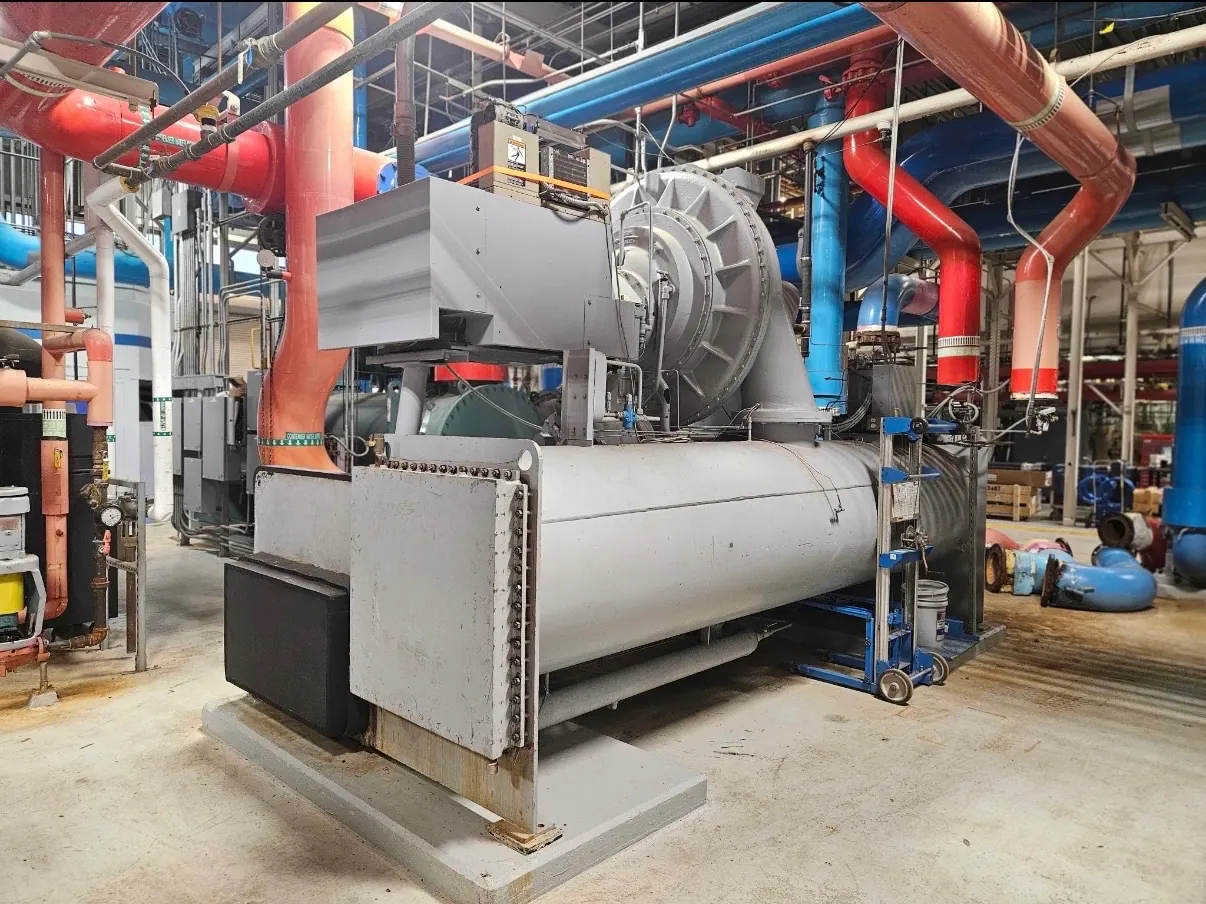
We buy York chillers in Texas for projects involving rigging and lifting. We offer upfront payment, handle removal, and do not require seller testing.
From first photo to final haul, we take care of the details so you can move forward.
Share a nameplate photo, the location, and whatever you know about your equipment. No testing is required from you.
We review the chiller and your site information, then make an offer. Payment is upfront.
We handle disconnects, refrigerant recovery, crane and rigging, loading, freight and hauling.
We buy used York water-cooled and air-cooled chillers in Texas, including centrifugal, screw, and scroll equipment. A York nameplate helps identify a unit, but it does not settle what is installed today or whether a purchase makes sense. Configuration, refrigerant, condition, modifications, and removal access all need to be reviewed against the seller’s information and the actual site.
We generally consider chillers from 20 to 2,000-plus cooling tons and consider all refrigerants. Idle or non-running equipment can also be reviewed; you do not need to test, restart, repair, or clean a machine to begin. A cooling ton measures capacity, not the chiller’s shipping weight, so it cannot establish crane requirements or tell us whether a route will work.
Photographs help answer questions that a model number cannot. A clear, close image of the equipment plate may show the model, serial number, capacity, electrical information, and refrigerant designation. Please include the full plate and make the lettering readable; a tight crop that omits surrounding labels can leave details open to interpretation.
Then step back. A wide photograph of the whole chiller, followed by views of its connections, base, and visible condition, helps show what is included and how it sits in the room or outdoors. Do not remove guards, open a refrigerant circuit, or put yourself in an unsafe position to get a picture. If a label is faded or a configuration has changed, note what you know rather than treating an old document as proof of the present setup.
Route information answers a separate question: how might the equipment reach a loading point? Pictures of the proposed path can reveal turns, doorways, overhead obstructions, adjacent equipment, and outdoor transitions. Where available, add door widths, ceiling clearances, floor or loading-dock details, and drawings. These are planning clues, not a substitute for verifying actual dimensions and lifting conditions.
A chiller may be in a mechanical room, on a roof, in a yard, or in another arrangement; the removal plan depends on what is actually there. Share the route from the equipment to the point where it can be loaded, not only a close-up of the machine. If a crane might be needed, surrounding structures, overhead lines, available setup space, and the lift path can affect whether and how it is used. Do not estimate machine weight from tonnage; available equipment records or drawings can help, but lifting details still need review.
Tell us about obstacles or operating limits you already know: shared corridors, active equipment nearby, restricted work hours, access controls, or areas that must remain open. These details can shape the sequence and timing. The authorized site contact should identify applicable rules, approvals, access arrangements, and any facility-specific requirements. We coordinate the equipment work with that contact rather than assuming the building can be cleared for a crew.
We arrange and handle appropriate refrigerant recovery with qualified personnel, disconnects, rigging, crane work when needed, loading, freight, and hauling. The exact scope follows the machine and site review. Sellers are not expected to hire a recovery contractor, crane company, or hauler as a condition of starting the conversation, nor to disconnect or move the chiller themselves.
Please do not vent refrigerant or open the circuit. The current charge and refrigerant condition are not known until the equipment is reviewed, and recovery must be handled appropriately. Our team coordinates the equipment-side work with the authorized site representative. The seller or site supplies accurate information, authorized access, applicable site rules, and necessary approvals.
A useful first submission includes readable plate photos, a few views of the machine and surroundings, route photographs, and any known dimensions or drawings. Add the York model and serial number in text if legible, describe whether the chiller is operating or idle, and flag anything uncertain. If there are multiple units, identify each one separately so pictures and records do not get mixed together.
We review the asset and removal project before discussing an offer. A cash offer depends on the equipment and actual project review; it is not guaranteed. If we agree to purchase, payment is made upfront before pickup under the agreed terms. Confirm the equipment included, payment terms, site contact, access, and removal scope before work is scheduled. There is no need to prepare the machine by running it or attempting a repair.
Gather the information you can access safely, then send it for review through the available business contact method. Separate what you know from what you are estimating: a documented model number, a measured doorway, and a remembered refrigerant change are different kinds of information. Clear photographs and candid notes let us ask focused questions and assess both the York chiller and the practical route for its removal.

Air-cooled or water-cooled. Centrifugal, screw or scroll. From single units to large shutdown projects, we buy industrial chillers across Texas.
Send us your chiller details and nameplate photos for a cash offer. Don’t worry if you don’t know every specification—we can start with what you have.
Call or text(614) 715-3047TEXT NAMEPLATE PHOTOS ↗Prefer email?
saleselectricalbuyers@gmail.com