
SEND THE DETAILS
Share a nameplate photo, the location, and whatever you know about your equipment. No testing is required from you.
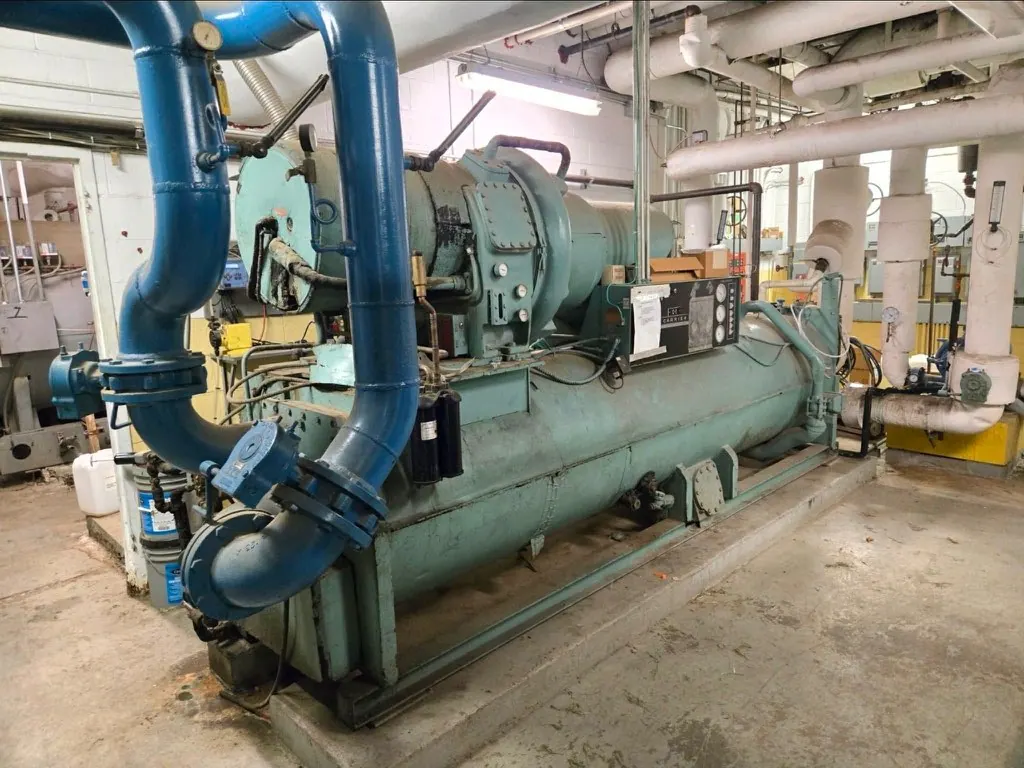
We buy used industrial chillers in Lubbock County, Texas, with cash offers and upfront payment when a purchase is agreed. We handle removal, and the seller does not need to test the equipment.
From first photo to final haul, we take care of the details so you can move forward.
Share a nameplate photo, the location, and whatever you know about your equipment. No testing is required from you.
We review the chiller and your site information, then make an offer. Payment is upfront.
We handle disconnects, refrigerant recovery, crane and rigging, loading, freight and hauling.
A chiller that is idle, disconnected, or no longer needed may still merit a purchase review. We buy used industrial and commercial water-cooled and air-cooled chillers in Lubbock County, including centrifugal, screw, and scroll equipment. Units generally range from 20 to 2,000-plus cooling tons, and we consider all refrigerants. Non-running equipment is also considered; you do not need to test, repair, or restart a machine to begin.
For a first review, send what you can verify and distinguish it from what is uncertain. A legible equipment label, a few overall photographs, and a short description of the unit’s status are more useful than a guessed capacity or refrigerant. If the history is incomplete, say so plainly.
A close, straight-on image of the manufacturer’s data plate can help identify the model, serial number, rated capacity, and refrigerant markings. Keep the full plate in frame and take another image if glare or dirt obscures a line. Don’t remove panels or reach into the machine to get a better view.
Separate views serve different purposes. A broad photograph shows the complete assembly and its position; a closer view can clarify piping, wiring, apparent damage, or missing components. A route photograph should show the path toward the loading area—not just the chiller—from a safe, permitted vantage point. Gates, overhead restrictions, narrow turns, stairs, nearby equipment, and changes in floor level can be worth noting if they apply.
Keep identification images distinct from access images when you send them, and add a brief caption to each. “Data plate,” “north-side clearance,” or “possible loading area” helps connect the evidence to the right question. A capacity marked in cooling tons measures cooling output, not the machine’s lifting weight. Don’t estimate rigging weight from tonnage; share any documented weight if available and let the removal plan account for the actual equipment.
Tell us where the unit sits, whether it appears connected, and what is known about its condition. Mention visible additions or changes, such as attached pumps or piping, only if you can identify them safely. If the installation is in a mechanical room or near active building systems, a site contact can explain what may be isolated and what must remain undisturbed.
Removal planning depends on the actual route and site conditions. If a crane, specialized rigging, or a particular loading position may be needed, photographs and accurate access notes help frame the review; they do not settle the lifting plan by themselves. Tell us about known work-hour limits, shared driveways, security procedures, or a deadline for clearing the area. We’ll coordinate the equipment work with the authorized site contact.
Identify who has authority to sell the chiller and who can approve access, site rules, and the agreed work area. If ownership is changing or several parties are involved, clarify which equipment is included and who can make decisions. This avoids treating nearby assets, building systems, or other property as part of the chiller sale without agreement.
You do not have to hire a refrigerant recovery contractor, crane company, or hauler to start. If a purchase is agreed, we arrange and handle appropriate refrigerant recovery with qualified personnel, along with disconnects, rigging, crane work when needed, loading, freight, and hauling. The seller or site supplies accurate information, authorized access, applicable site requirements, and necessary approvals.
Do not vent refrigerant or open the chiller’s refrigerant circuit. If the refrigerant type or remaining charge is unknown, say that; don’t guess or try to confirm it by disturbing the system. Share any existing labels or records and allow the qualified personnel handling the work to address recovery.
A cash offer depends on the specific asset and a review of the actual project. Identification, condition, included components, connections, access, and removal requirements can all affect whether a purchase is workable. An offer is not guaranteed, and submitting photographs does not commit either party to a sale.
If we agree to purchase the equipment, the amount, included items, access, and pickup terms are settled before removal is scheduled. Payment is made upfront before pickup on the agreed terms. Before the visit, confirm that the person granting access knows the agreed scope and that the route and work area can be made available under site rules.
For a practical start, provide the data-plate photo, overall and access-route views, the chiller type and status as you know them, any known refrigerant information, and the county location or site description. Add what is uncertain rather than filling gaps with assumptions. We can review the information and clarify what else is needed to consider the equipment and removal scope. There is no need to clean, test, disconnect, or restart the unit first.

Air-cooled or water-cooled. Centrifugal, screw or scroll. From single units to large shutdown projects, we buy industrial chillers across Texas.
Send us your chiller details and nameplate photos for a cash offer. Don’t worry if you don’t know every specification—we can start with what you have.
Call or text(614) 715-3047TEXT NAMEPLATE PHOTOS ↗Prefer email?
saleselectricalbuyers@gmail.com