
SEND THE DETAILS
Share a nameplate photo, the location, and whatever you know about your equipment. No testing is required from you.
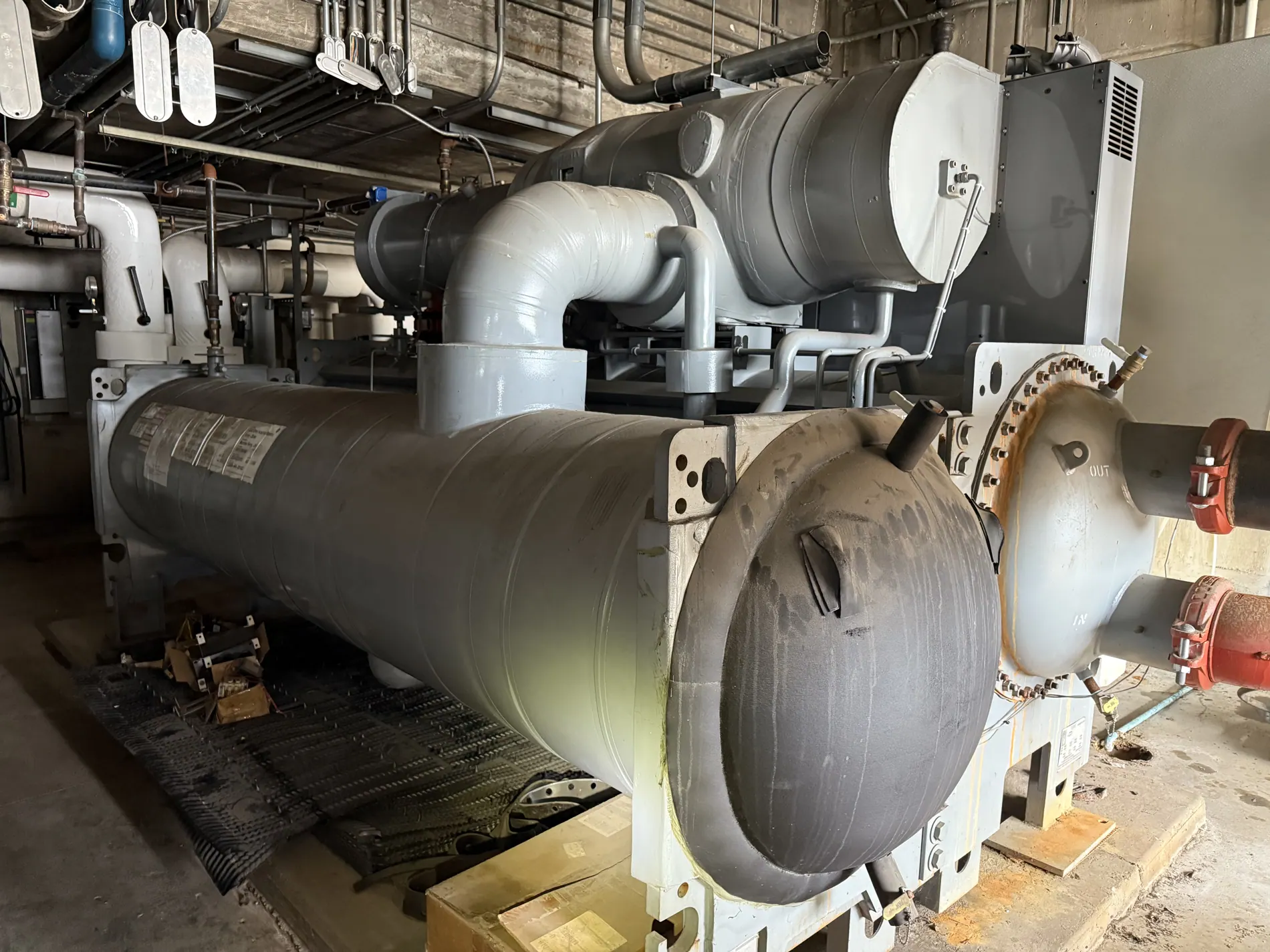
We buy used industrial chillers in Jefferson County, Texas, with cash offers and upfront payment when a purchase is agreed. We handle removal, and the seller does not need to test the equipment.
From first photo to final haul, we take care of the details so you can move forward.
Share a nameplate photo, the location, and whatever you know about your equipment. No testing is required from you.
We review the chiller and your site information, then make an offer. Payment is upfront.
We handle disconnects, refrigerant recovery, crane and rigging, loading, freight and hauling.
A planned upgrade, a change in cooling demand, or a facility transition can leave a chiller with no role in the next operating plan. If you are preparing to replace or retire equipment in Jefferson County, Texas, it helps to consider its sale while the machine and its location can still be reviewed. We buy used industrial chillers, including water-cooled and air-cooled units, and consider centrifugal, screw, and scroll equipment. Idle and non-running machines can also be reviewed.
Capacity, condition, refrigerant, and removal requirements vary from one asset to another. Our general range is 20 to 2,000+ cooling tons, but a cooling ton measures capacity, not the machine’s physical weight. We consider all refrigerants. An offer depends on the particular equipment and project review; it is not guaranteed.
To begin, share what is available without trying to fill gaps by guesswork: the equipment type, manufacturer and model if readable, stated capacity, refrigerant marking, and whether the chiller is operating, idle, or known to be non-running. Photos of the full unit and its identification plate are useful. If the label is missing or difficult to read, say so.
Include a short description of where the chiller sits and whether it is still connected to electrical, water, or other plant services. Note known access limits, nearby equipment that must remain, and the schedule you are working toward. A service history can help, but a complete history or operating test is not a prerequisite. Do not open the refrigerant circuit or vent refrigerant to prepare the machine for review.
On a replacement project, the sold asset may share a mechanical room or service area with equipment that stays in operation. Identify exactly which chiller and related components are included, and which pipes, controls, cables, or adjacent machines must remain untouched. The authorized site contact can explain the isolation process and any approval needed before work begins.
Access affects the collection plan. Describe the route from the unit to a loading area, including doors, stairs, overhead obstructions, narrow passages, and areas that cannot be blocked. If the route has not been assessed, current photos can help surface questions for a site review. Occupied spaces, active production, or contractor schedules may call for a specific work window; the actual site rules determine what can be arranged.
A chiller that will not run may still contain refrigerant, and a unit that appears disconnected may have remaining services or controls nearby. You do not need to restart, test, repair, or disconnect the machine before sharing it for review. If a purchase is agreed, we arrange appropriate refrigerant recovery with qualified personnel and coordinate equipment disconnects with the authorized site contact.
Be clear about what the site can authorize and what must stay available to the facility. Our team is responsible for the equipment work covered by the agreed scope. The seller or site supplies accurate information, authorized access, applicable site rules, and necessary approvals. Recovery and isolation details are settled for the actual equipment and setting, rather than assumed from a general description.
Once the asset and site details are reviewed, the parties can confirm what is included, how the chiller will be moved, and a workable pickup window. We arrange and handle rigging, crane work when needed, loading, freight, and hauling. The required approach depends on the machine’s actual dimensions and weight, lifting points, access route, and available work area; capacity alone does not establish those requirements.
Before the crew arrives, the site contact should confirm who can authorize access and work, where the agreed boundary lies, and which routes or services need protection. If the facility uses escorts, work permits, orientation, or restricted hours, share those requirements early so they can be considered in scheduling. Do not book a separate crane, recovery provider, or hauler on our behalf unless that is specifically part of a separately agreed arrangement.
A cash offer is considered after review of the equipment and the removal project. Accessibility, known condition, configuration, and the work required to collect the chiller may all be relevant, but the result depends on the facts supplied and confirmed. No offer or purchase is automatic. If we agree to buy the equipment, payment is made upfront before pickup, on the terms agreed for that transaction.
Send the identification details and photos you have, describe the chiller’s operating status and connections, and outline the access route and your replacement schedule. If several machines are involved, distinguish each unit so the equipment and scope can be reviewed clearly. The next step is an assessment of the specific asset and project—not a requirement to make the machine run or prepare it for removal yourself.

Air-cooled or water-cooled. Centrifugal, screw or scroll. From single units to large shutdown projects, we buy industrial chillers across Texas.
Send us your chiller details and nameplate photos for a cash offer. Don’t worry if you don’t know every specification—we can start with what you have.
Call or text(614) 715-3047TEXT NAMEPLATE PHOTOS ↗Prefer email?
saleselectricalbuyers@gmail.com