
SEND THE DETAILS
Share a nameplate photo, the location, and whatever you know about your equipment. No testing is required from you.
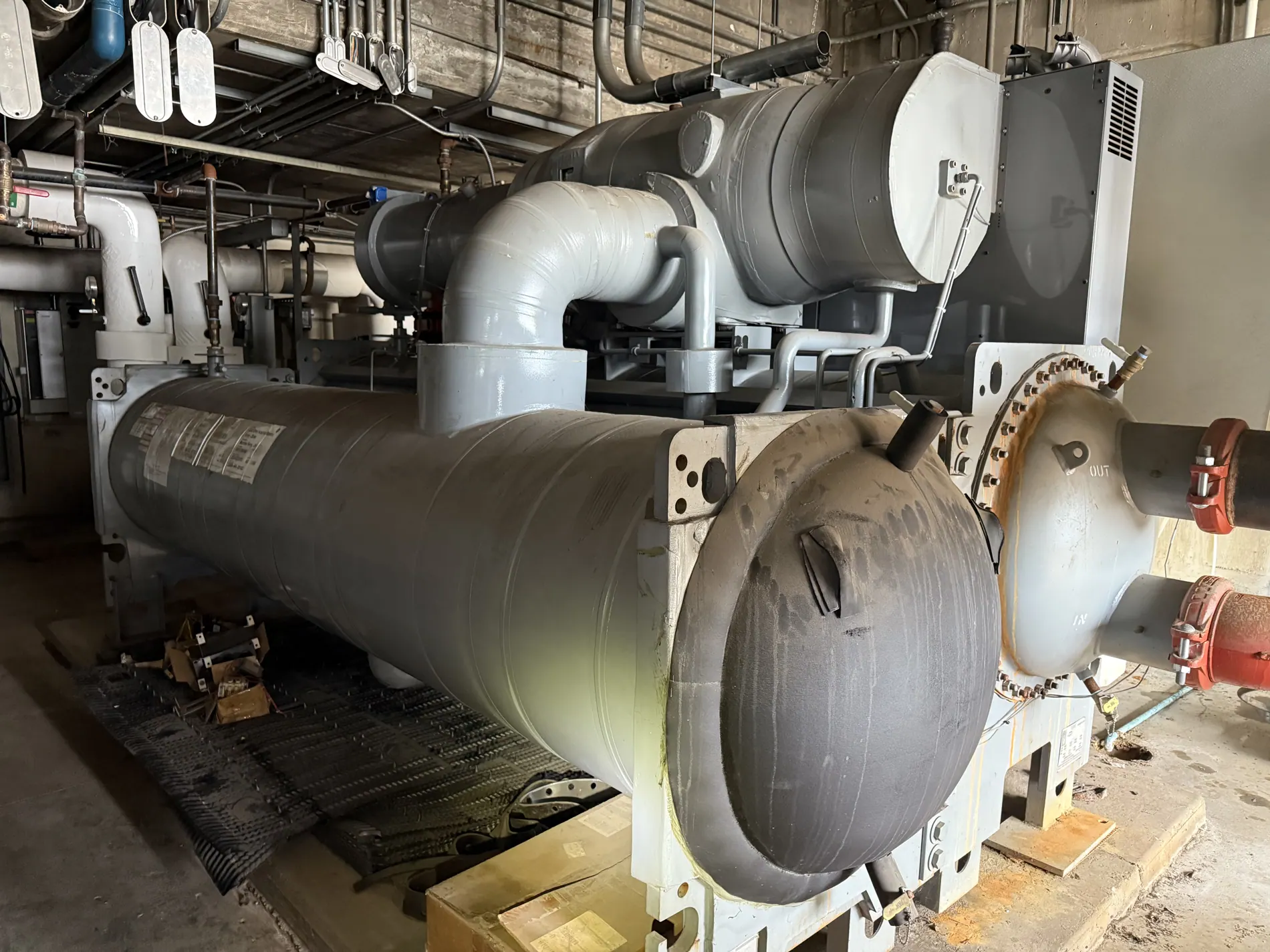
We buy university campus chillers in Midland, Texas, with cash offers and upfront payment when a purchase is agreed. We handle removal, and the seller does not need to test the equipment.
From first photo to final haul, we take care of the details so you can move forward.
Share a nameplate photo, the location, and whatever you know about your equipment. No testing is required from you.
We review the chiller and your site information, then make an offer. Payment is upfront.
We handle disconnects, refrigerant recovery, crane and rigging, loading, freight and hauling.
A university chiller may be one machine in a central plant, a unit serving one building, or equipment already removed from service. In Midland, the useful first step is not to guess at its value or prepare it for pickup. Give a clear account of what is being offered and let the review begin with the evidence available.
Photographs and labels answer different questions. A readable equipment plate can help identify the manufacturer, model, serial number, capacity, and refrigerant marking. Wider views show how the chiller is installed, what surrounds it, and whether connected equipment or nearby machines appear to be part of the same work area. Neither view replaces the other.
Take the plate straight-on and close enough for its lettering to be legible; avoid glare where possible. Then photograph the whole unit from more than one side, along with visible piping, electrical connections, and any separate components you believe are included. If the plate is missing or unreadable, send the best images you can rather than trying to fill in uncertain specifications.
Include the route in separate views. Show doors, corridors, stairs, ramps, service openings, elevators if relevant, and the approach from the building to a possible loading area. A machine photo helps assess the asset; route photos help reveal handling questions. If dimensions or weight limits are posted or documented, share them. Do not estimate structural capacity from appearance.
Share any available asset records, service notes, or information about whether the chiller is operating, idle, or non-running. The buyer considers water-cooled and air-cooled industrial or commercial chillers, including centrifugal, screw, and scroll units, generally from 20 to more than 2,000 cooling tons, and considers all refrigerants. An unknown charge or incomplete history does not require you to start the machine or open its circuit.
Cooling tons describe capacity, not shipping weight. Do not use the tonnage as a rigging figure; the actual machine configuration and verified handling information matter. If the equipment cannot be run, say so plainly. Sellers do not need to test, restart, repair, clean, disconnect, or recover refrigerant before an initial review.
Route information should help a crew understand how equipment could leave, not just where it sits. Note the building or campus area, the nearest usable service entrance, known access restrictions, and whether the route passes through occupied or operational spaces. If a loading zone, gate, or work window requires approval, identify who can explain the rules and authorize access.
For a basement installation, photographs of openings, turns, stairs, ramps, and any freight route are especially useful. A narrow passage, overhead obstruction, floor limit, or operating system nearby could affect the removal plan. These are details to verify for the actual site, not reasons to assume a particular lift or method will work.
Campus plants can contain adjacent equipment that must stay in service. Mark which chiller is being offered and identify included accessories or related items; also note what is excluded. If pipes, controls, or shared supports connect the unit to equipment that remains, point them out in photographs or records. The authorized site contact can explain which systems must remain undisturbed and what approvals or shutdown limits apply.
The buyer arranges and handles appropriate refrigerant recovery with qualified personnel, disconnects, rigging, crane work when needed, loading, freight, and hauling. The work is coordinated with the authorized site representative and the actual site conditions. The seller supplies accurate information, approved access, site rules, and necessary approvals. Do not vent refrigerant or open the circuit.
A cash offer depends on the asset and the project review, including the equipment information and removal conditions; it is not guaranteed. If a purchase is agreed, payment is made upfront before pickup on the agreed terms. Confirm the equipment included, access plan, timing, and payment terms with the party authorized to sell before work is scheduled.
To begin, gather the clearest nameplate image, several machine views, route photographs, and a short note about condition, location, and known restrictions. Send what you have, distinguishing confirmed details from unknowns. That gives the buyer a practical basis to review the university chiller in Midland and ask focused follow-up questions without requiring you to prepare the machine for removal.

Air-cooled or water-cooled. Centrifugal, screw or scroll. From single units to large shutdown projects, we buy industrial chillers across Texas.
Send us your chiller details and nameplate photos for a cash offer. Don’t worry if you don’t know every specification—we can start with what you have.
Call or text(614) 715-3047TEXT NAMEPLATE PHOTOS ↗Prefer email?
saleselectricalbuyers@gmail.com