
SEND THE DETAILS
Share a nameplate photo, the location, and whatever you know about your equipment. No testing is required from you.
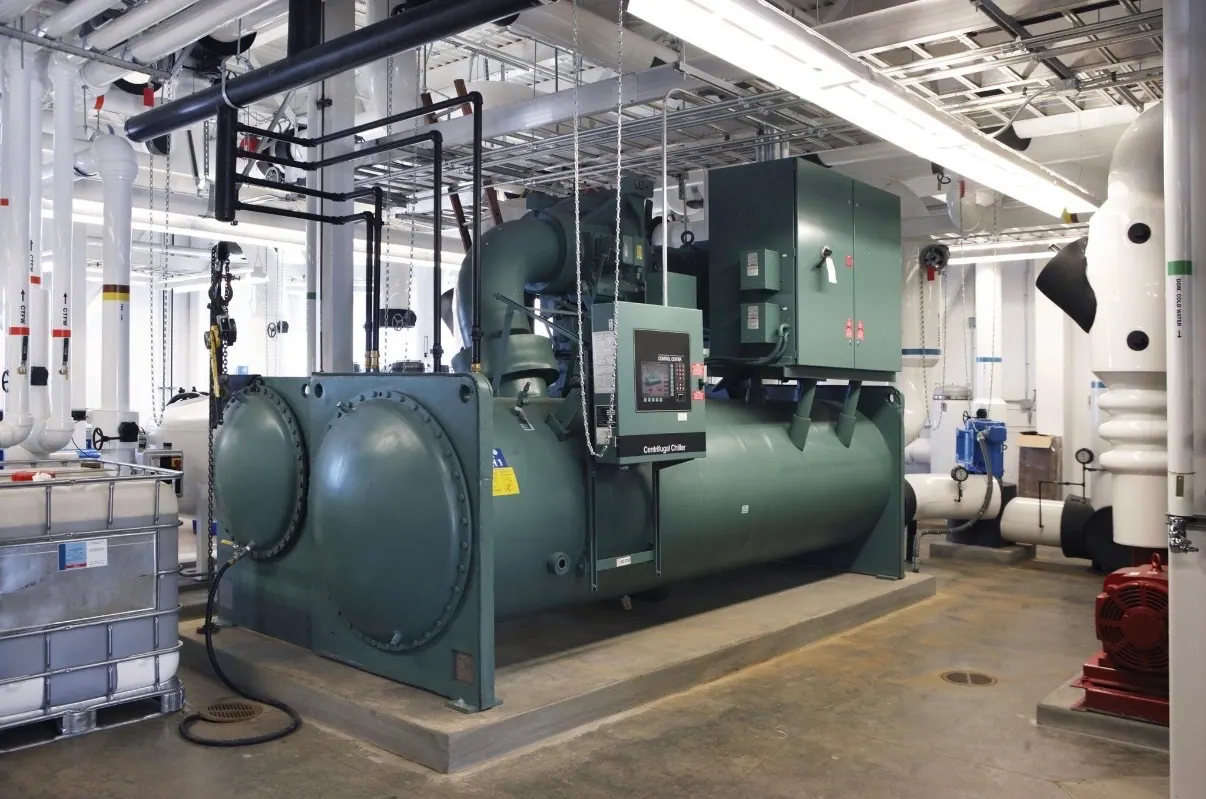
We buy chillers requiring rooftop removal in Dallas, Texas, with cash offers and upfront payment when a purchase is agreed. We handle removal, and the seller does not need to test the equipment.
From first photo to final haul, we take care of the details so you can move forward.
Share a nameplate photo, the location, and whatever you know about your equipment. No testing is required from you.
We review the chiller and your site information, then make an offer. Payment is upfront.
We handle disconnects, refrigerant recovery, crane and rigging, loading, freight and hauling.
Yes. We buy used industrial and commercial water-cooled and air-cooled chillers that may need rooftop removal, including centrifugal, screw, and scroll units. We generally consider equipment from 20 to more than 2,000 cooling tons and consider all refrigerants. Idle or non-running equipment can also be reviewed; you do not need to restart the machine to begin.
A cooling ton measures refrigeration capacity, not the machine’s weight. Capacity and nameplate details help identify the unit, but removal planning also depends on its configuration, condition, position, access route, and the property’s requirements. Those details are not known until they are shared and reviewed.
Start with what you know: the manufacturer and model, capacity, refrigerant marking, whether the chiller is water-cooled or air-cooled, and whether it is running, idle, or known to be incomplete. A readable equipment-plate photo is useful, but missing records or an unreadable label need not prevent you from describing the unit.
For a rooftop machine, include clear photographs of the chiller and its surroundings, taken only from safe, authorized locations. Views that show the roof position, nearby structures, possible lift area, and route for loading can help frame the discussion. Mention known alterations, missing components, roof restrictions, or access limits rather than guessing at details you cannot verify.
An offer depends on the specific equipment and an actual project review. The unit’s type, capacity, refrigerant, completeness, and stated condition all matter; so do the practical requirements for recovery, disconnects, rigging, loading, and transportation. Rooftop access can change the work plan, so a tonnage figure alone cannot establish a purchase amount.
We review the information, discuss the equipment and removal scope, and make a cash offer when appropriate. A purchase is not automatic: any offer is subject to review and agreement. If a purchase is agreed, payment is made upfront before pickup, on the terms agreed with the seller. Confirm the equipment included, payment terms, access arrangements, and removal scope before work is scheduled.
For an agreed purchase, we coordinate the equipment work: appropriate refrigerant recovery with qualified personnel, utility disconnects, rigging and crane work when needed, loading, freight, and hauling. The right approach depends on the actual chiller and site. A rooftop lift may require review of clearances, the proposed crane position, ground conditions, overhead obstructions, weather limits, and the route from the roof to the loading area.
You do not need to test, run, repair, restart, or arrange recovery for the chiller to have it considered. Do not vent refrigerant or open the refrigerant circuit. Work is coordinated with the authorized site contact, who can explain applicable site rules and identify which access and approvals are required. The buyer handles the equipment work; the seller or property contact supplies accurate information, authorized access, and necessary approvals.
The removal plan must fit the property rather than assume a standard roof or lift setup. Tell us where the equipment sits and what is known about roof access, staging space, loading areas, restricted hours, escorts, permits, or other approval processes. If the building has limited access, nearby operations that must continue, or areas a crane or truck cannot occupy, share that early.
Where available, note roof height, access routes, overhead lines or structures, and possible crane placement. These are planning details, not a request for you to assess lifting safety or provide an engineered plan. The actual method and equipment can be determined only after the specific site and scope are reviewed.
Describe its current state plainly: for example, whether it is idle, disconnected, incomplete, or has an issue you know about. If operating history, service records, or the present refrigerant charge is unknown, say so. You are not expected to diagnose the machine or produce a performance test before discussion.
Condition can affect whether a purchase makes sense, but a stopped unit is not excluded from consideration just because it does not run. Share only information you can support, and distinguish observed facts from estimates. Do not operate equipment or enter a restricted roof area just to obtain a better photograph or answer.
Gather the identification details and safe photographs you already have, then describe the roof location, known condition, refrigerant marking if available, and any access or scheduling rules. Include the best authorized site contact for coordinating questions and approvals. That gives us a practical basis to review the chiller and, if a purchase is agreed, discuss payment and a removal plan suited to the property.

Air-cooled or water-cooled. Centrifugal, screw or scroll. From single units to large shutdown projects, we buy industrial chillers across Texas.
Send us your chiller details and nameplate photos for a cash offer. Don’t worry if you don’t know every specification—we can start with what you have.
Call or text(614) 715-3047TEXT NAMEPLATE PHOTOS ↗Prefer email?
saleselectricalbuyers@gmail.com