
SEND THE DETAILS
Share a nameplate photo, the location, and whatever you know about your equipment. No testing is required from you.
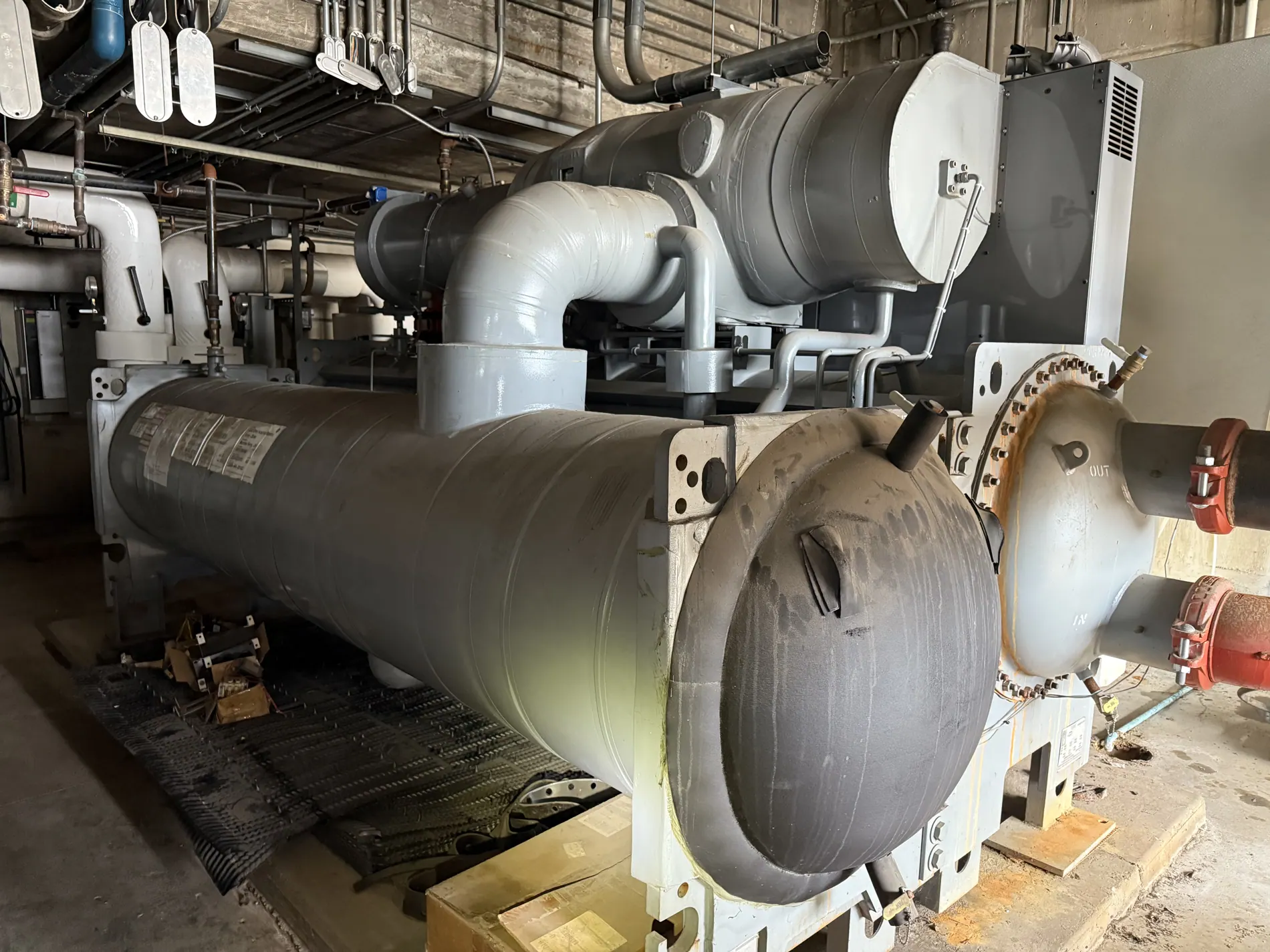
We buy 250 to 499 ton chillers in Dallas, Texas, with cash offers and upfront payment when a purchase is agreed. We handle removal, and the seller does not need to test the equipment.
From first photo to final haul, we take care of the details so you can move forward.
Share a nameplate photo, the location, and whatever you know about your equipment. No testing is required from you.
We review the chiller and your site information, then make an offer. Payment is upfront.
We handle disconnects, refrigerant recovery, crane and rigging, loading, freight and hauling.
When a planned plant change makes a 250-to-499-ton chiller surplus, the first question is usually how its removal fits the project—not whether it can be restarted for a demonstration. We buy used chillers in this capacity range in Dallas, including units that are idle or not running. A seller does not need to test, repair, or restart the machine.
Before setting a collection window, we review what is being sold, what work the site permits, and how the equipment can be removed. If the outgoing chiller shares a room, piping, electrical service, or an access route with equipment that will stay, identify those boundaries early. That helps establish a realistic scope alongside the replacement or shutdown schedule.
Start with the nameplate information, if readable: manufacturer, model, serial number, capacity, and refrigerant type. Include recent photographs of the full machine, its connections, and any visible damage or removed components. Note whether it is operating, idle, incomplete, or of unknown condition. A clear account of what is known—and what is not—is more useful than an unsupported performance claim.
Cooling tons measure capacity, not physical weight. Do not use the tonnage range to estimate a lift. If available, provide dimensions, shipping or equipment records, and any known weight information; the actual machine and route still need review before rigging is planned. We consider all refrigerants, but the current charge and circuit condition may be unknown at first.
For a chiller in a mechanical room, the shortest path to the loading area may not be the usable one. Door openings, turns, floor transitions, overhead obstructions, and the distance to a suitable vehicle position can affect the removal method. If the unit is outdoors or on another level, explain its location and how a crew and lifting equipment could reach the work area.
Photos that show the chiller in context, the likely route out, and the loading area can make the initial review more concrete. Share known restrictions such as limited work hours, required escorts, booking procedures, occupied areas, or routes that must remain clear. These are planning details, not a request for you to conduct a rigging survey.
Where the plant will remain partly in service, mark which chiller and components are included in the sale and which systems must be left undisturbed. A facilities contact can explain isolation boundaries, site rules, permits, and any approval sequence. We coordinate the equipment work with the authorized site contact rather than assuming that the whole plant can be shut down.
Tell us about known shared piping, electrical feeds, controls, or nearby equipment that could affect disconnects. The final work sequence and collection window depend on the agreed scope, access, and actual conditions. If a project schedule is still changing, say so; timing can be discussed before a pickup date is set.
Do not vent refrigerant or open the chiller’s refrigerant circuit. If a purchase is agreed, we arrange appropriate recovery with qualified personnel and coordinate disconnects, rigging, crane work when needed, loading, freight, and hauling. The seller does not need to hire a recovery contractor, crane, or hauler for this work.
The site supplies accurate information, authorized access, applicable site rules, and necessary approvals. Before work begins, the scope and access arrangements should be understood by the people responsible for the property. Refrigerant charge, equipment configuration, and surrounding conditions may need confirmation during that review; an initial description should not be treated as a verified removal plan.
A cash offer depends on review of the particular asset and project. Capacity alone does not determine whether a purchase is agreed; condition, completeness, identification, refrigerant, and removal requirements may all matter. An offer is not guaranteed, and there is no need to prepare the chiller for operation to begin that conversation.
If we agree to buy the equipment, payment is made upfront before pickup on terms agreed with the seller. Confirm which machine and components are included, who has authority to approve the sale, and what access and removal arrangements apply. That keeps the transaction scope distinct from equipment or building systems that are not part of the sale.
For a first review, gather whatever is already available: nameplate details, overall and close-up photos, known condition, approximate dimensions if known, refrigerant information, and a short description of the location and route. Identify the authorized seller and the site contact who can address access and approvals. Missing details can be noted rather than guessed.
Send that information for review and include the project’s expected changeover timing, even if it is preliminary. We can then discuss the chiller, the removal scope, and whether an offer is appropriate. There is no need to start, clean, repair, disconnect, or otherwise prepare the machine before taking that first step.

Air-cooled or water-cooled. Centrifugal, screw or scroll. From single units to large shutdown projects, we buy industrial chillers across Texas.
Send us your chiller details and nameplate photos for a cash offer. Don’t worry if you don’t know every specification—we can start with what you have.
Call or text(614) 715-3047TEXT NAMEPLATE PHOTOS ↗Prefer email?
saleselectricalbuyers@gmail.com