
SEND THE DETAILS
Share a nameplate photo, the location, and whatever you know about your equipment. No testing is required from you.
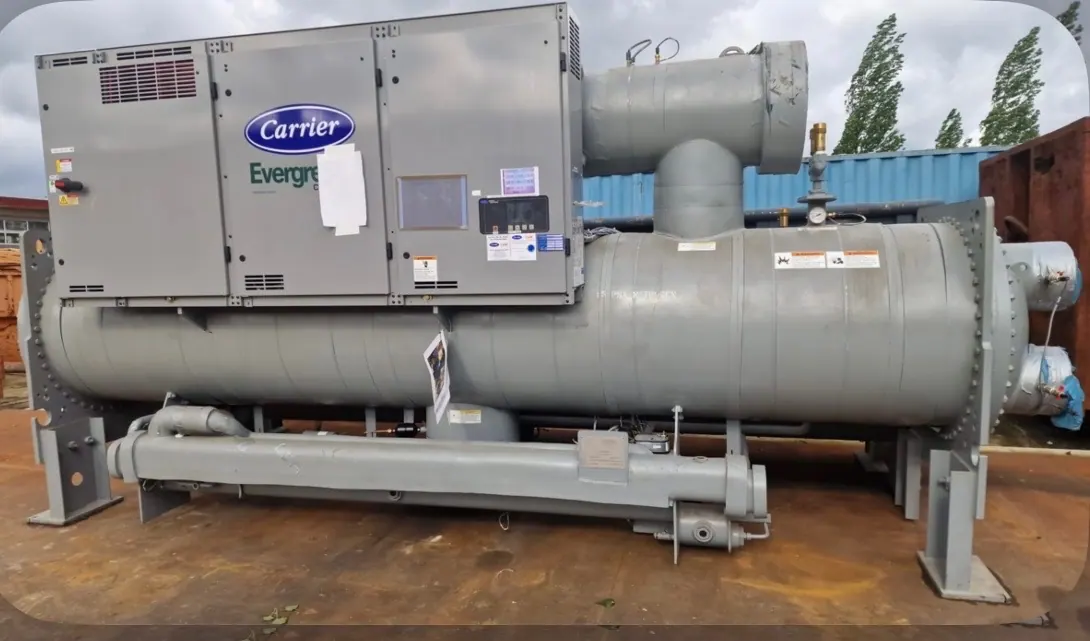
We buy chillers marked R-410A in El Paso, Texas, with cash offers and upfront payment when a purchase is agreed. We handle removal, and the seller does not need to test the equipment.
From first photo to final haul, we take care of the details so you can move forward.
Share a nameplate photo, the location, and whatever you know about your equipment. No testing is required from you.
We review the chiller and your site information, then make an offer. Payment is upfront.
We handle disconnects, refrigerant recovery, crane and rigging, loading, freight and hauling.
A chiller marked R-410A is worth describing as it stands, even if it is idle or no longer operating. We buy used industrial and commercial water-cooled and air-cooled chillers, including centrifugal, screw, and scroll units, and consider equipment across refrigerants and a broad range of capacities. The label is one useful detail, not a substitute for identifying the actual machine and the work needed to remove it.
Send whatever identification is readily available: a photograph of the nameplate and refrigerant marking, the make and model if legible, approximate cooling capacity, and an overall view of the unit. Cooling tons describe capacity, not the machine’s weight. If the refrigerant charge, condition, or operating history is unknown, say so. Don’t open the circuit, vent refrigerant, restart the chiller, or arrange a test for our review.
Before removal planning gets specific, establish who has authority to sell the equipment. The person who knows the machine may not be the person authorized to commit the owner, approve its removal, or sign off on sale terms. If ownership sits with a company, property owner, contractor, or another party, identify the appropriate decision-maker and keep that person involved in the review.
Site access is a separate responsibility. Tell us who can authorize entry and coordinate with the facility, and whether that person must arrange a work window, escort, security check-in, or approval from another department. Access permission should cover the actual pickup work—not just a visit to look at the chiller. We coordinate removal with the authorized site contact and work within the approvals and rules supplied for the property.
A few clear photos can explain more than a long description: show the chiller in context, the route toward a loading area, and any narrow passage, overhead obstruction, stairs, or change in level that may matter. Mention whether the unit is indoors, on a roof, in a plant room, or in a yard only if you know. Do not put yourself at risk to get a picture; safe, available views are enough to begin.
Also describe the likely truck entrance and any known limits on vehicle size, staging, lifting, or work hours. If another machine or shared piping is staying in place, identify what is—and is not—included. This helps avoid treating connected pumps, controls, or neighboring chillers as part of the sale when they are not authorized for removal.
An offer depends on the particular asset and the project after review. Capacity, configuration, known condition, included components, access, and removal requirements can all inform the decision. A readable R-410A label is helpful, but it does not by itself establish the present charge or complete system condition. We consider non-running equipment too; it need not be repaired or demonstrated to qualify for consideration.
If a replacement or plant change is underway, share when the outgoing chiller may be released and what must remain operational around it. A site contact can clarify isolation boundaries and any sequence needed to protect equipment that stays behind. We can then review the proposed scope with the people authorized to approve the sale and the work area.
If a purchase is agreed, we arrange appropriate refrigerant recovery with qualified personnel, along with disconnects, rigging, crane work when needed, loading, freight, and hauling. The actual plan depends on the verified equipment and site conditions. The seller is not expected to hire a recovery contractor, crane, or carrier, and does not need to test, repair, restart, or disconnect the machine in advance.
The facility still has an important role: provide accurate information, authorized access, site rules, and any necessary approvals. Its authorized representative should identify utility or work-area restrictions and confirm what can be isolated. We coordinate the equipment work and pickup around those requirements; the seller should not vent refrigerant or open refrigerant lines.
A cash offer is not automatic or guaranteed. It follows review of the actual asset and removal project, and the scope, access, and terms must be agreed before work is scheduled. If a purchase is agreed, payment is made upfront before pickup, on the agreed terms. Clarify which chiller and components are included, who can approve the transaction, and who will grant site access before confirming a handoff.
The useful next step is to gather the identification you have, a few safe photographs, a plain description of known condition, and the name or role of the person who can authorize the sale and coordinate entry. Include any known pickup restrictions or timing needs. You can share uncertainty rather than guess; no preparation beyond accurate information and proper authorization is needed to start a review.

Air-cooled or water-cooled. Centrifugal, screw or scroll. From single units to large shutdown projects, we buy industrial chillers across Texas.
Send us your chiller details and nameplate photos for a cash offer. Don’t worry if you don’t know every specification—we can start with what you have.
Call or text(614) 715-3047TEXT NAMEPLATE PHOTOS ↗Prefer email?
saleselectricalbuyers@gmail.com