
SEND THE DETAILS
Share a nameplate photo, the location, and whatever you know about your equipment. No testing is required from you.
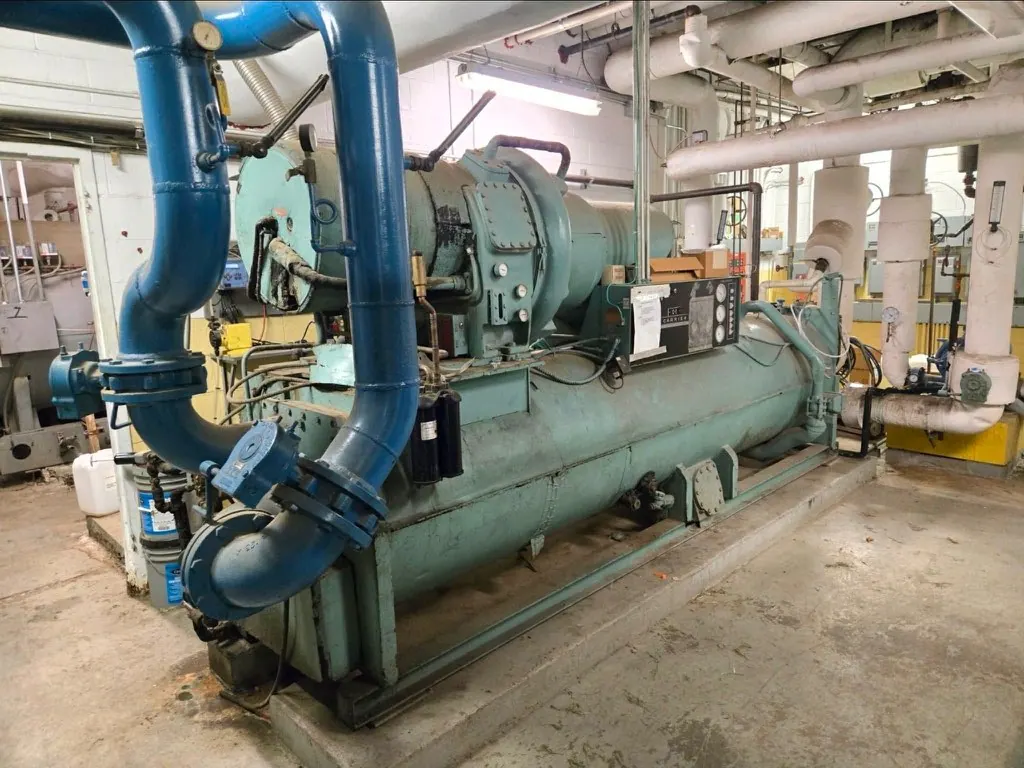
We buy chillers marked R-134a in Dallas, Texas, with cash offers and upfront payment when a purchase is agreed. We handle removal, and the seller does not need to test the equipment.
From first photo to final haul, we take care of the details so you can move forward.
Share a nameplate photo, the location, and whatever you know about your equipment. No testing is required from you.
We review the chiller and your site information, then make an offer. Payment is upfront.
We handle disconnects, refrigerant recovery, crane and rigging, loading, freight and hauling.
A nameplate or service label marked R-134a gives us a useful starting point when reviewing a chiller in Dallas. It does not establish the machine’s present charge, operating condition, or removal requirements. Labels may be incomplete, and equipment may have been altered or serviced during its life. Share what you can verify and flag anything uncertain; there is no need to open the refrigerant circuit or check the charge.
We consider used water-cooled and air-cooled chillers, including centrifugal, screw, and scroll equipment, and review a broad range of refrigerants. An R-134a marking does not by itself determine whether a purchase makes sense. The complete asset and the work required to reach and remove it are considered together.
Cooling capacity is commonly stated in tons, but a cooling ton measures heat-removal capacity—not the machine’s physical weight. Two chillers with similar capacity can differ in dimensions, construction, configuration, and lifting requirements. For a removal review, provide the nameplate capacity if legible, along with overall dimensions or equipment drawings when available. Do not estimate a lift from tonnage alone.
Useful identification may include the manufacturer, model, serial number, year if known, and whether the unit is water-cooled or air-cooled. Photos of the full chiller and its accessible nameplates often help establish what is being offered. Include any known accessories only if they are part of the proposed sale; nearby equipment is not automatically included.
A chiller does not have to be running to be considered. Idle, disconnected, stored, or non-running equipment may still be reviewed, and the seller is not expected to test, restart, repair, or prepare it for operation. If you know why it was taken out of service, when it last ran, or whether parts are missing, share that information plainly. If the history is unknown, say so rather than guessing.
Photographs and records are helpful, not a substitute for facts you do not have. You can begin with the equipment identification, current location, known condition, and a description of what is included. We review the information and the removal scope before deciding whether to make an offer. A purchase is not guaranteed.
Pickup planning depends on the actual path from the installed chiller to a loading position. If you can do so safely, describe doors, corridors, stairs, overhead limits, turning areas, loading docks, and outdoor surfaces along that route. Mention relevant site rules or time windows, and send photos that show the machine in context. Measurements, building drawings, or equipment schedules can clarify constraints when already available.
Some installations may require disconnect work, rigging, a crane, or a particular loading arrangement; others may not. These needs cannot be settled from capacity or a refrigerant label alone. We coordinate and handle appropriate equipment work, recovery, rigging, crane work when needed, loading, freight, and hauling after reviewing the specific machine and site. The authorized site contact provides accurate information, access, applicable rules, and necessary approvals.
Do not vent refrigerant or open the circuit to confirm what remains in the chiller. The current charge and system condition may be unknown, even when the equipment is marked R-134a. If a purchase is agreed, we arrange appropriate refrigerant recovery with qualified personnel as part of the coordinated work. The sequence for recovery and disconnects depends on the equipment and site requirements; the seller does not need to arrange recovery independently to start a review.
A cash offer depends on the asset information and an actual review of the proposed project, including condition, included equipment, access, and removal scope. It is not a fixed amount tied to refrigerant type or cooling capacity. If both sides agree to a purchase, payment is made upfront before pickup, under the agreed terms. We coordinate the removal; the seller does not need to deliver the chiller.
Before pickup is scheduled, the sale should be authorized by the equipment owner or an approved representative. The site contact can confirm access arrangements, safety procedures, work permissions, and any restrictions that affect timing or equipment movement. If the chiller is stored or already disconnected, identify who controls the location and loading access.
To begin, send the equipment identification and available photos, state that it is marked R-134a, and describe whether it is operating, idle, or non-running to the best of your knowledge. Add its Dallas-area location, the apparent route to a loading area, and any known access limits. Note uncertainties rather than arranging a test or changing the refrigerant system. That information gives us a practical basis to review the chiller and determine whether an offer and coordinated removal are appropriate.

Air-cooled or water-cooled. Centrifugal, screw or scroll. From single units to large shutdown projects, we buy industrial chillers across Texas.
Send us your chiller details and nameplate photos for a cash offer. Don’t worry if you don’t know every specification—we can start with what you have.
Call or text(614) 715-3047TEXT NAMEPLATE PHOTOS ↗Prefer email?
saleselectricalbuyers@gmail.com