
SEND THE DETAILS
Share a nameplate photo, the location, and whatever you know about your equipment. No testing is required from you.
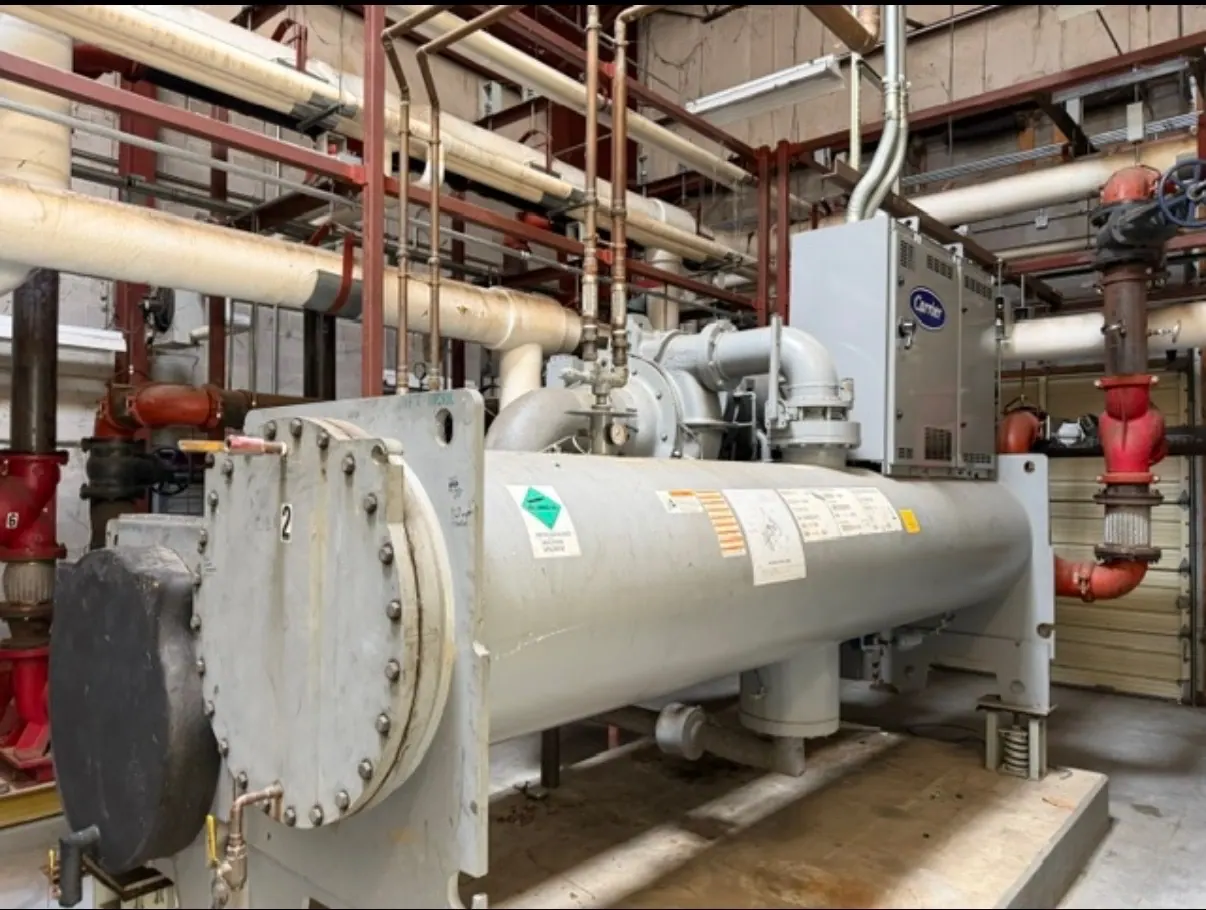
We buy chillers marked R-134a in Austin, Texas, with cash offers and upfront payment when a purchase is agreed. We handle removal, and the seller does not need to test the equipment.
From first photo to final haul, we take care of the details so you can move forward.
Share a nameplate photo, the location, and whatever you know about your equipment. No testing is required from you.
We review the chiller and your site information, then make an offer. Payment is upfront.
We handle disconnects, refrigerant recovery, crane and rigging, loading, freight and hauling.
If you have a chiller marked R-134a to sell in Austin, the refrigerant designation helps identify the equipment, but it does not tell the whole story. The unit’s condition, configuration, charge status, included components, and access route still need review. We buy used industrial and commercial water-cooled and air-cooled chillers, including centrifugal, screw, and scroll machines, and consider all refrigerants. Idle and non-running equipment can be considered; you do not need to restart or test it.
An offer depends on the particular asset and the removal scope after review. A label alone cannot establish whether a purchase makes sense or what work pickup will require. If we agree to buy, payment is made upfront before pickup on terms agreed in advance.
Cooling capacity, usually stated in tons, describes how much heat a chiller can remove. It is not the machine’s weight and does not indicate what crane, rigging, or transport equipment may be needed. Those decisions depend on the actual unit, how it is installed, and the route from its current position to a loading area.
When available, share the nameplate details, overall photographs, and any service records or known history. Include the marked refrigerant and say plainly if the present charge or equipment condition is uncertain. Do not open the refrigerant circuit or vent, drain, or attempt to recover its contents.
For a useful first review, identify where the chiller sits and how it might leave the building or site. A unit in a roof plant, basement, enclosed mechanical room, or active production area may present different access and scheduling questions. These are matters to check at the actual site, not conclusions that can be drawn from the capacity label.
Photos of the unit in place and the proposed route can help show doors, stairs, tight turns, overhead obstructions, nearby equipment, and potential loading or staging areas. Mention known restrictions, including work hours, access approvals, occupied areas, and facility safety procedures. An authorized site contact should confirm which assets are included and what must remain untouched or in service.
If a purchase is agreed, we coordinate the equipment work: appropriate refrigerant recovery by qualified personnel, disconnects, rigging, crane work when needed, loading, freight, and hauling. The specific sequence depends on the chiller and the site’s requirements. You do not need to hire a separate recovery contractor, crane company, or hauler for our removal scope, or perform the work yourself.
The site supplies accurate equipment and access information, applicable rules, approvals, and an authorized contact to coordinate with. The buyer is responsible for the agreed equipment work. Clear boundaries matter where other chillers, piping, electrical services, or active systems are nearby; do not assume connected or adjacent assets are part of the sale.
A chiller that has been idle, taken out of service, or reported as non-running may still be considered. Tell us what is known, such as when it was last operated, whether components are believed to be missing, or whether its condition has not been checked. Unknown details can be identified as unknown. There is no need to energize equipment, arrange a demonstration, repair it, or restart it to begin a conversation.
That information helps distinguish what is known about the asset from what remains to be assessed. It also helps the removal plan account for the real machine and site rather than relying on assumptions based on an R-134a marking or tonnage.
Gather what is readily available rather than preparing the unit for pickup. A concise description can include the manufacturer and model, nameplate capacity, refrigerant marking, known condition, current location within the facility, and photographs of both the chiller and its access route. Note which controls or other components are included, and flag any uncertainty about the refrigerant charge or service history.
You can also share the preferred timing, site access process, and any known restrictions on disconnecting or moving equipment. Accurate information is more useful than an unsupported estimate of weight or a guessed recovery status. No particular document or test is required to start the review.
Send the available equipment details and site photographs for review, and identify an authorized person who can clarify the asset boundary and access requirements. We can then assess the chiller and proposed removal scope and discuss whether a cash offer is appropriate. Any offer is subject to actual project review, not guaranteed by the refrigerant type, location, capacity, or condition alone.

Air-cooled or water-cooled. Centrifugal, screw or scroll. From single units to large shutdown projects, we buy industrial chillers across Texas.
Send us your chiller details and nameplate photos for a cash offer. Don’t worry if you don’t know every specification—we can start with what you have.
Call or text(614) 715-3047TEXT NAMEPLATE PHOTOS ↗Prefer email?
saleselectricalbuyers@gmail.com