
SEND THE DETAILS
Share a nameplate photo, the location, and whatever you know about your equipment. No testing is required from you.
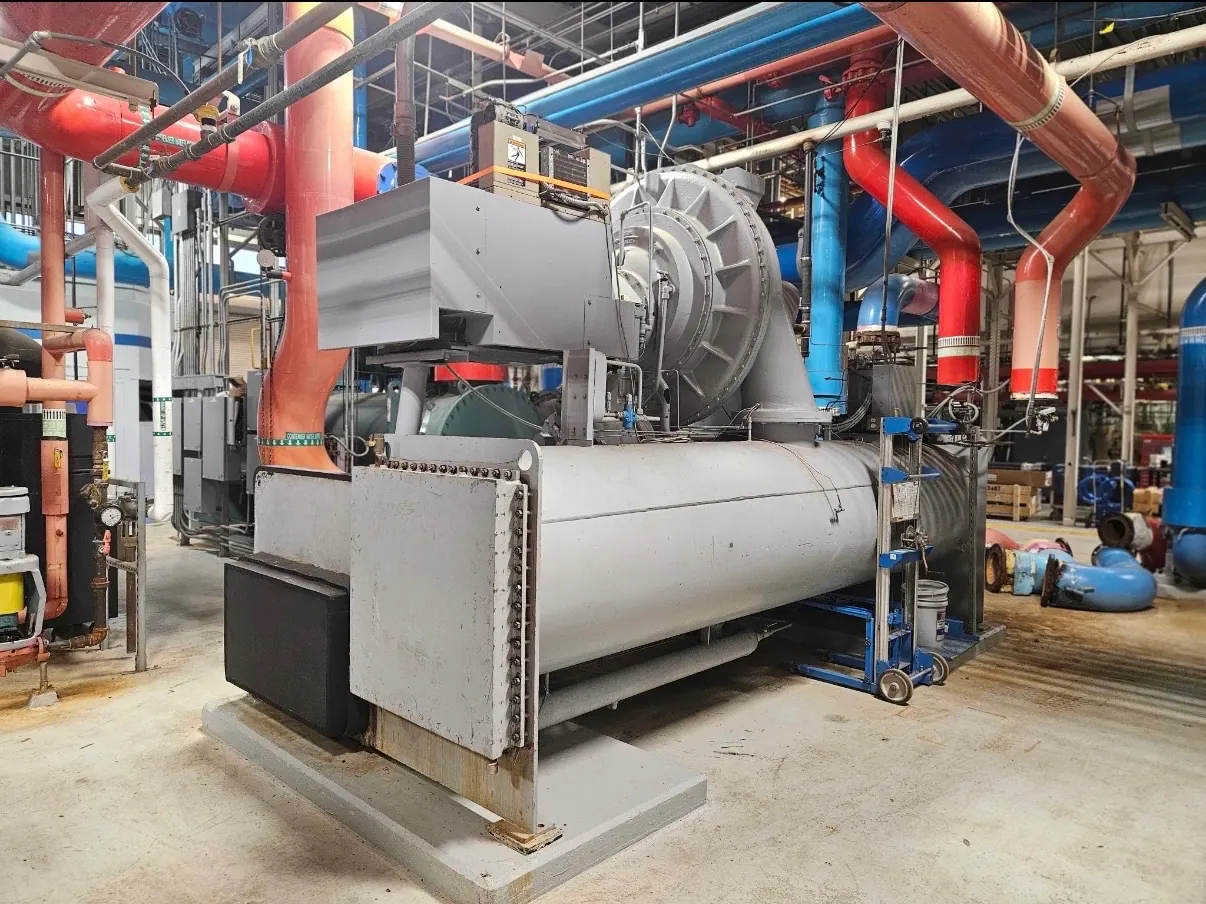
We buy chillers marked R-123 in Lubbock, Texas, with cash offers and upfront payment when a purchase is agreed. We handle removal, and the seller does not need to test the equipment.
From first photo to final haul, we take care of the details so you can move forward.
Share a nameplate photo, the location, and whatever you know about your equipment. No testing is required from you.
We review the chiller and your site information, then make an offer. Payment is upfront.
We handle disconnects, refrigerant recovery, crane and rigging, loading, freight and hauling.
If you are responsible for a chiller marked R-123 in Lubbock, you can begin a sale discussion without starting the machine or opening its refrigerant circuit. A clear nameplate photo, an image of the refrigerant label, and a few wide views of the equipment often answer the first questions. If a label is faded, obstructed, or missing, say what you can read rather than guessing.
We buy used industrial and commercial chillers, including units identified as R-123, across a broad range of capacities and conditions. The refrigerant marking is useful identification, but it does not establish what is currently in the system, whether the chiller runs, or what an offer may be. We consider those details through an actual review of the equipment and removal project.
Share the manufacturer and model if visible, the stated cooling capacity, approximate age if known, and whether the chiller is installed, disconnected, or in storage. Note any known repairs, past refrigerant changes, missing components, damage, or reason the unit is being retired. Existing service records, equipment schedules, or retrofit notes can help, but you do not need to create records or arrange a test.
Be direct about uncertainty. For example, distinguish “the last service record lists R-123” from “the chiller was checked recently,” if no recent check occurred. Do not run, repair, drain, vent, or open the machine to fill gaps in the information. A cooling-ton rating describes capacity; it is not the machine’s weight or a safe lifting estimate.
Tell us whether the proposed sale covers one chiller or several, and identify any accessories or loose components you intend to include. If pumps, controls, starters, or other equipment are nearby but not part of the sale, distinguish them in your description or photos. This helps prevent confusion when the purchase scope and removal plan are agreed.
If the unit has already been removed from service or stored, describe where it is and what is known about its history. Photos may show weather exposure, corrosion, enclosure damage, or parts stored separately. None of those observations replaces an inspection, but they give us a more grounded starting point than an assumption about condition.
Before planning work, identify the owner or authorized representative who can approve the sale and the site contact who controls access. Those roles may belong to different people. The site contact can explain sign-in procedures, safety rules, work hours, loading restrictions, and any approvals needed before contractors or equipment can enter.
For a Lubbock-area property, describe the actual route from the chiller to a loading point rather than relying on a general site description. Mention stairs, doors, tight turns, roof or outdoor-pad access, overhead obstructions, traffic lanes, and possible staging areas if they apply. Conditions vary by facility, and a route that looks clear in a photo still needs to be assessed for the planned work.
If a chiller serves a facility that remains in operation, explain which equipment and routes must stay available and whether there is an approved work window. For a data center or another sensitive site, the authorized contact can identify change-control steps and boundaries between surplus equipment and systems that must remain online. No particular arrangement is assumed; the plan depends on your facility.
When a purchase is agreed, we coordinate the equipment work: appropriate refrigerant recovery by qualified personnel, disconnects, rigging, crane work when needed, loading, freight, and hauling. The sequence and equipment required depend on the chiller, access, site rules, and approvals. You are not expected to hire a recovery contractor, crane, or hauler on our behalf, but the site must provide accurate information and authorized access.
A cash offer is considered after reviewing the asset and the actual project. Identification, capacity, included components, known condition, and the practical removal scope all matter; an R-123 label or tonnage alone does not set a value. An offer is not guaranteed, and no chiller is accepted automatically.
If both sides agree to a purchase, payment is made upfront before pickup on the agreed terms. Confirm which equipment is included and who is authorized to approve the sale before work is scheduled. We handle the equipment work and transport under the confirmed arrangement; you do not need to deliver the chiller.
Gather the photos and records already available, note what is known and unknown, and provide the chiller’s location and basic access conditions. Include the name or role of the person authorized to discuss the sale. From there, the equipment and removal scope can be reviewed without asking you to restart the machine or disturb its refrigerant circuit.

Air-cooled or water-cooled. Centrifugal, screw or scroll. From single units to large shutdown projects, we buy industrial chillers across Texas.
Send us your chiller details and nameplate photos for a cash offer. Don’t worry if you don’t know every specification—we can start with what you have.
Call or text(614) 715-3047TEXT NAMEPLATE PHOTOS ↗Prefer email?
saleselectricalbuyers@gmail.com