
SEND THE DETAILS
Share a nameplate photo, the location, and whatever you know about your equipment. No testing is required from you.
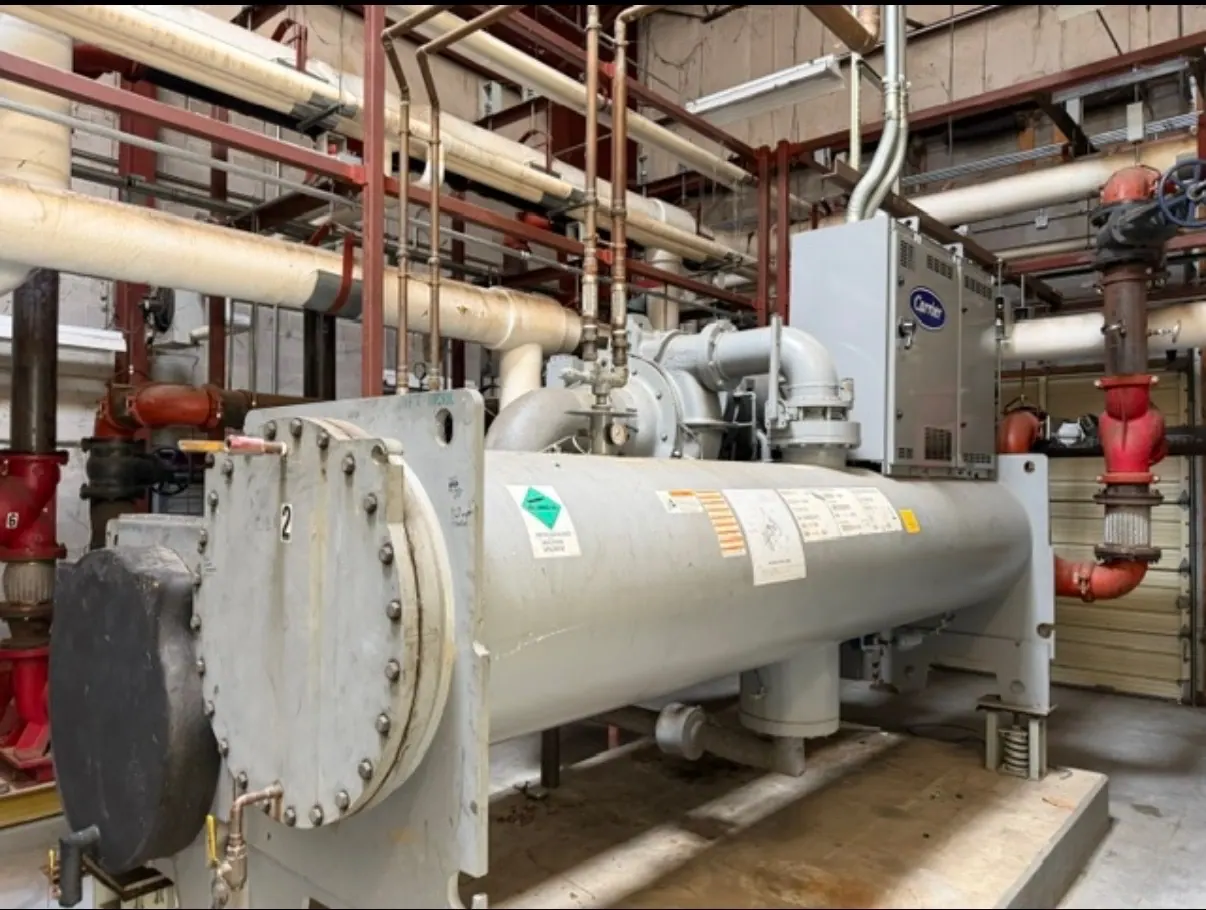
We buy university campus chillers in Lubbock, Texas, with cash offers and upfront payment when a purchase is agreed. We handle removal, and the seller does not need to test the equipment.
From first photo to final haul, we take care of the details so you can move forward.
Share a nameplate photo, the location, and whatever you know about your equipment. No testing is required from you.
We review the chiller and your site information, then make an offer. Payment is upfront.
We handle disconnects, refrigerant recovery, crane and rigging, loading, freight and hauling.
A university may have chillers serving one building, supporting a central plant, or standing idle after a system change. If you are considering a campus chiller in Lubbock, begin by identifying the specific unit and clarifying whether the proposed sale includes only that machine or associated equipment as well. Nearby pumps, piping, controls, and other plant assets should not be treated as included unless they are expressly part of the agreed scope.
We buy used commercial and industrial water-cooled and air-cooled chillers, including centrifugal, screw, and scroll equipment. Units generally range from 20 to more than 2,000 cooling tons, and all refrigerants are considered. A cooling ton measures capacity; it does not tell us the machine’s weight or what lifting and transport will require.
Useful starting material includes the nameplate, manufacturer and model if visible, approximate capacity, refrigerant type if known, and recent photographs. Include the chiller’s building or outdoor location and explain whether it is operating, disconnected, stored, or non-running. Do not delay because records are incomplete: we consider idle and non-running equipment, and you do not need to run or test the machine for us.
For campus equipment, a few wider photographs can answer practical questions that a nameplate cannot. Show the machine in relation to doors, corridors, stairs, nearby equipment, outdoor barriers, and the likely loading area where possible. If the route crosses a controlled area or the property has work-hour limits, mention those requirements rather than assuming a standard pickup window.
Before discussing collection in detail, identify who is authorized to sell the chiller and who can approve access for removal. That may involve separate facilities, property, purchasing, or project contacts, depending on the campus. Tell us what approvals remain outstanding and whether the unit is part of a larger renovation or decommissioning schedule.
Also identify what stays in service and what the sale may affect. A chiller can be connected to systems that campus staff need to preserve, even when the machine itself is retired. We rely on the site contact to describe operating boundaries, access procedures, required permits or escorts, and any restrictions on staging vehicles or equipment. The removal plan is based on the actual property, not just the distance from the plant room to a road.
After reviewing the equipment information and proposed scope, we can discuss whether to make an offer. The decision depends on the particular asset and project review; a cash offer is not guaranteed. Condition, included components, access, disconnection needs, lifting conditions, and hauling logistics may all matter. Be candid about what is known and what is uncertain so the review reflects the equipment as it stands.
If the purchase is agreed, confirm the chiller included, the amount and payment terms, the authorized site contact, and the collection arrangements before work begins. Payment is made upfront before pickup on the agreed terms. Do not rely on a general capacity range or a preliminary conversation as a final commitment to purchase or remove equipment.
Once the scope is agreed, the site representative and removal team can coordinate access, timing, and the route out. A large unit may need careful review of door openings, overhead clearance, floor or roof access, turning space, and the location available for staging. Crane work may be needed in some settings, but whether it is appropriate depends on the equipment and site. Weather, overhead obstructions, active campus traffic, and nearby operations can also affect the plan where relevant.
We arrange and handle appropriate refrigerant recovery with qualified personnel, disconnects, rigging, crane work when needed, loading, freight, and hauling. The seller does not need to test, restart, repair, disconnect, or arrange a separate recovery or hauling contractor as a condition of an initial review. Do not vent refrigerant or open the circuit. Our team coordinates the equipment work with the authorized site contact; the site supplies accurate information, approved access, applicable rules, and necessary approvals.
To begin, gather whatever is readily available: identification and photos, known condition and refrigerant information, the exact equipment included, its location, and any known access or schedule restrictions. Add the name or role of the person authorized to discuss the sale and coordinate with the campus. If the route or scope is not yet clear, say so; those details can be reviewed before collection is set.
Share that information through the buyer’s available inquiry process and wait for the equipment and project review before making site changes. There is no need to clean up the unit, prove that it runs, or prepare it for removal first. A clear description helps determine whether an offer is appropriate and, if a purchase is agreed, gives both parties a practical basis for planning payment and pickup.

Air-cooled or water-cooled. Centrifugal, screw or scroll. From single units to large shutdown projects, we buy industrial chillers across Texas.
Send us your chiller details and nameplate photos for a cash offer. Don’t worry if you don’t know every specification—we can start with what you have.
Call or text(614) 715-3047TEXT NAMEPLATE PHOTOS ↗Prefer email?
saleselectricalbuyers@gmail.com