
SEND THE DETAILS
Share a nameplate photo, the location, and whatever you know about your equipment. No testing is required from you.
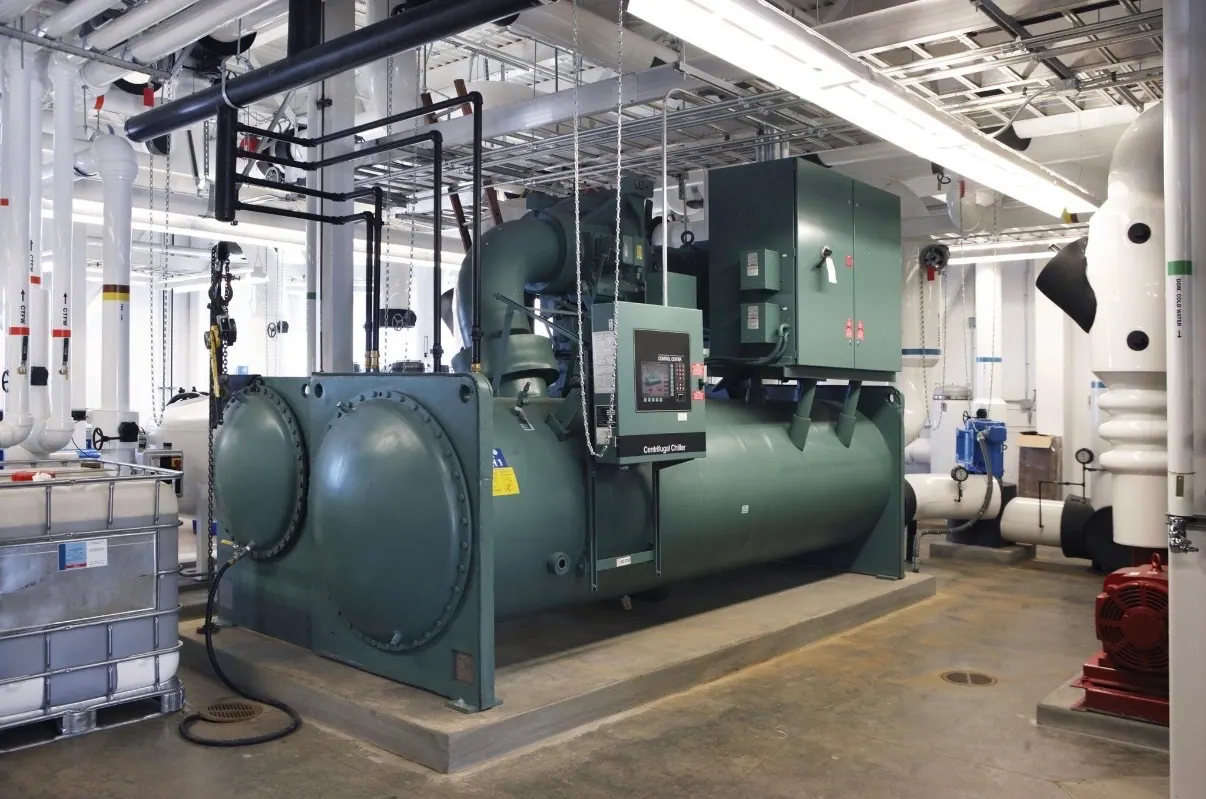
We buy chillers in mechanical rooms in Austin, Texas, with cash offers and upfront payment when a purchase is agreed. We handle removal, and the seller does not need to test the equipment.
From first photo to final haul, we take care of the details so you can move forward.
Share a nameplate photo, the location, and whatever you know about your equipment. No testing is required from you.
We review the chiller and your site information, then make an offer. Payment is upfront.
We handle disconnects, refrigerant recovery, crane and rigging, loading, freight and hauling.
Selling a chiller inside a mechanical room involves two related questions: what equipment is being offered, and how can it be transferred out under the site’s rules? For an Austin facility, the useful first conversation connects the person authorized to sell with the person who can explain access and operating constraints. One person may fill both roles, but that should be confirmed rather than assumed.
We buy used water-cooled and air-cooled industrial and commercial chillers, including centrifugal, screw, and scroll units. Equipment generally ranges from 20 to more than 2,000 cooling tons, and all refrigerants are considered. Idle and non-running units may also be reviewed. A ton measures cooling capacity; it does not tell us the machine’s weight or how it can be moved.
Begin with the manufacturer, model and serial number if readable, rated capacity, and the number of units involved. A nameplate photograph can help, but it is fine to report what is legible and flag anything uncertain. Include a few wider images showing the chiller in the room, nearby equipment, and the visible route toward an exit.
Share what is known about operating status, refrigerant, service history, and whether controls or other components are included. If the unit is already disconnected, stored, or missing parts, say so plainly. Service records and drawings can help when available, but an initial review does not depend on complete documentation. Do not start the chiller, arrange a test, repair it, or open its refrigerant circuit to prepare for review.
A mechanical-room door is only the first part of the route. The path may include tight turns, thresholds, stairs, a loading area, or a lift from an upper level. Door and corridor dimensions, overhead clearance, floor access, and approximate equipment dimensions are useful where known. Photos can show context, but they do not replace checking the actual route before work is scheduled.
Tell us whether the chiller remains connected and whether nearby systems must stay in service. If the room has restricted entry, shared access, occupied areas, or a limited work window, the authorized site contact can explain the applicable rules. Those details help shape a practical plan; the actual work depends on the equipment and conditions found at the facility.
The person offering the asset should be able to confirm ownership or authority to sell and identify exactly what is included. The site contact can address access, escorts, permits, isolation procedures, and approvals required before equipment work begins. Where approval must come from another owner, property manager, or department, establish that path before agreeing to a pickup date.
If a purchase is agreed, we coordinate and handle appropriate refrigerant recovery with qualified personnel, equipment disconnects, rigging, crane work when needed, loading, freight, and hauling. The method and sequence depend on the chiller, its current condition, the route, and site requirements. The seller is not expected to hire a recovery contractor, arrange a crane, provide a truck, or move the unit to the loading area.
The facility’s role is to provide accurate information, authorized access, site rules, and necessary approvals. Tell us about known restrictions early, including areas that must remain clear or services that cannot be interrupted. Do not vent refrigerant or attempt to open a circuit; leave recovery and related equipment work to the qualified personnel arranged for the job.
A chiller does not have to be operational for us to consider it. When a unit is idle or non-running, describe what is known without guessing: when it was last used, whether components are missing, and whether the condition is uncertain. Photos of visible damage or corrosion can support the review. The final assessment depends on the asset and the actual removal project, so consideration does not guarantee a purchase.
A cash offer depends on the equipment and review of the job required to collect it; no amount is guaranteed before that review. If we agree to purchase, payment is made upfront before pickup, on terms agreed by both sides. Confirm the units and components included, sale authority, payment terms, access responsibilities, and the planned removal scope before scheduling work.
For a useful first step, assemble the available identification, room and route photos, known condition, and access notes. Identify the authorized seller and the site contact, then share the information for review. You do not need to clean, test, disconnect, or restart the chiller before that conversation. Clear facts and an early handoff make it easier to determine whether the equipment and removal project are a fit.

Air-cooled or water-cooled. Centrifugal, screw or scroll. From single units to large shutdown projects, we buy industrial chillers across Texas.
Send us your chiller details and nameplate photos for a cash offer. Don’t worry if you don’t know every specification—we can start with what you have.
Call or text(614) 715-3047TEXT NAMEPLATE PHOTOS ↗Prefer email?
saleselectricalbuyers@gmail.com