
SEND THE DETAILS
Share a nameplate photo, the location, and whatever you know about your equipment. No testing is required from you.
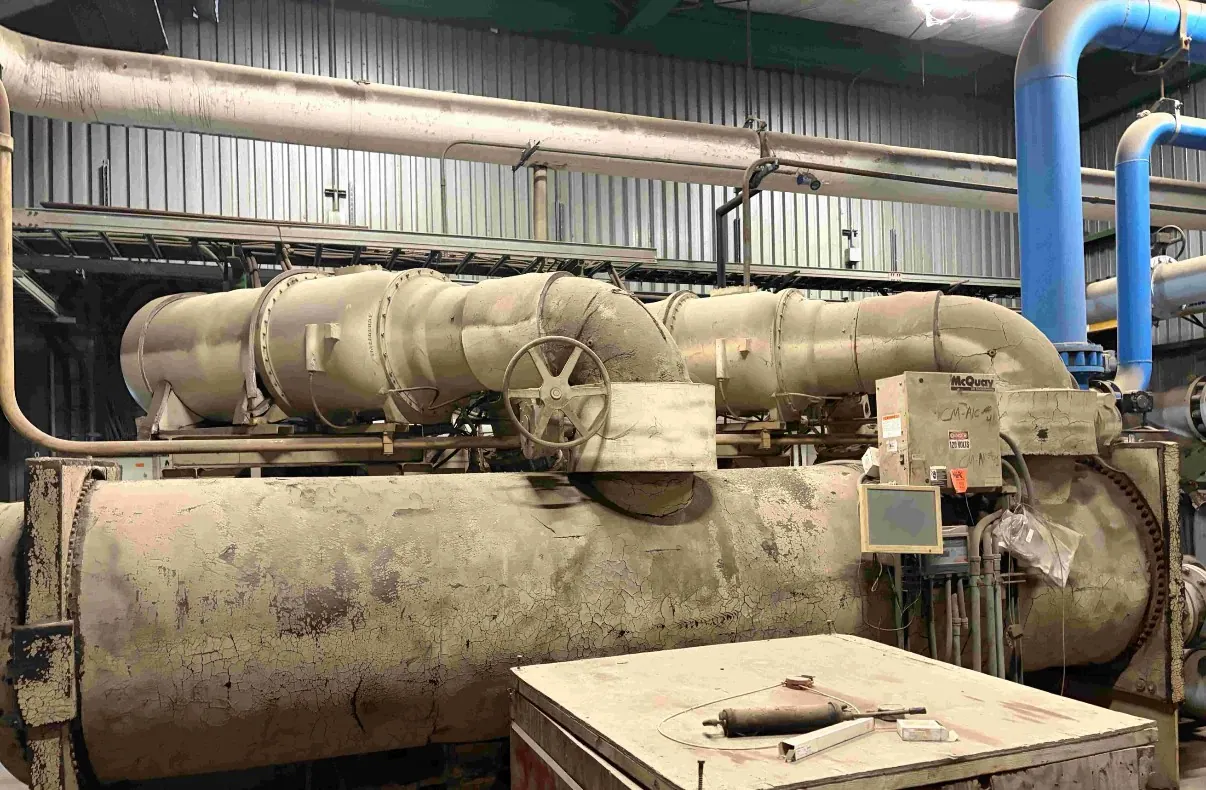
We buy McQuay chillers in Texas for projects involving facility closure. We offer upfront payment, handle removal, and do not require seller testing.
From first photo to final haul, we take care of the details so you can move forward.
Share a nameplate photo, the location, and whatever you know about your equipment. No testing is required from you.
We review the chiller and your site information, then make an offer. Payment is upfront.
We handle disconnects, refrigerant recovery, crane and rigging, loading, freight and hauling.
Closing a facility can turn a chiller from working infrastructure into an asset that must be sold and cleared on a defined schedule. We buy used McQuay water-cooled and air-cooled chillers in Texas, including idle and non-running equipment. The manufacturer name is a useful identifier, but it does not establish the unit’s age, configuration, condition, refrigerant, or value.
A realistic cash offer follows a review of both the equipment and the removal work. Capacity, model and configuration, condition, included components, and the actual route out of the building can all matter. A cooling-ton rating describes capacity, not shipping weight or the effort required to extract a machine. Any offer depends on the asset and project review; it is not guaranteed before those details are understood.
Start with the information already available. A photograph of the McQuay nameplate, overall views, and pictures of connections and surrounding clearances can help identify what is being considered. Share model and serial details if legible, along with records or known modifications if you have them. If the plate is missing or unreadable, say so and provide what you can.
Describe whether the unit is operating, idle, disconnected, or known to be non-running, without trying to prove its condition. The seller does not need to test, run, repair, or restart it. Do not open the refrigerant circuit or vent refrigerant to prepare for a review. If the chiller has been out of service, simply report what is known and leave unknowns clearly marked as unknown.
At a closing site, nearby equipment may be assigned to another buyer, retained for a remaining operation, or scheduled for separate removal. Identify the chiller itself and specify whether items such as controls or accessories are included. Point out adjacent pumps, piping, panels, or equipment that must stay. Photos with the intended boundary described in plain language help align the proposed purchase with the removal scope.
A property handover date is useful, but it does not by itself determine when a chiller can be removed. Tell us the target clearance date, when access is permitted, and which authorized contact can approve work at the site. The actual plan may need to account for appointment rules, escorts, permits, loading-hour limits, or an access route shared with other work, if those constraints apply.
Explain where the unit sits and how a crew could reach it: for example, whether it is on a floor, in a plant area, or outdoors, and which doors, corridors, docks, or staging areas are relevant. Mention narrow clearances, overhead obstructions, stairs, or nearby equipment only where they are part of the actual route. These details help determine the removal scope; they should not be guessed from the facility address or chiller capacity.
During a closure, some utilities may already be isolated while others may still serve equipment or areas that remain active. Let the site contact identify what is connected, what must stay available, and which approvals or isolation procedures govern the work. Do not disconnect the chiller on the assumption that a service is no longer needed. Disconnects are coordinated as part of the agreed removal scope.
A water-cooled or air-cooled configuration can affect the connections and physical work involved, but the specific arrangement must be confirmed from the machine and site information. We arrange appropriate refrigerant recovery with qualified personnel, along with disconnects, rigging, crane work when needed, loading, freight, and hauling. The buyer handles the equipment work; the seller or site provides accurate information, authorized access, applicable rules, and necessary approvals.
Dimensions, verified weight, lift points, surrounding clearance, and the path to a truck inform handling. Cooling tons are not a substitute for shipping weight, and a photo cannot establish whether a lift is safe. If equipment records, lift information, or building plans are available, they may help; their absence does not mean the seller must commission new testing or arrange a crane or hauler.
If the review supports a purchase and both sides agree to the scope and terms, payment is made upfront before pickup. The exact purchase terms, equipment included, and removal plan should be confirmed with the authorized seller before work begins. A cash offer is a proposal tied to the asset and actual project review, not a guaranteed amount based solely on brand or tonnage.
Send the chiller identification you have, current photos, a straightforward account of its known condition, the equipment included, and the site’s access and timing requirements. Note anything uncertain rather than filling gaps with assumptions. That gives us a basis to review the McQuay chiller, discuss whether the closure schedule and removal scope are workable, and determine whether to make an offer. No seller testing or refrigerant handling is needed to begin.

Air-cooled or water-cooled. Centrifugal, screw or scroll. From single units to large shutdown projects, we buy industrial chillers across Texas.
Send us your chiller details and nameplate photos for a cash offer. Don’t worry if you don’t know every specification—we can start with what you have.
Call or text(614) 715-3047TEXT NAMEPLATE PHOTOS ↗Prefer email?
saleselectricalbuyers@gmail.com