
SEND THE DETAILS
Share a nameplate photo, the location, and whatever you know about your equipment. No testing is required from you.
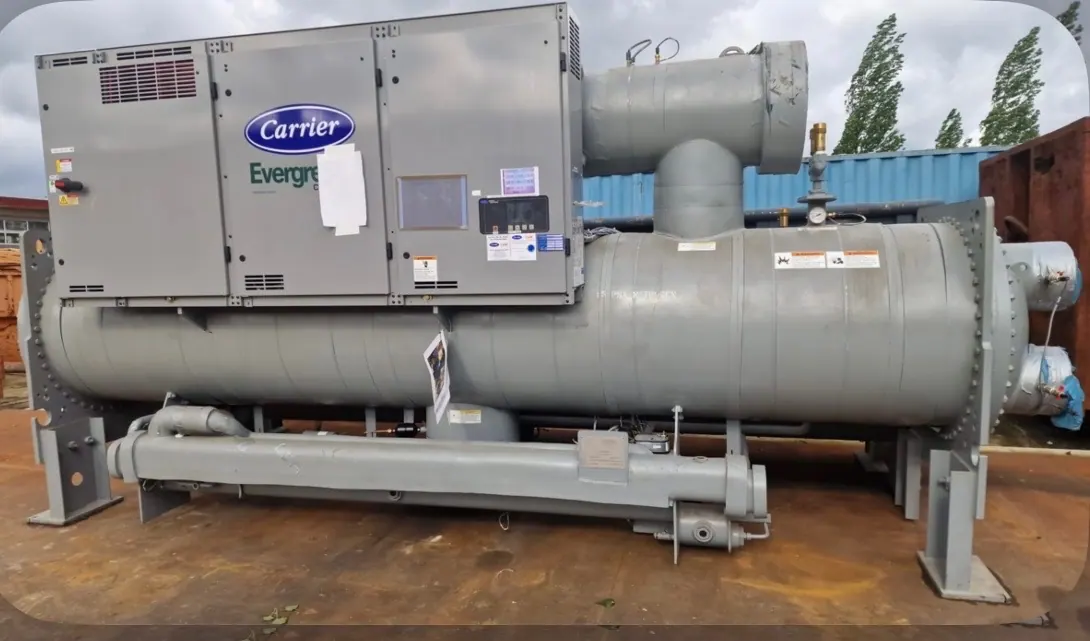
We buy Smardt chillers in Texas for projects involving refrigerant recovery. We offer upfront payment, handle removal, and do not require seller testing.
From first photo to final haul, we take care of the details so you can move forward.
Share a nameplate photo, the location, and whatever you know about your equipment. No testing is required from you.
We review the chiller and your site information, then make an offer. Payment is upfront.
We handle disconnects, refrigerant recovery, crane and rigging, loading, freight and hauling.
A Smardt chiller in Texas can be considered for purchase whether it is operating, idle, or not running. The brand name alone does not establish its model, compressor arrangement, condition, refrigerant, or value. Those details come from the actual equipment and the information available about it. We review water-cooled and air-cooled chillers, including centrifugal, screw, and scroll units, generally from 20 to more than 2,000 cooling tons, and consider all refrigerants.
For an initial review, send the information you already have rather than arranging a test. A clear photograph of the identification plate can help establish the manufacturer’s model and serial details, while a separate image of the refrigerant label may help identify the marked refrigerant. If a label is faded, missing, or difficult to read, say so; do not open the circuit or guess at its contents.
Useful photographs show the chiller as it sits, not only a close-up of its nameplate. One broad view can show the overall unit and surrounding space. Other views can document controls, visible piping connections, access doors, or any apparent damage. These images help describe configuration and removal conditions; they do not substitute for a service inspection or prove that internal components work.
Take pictures from safe, authorized locations and avoid removing panels, moving guards, or entering restricted areas for the sake of a better image. If the equipment is installed in a tight mechanical room or behind a controlled access point, a picture from the available vantage point is still useful. Add a short note about what the photograph cannot show.
Labels, service records, and conversion documents can answer different questions. A nameplate may identify the unit; a refrigerant marking may state the designated refrigerant; maintenance or service records may describe repairs or changes. None should be treated as confirmation of the chiller’s present charge or operating condition unless that is actually known. Share uncertainty plainly, especially if the unit has been modified or its history is incomplete.
Records are helpful but not a prerequisite for beginning a conversation. Do not run, restart, test, repair, drain, or vent the chiller to improve a potential offer. You do not need to hire a recovery contractor or prepare the equipment for removal before it can be reviewed.
Pictures of the unit help identify the asset; route details help evaluate how it could leave the site. Describe the path from the chiller to the loading area, including relevant doors, turns, stairs, floor changes, gates, or overhead restrictions. A wide shot of the room entrance and loading area can help explain spatial relationships that isolated equipment photos miss. Do not estimate dimensions unless you have reliable measurements.
Also note known access windows, escort requirements, permits, work-hour limits, and areas that must remain clear. These constraints vary by property, so a general description of the Texas location is less useful than practical information about the actual site. The authorized site contact should confirm access, site rules, and required approvals before a pickup plan is finalized.
If a purchase is agreed, we arrange and handle appropriate refrigerant recovery with qualified personnel, along with equipment disconnects, rigging, crane work when needed, loading, freight, and hauling. The appropriate sequence depends on the equipment configuration and facility procedures. Do not vent refrigerant or open a refrigerant circuit. Our removal work is coordinated with the authorized site contact; the site provides accurate information and necessary access and approvals.
A cooling ton describes capacity, not the machine’s physical weight. Photos can show the general setting, but they do not establish lift weight, rigging points, or crane requirements. Those details need review for the actual unit and route. The seller is not expected to arrange a crane, truck, or recovery crew, or to move the chiller to make it accessible.
A cash offer depends on the asset and the project review, including the equipment information and removal scope. It is not guaranteed, and no particular amount can be inferred from the Smardt name, cooling capacity, refrigerant label, or a photograph alone. If we agree to purchase the equipment, payment is made upfront before pickup, on the terms agreed with the seller.
To begin, gather any available unit and refrigerant-label photos, a few views of the equipment and its route, and notes about known condition, history, and site restrictions. Send what is available without delaying to test or prepare the chiller. Clear identification, candid uncertainty, and practical access information give us a sound basis to review the equipment and discuss whether a purchase may be possible.

Air-cooled or water-cooled. Centrifugal, screw or scroll. From single units to large shutdown projects, we buy industrial chillers across Texas.
Send us your chiller details and nameplate photos for a cash offer. Don’t worry if you don’t know every specification—we can start with what you have.
Call or text(614) 715-3047TEXT NAMEPLATE PHOTOS ↗Prefer email?
saleselectricalbuyers@gmail.com