
SEND THE DETAILS
Share a nameplate photo, the location, and whatever you know about your equipment. No testing is required from you.
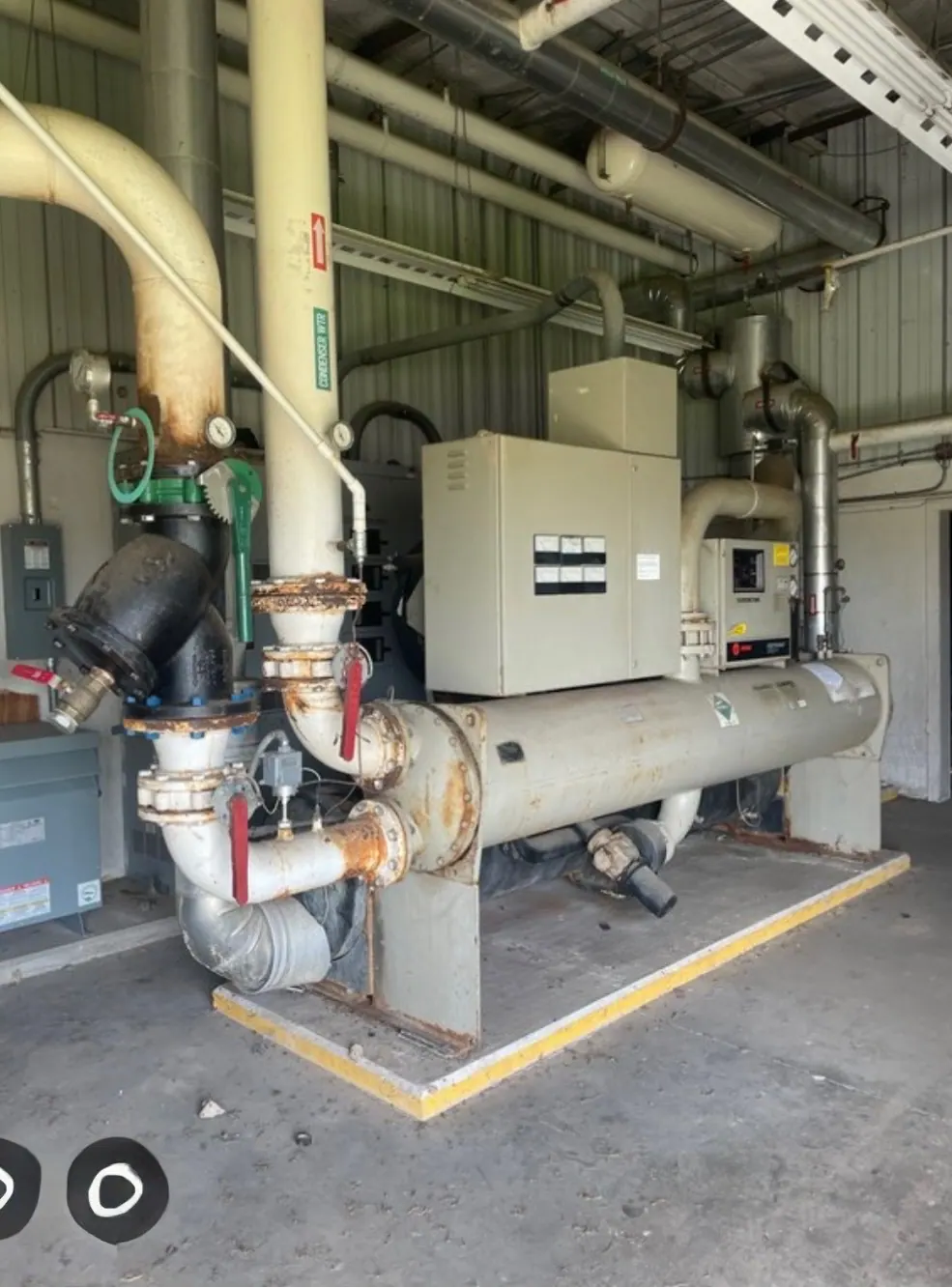
We buy manufacturing plant chillers in Beaumont, Texas, with cash offers and upfront payment when a purchase is agreed. We handle removal, and the seller does not need to test the equipment.
From first photo to final haul, we take care of the details so you can move forward.
Share a nameplate photo, the location, and whatever you know about your equipment. No testing is required from you.
We review the chiller and your site information, then make an offer. Payment is upfront.
We handle disconnects, refrigerant recovery, crane and rigging, loading, freight and hauling.
A manufacturing plant chiller can be reviewed without restarting it or proving its cooling capacity. Begin with the equipment’s location and visible identification. A clear nameplate photo may show the manufacturer, model, serial number, and rated tonnage; if the plate is unreadable or missing, send what can be observed without opening panels or approaching unsafe areas.
Also note whether the unit is installed, stored, idle, or known not to run. A short description of its history can help, but avoid guessing about faults or refrigerant charge. We consider water-cooled and air-cooled equipment, including centrifugal, screw, and scroll chillers, generally from 20 to 2,000+ cooling tons, and consider all refrigerants. A cooling ton measures capacity, not the machine’s weight.
Tell us what is included in the proposed sale: the chiller alone, or identified components such as a control panel or attached accessories. Point out pipes, wiring, pumps, or controls that appear shared with equipment staying at the facility. You do not need to determine how to disconnect them; the purpose is to make clear what must remain untouched.
If the plant is operating, mention nearby production equipment or services that cannot be interrupted, along with any required work windows. If the area is vacant or the unit has already been isolated, say so. These details help frame an actual removal plan rather than assuming a manufacturing shutdown or a standard installation.
Photos can answer practical questions that a model number cannot. If safe and permitted, take views of the chiller, its immediate work area, the route toward an exit, and the intended loading area. Include visible doors, overhead restrictions, stairs, fences, or tight turns. Do not enter a restricted space or move stored material just to obtain a photograph.
In Beaumont, the relevant conditions are the ones at the specific property: gate procedures, escorts, permits, loading access, and scheduling limits may vary. Note whether a truck can approach the building and whether the route crosses active work areas. The authorized site contact can confirm access rules and approvals before a pickup plan is set.
Leave testing, repairs, and restart attempts out of the preparation. The seller does not need to run the chiller, hire a recovery contractor, disconnect it, arrange a crane, or hire a hauler before asking us to review it. Do not vent refrigerant or open the circuit. If the current charge or refrigerant type is unknown, report that uncertainty rather than trying to check it.
We arrange appropriate refrigerant recovery with qualified personnel and coordinate disconnects, rigging, crane work when needed, loading, freight, and hauling. The work is planned around the actual equipment and site requirements. The facility supplies accurate information, authorized access, applicable rules, and necessary approvals; our team handles the equipment-side removal under the agreed scope.
If the chiller is being replaced, share the expected availability date and identify who controls the work area. A removal may need to fit between production demands, contractor work, or installation of replacement equipment. If the unit is part of a wider retirement or decommissioning project, distinguish the chiller being offered from assets and services that remain with the plant.
Schedules are easier to assess when the person coordinating access can explain isolation boundaries and site procedures. We do not assume that a replacement project includes every connected component, or that a broader decommissioning scope is part of the sale. Those boundaries should be confirmed before work is scheduled.
A cash offer depends on the identified asset and review of the actual project, including its condition, removal access, included equipment, and transport requirements. Considering a unit does not guarantee a purchase. If we agree to buy it, payment is made upfront before pickup on the terms agreed by both sides; confirm the equipment included, payment arrangement, and authorized seller before scheduling removal.
To begin, assemble whatever is available: nameplate or model information, approximate capacity, known operating status, current location, photographs, refrigerant information if known, and a brief note about the route and site contact. Missing details are fine—identify them as unknown. We can review the information, clarify the scope, and determine whether to discuss an offer without asking you to test, repair, or prepare the machine for operation.

Air-cooled or water-cooled. Centrifugal, screw or scroll. From single units to large shutdown projects, we buy industrial chillers across Texas.
Send us your chiller details and nameplate photos for a cash offer. Don’t worry if you don’t know every specification—we can start with what you have.
Call or text(614) 715-3047TEXT NAMEPLATE PHOTOS ↗Prefer email?
saleselectricalbuyers@gmail.com