
SEND THE DETAILS
Share a nameplate photo, the location, and whatever you know about your equipment. No testing is required from you.
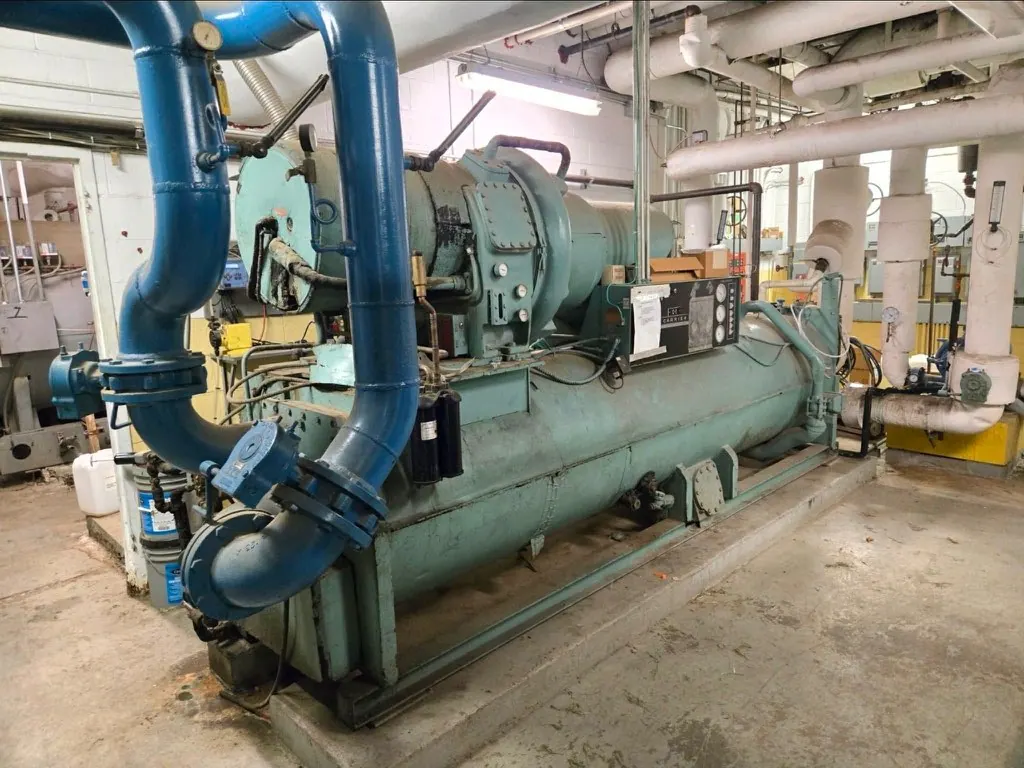
We buy university campus chillers in Beaumont, Texas, with cash offers and upfront payment when a purchase is agreed. We handle removal, and the seller does not need to test the equipment.
From first photo to final haul, we take care of the details so you can move forward.
Share a nameplate photo, the location, and whatever you know about your equipment. No testing is required from you.
We review the chiller and your site information, then make an offer. Payment is upfront.
We handle disconnects, refrigerant recovery, crane and rigging, loading, freight and hauling.
You do not need to start a campus chiller to discuss selling it. There is no need to repair it, arrange refrigerant recovery, disconnect utilities, or prepare a crane and hauler before an initial review. We buy used university and other commercial or industrial chillers, including idle and non-running units. If a purchase is agreed, we coordinate the removal work and pay upfront before pickup on the agreed terms.
To begin, share what you know about the machine, where it is located on campus, and who can authorize its sale and site access. A model or equipment-plate photo, a few clear overall photos, and an honest description of its condition are useful. Incomplete details are fine; identify what is unknown rather than guessing.
University cooling equipment may serve one building or tie into a wider campus system. The unit offered could be a water-cooled or air-cooled chiller, and its compressor may be centrifugal, screw, or scroll. We generally consider units from about 20 cooling tons to more than 2,000, and consider all refrigerants. Those ranges describe the equipment we review, not a promise to buy any particular unit.
Operating history can help, but a seller does not have to establish that a chiller runs. Tell us whether it is operating, idle, incomplete, or known to have a fault, if that information is available. Do not energize equipment or open a refrigerant circuit to gather details. If a label is difficult to reach, an existing record or a photograph from a safe location may be enough to start.
The machine’s position matters as much as its general description. Note whether it is in a mechanical room, on a roof, at grade, or in another setting; identify the nearest practical service or loading access. Photos of the equipment and its route can help show doorways, corridors, stairs, overhead obstructions, and the space available for staging. The actual site review determines what can be moved and how.
Campus access may involve appointments, escorts, contractor check-in, work permits, quiet hours, occupied spaces, or limits on blocking a dock. Mention only the restrictions that apply to this property. If classes, events, deliveries, or other work affect the timing, an authorized site contact can explain the available work window and the routes that must remain open.
A replacement or decommissioning project can involve piping, electrical services, controls, or equipment that will remain in use. Clarify which chiller is for sale and which adjacent assets or connections are excluded. The removal boundary should be agreed before work begins, especially where the campus system must continue serving other buildings. We handle the equipment work within the agreed scope; the site supplies accurate information, authorized access, applicable rules, and necessary approvals.
When a purchase is agreed, we arrange appropriate refrigerant recovery with qualified personnel, utility disconnects, rigging, crane work when needed, loading, freight, and hauling. The requirements depend on the chiller’s configuration, condition, current charge, surroundings, and route out of the building. The seller does not need to hire those services or carry out the recovery. Do not vent refrigerant or open the circuit.
A rooftop unit, for example, may require a lift plan that accounts for roof access, obstructions, ground conditions, staging space, and an approved crane position. An indoor machine may instead be constrained by low clearances, narrow corridors, or shared service areas. These are questions for review of the actual property, not assumptions based on a campus address or a photograph alone.
Cooling tons measure capacity; they do not tell a crew how heavy a chiller is or prove that a lift is safe. Dimensions, verified weight where available, rigging points, and the route need to inform the handling plan. Share records or visible equipment details you already have, and flag anything uncertain for the removal team to assess.
A cash offer depends on the specific asset and review of the proposed project. Condition, completeness, refrigerant information, access, and removal requirements may all affect the decision and scope. An initial conversation is not a guaranteed offer or a commitment to purchase. If both sides agree to a purchase, the amount, included equipment, timing, and terms should be confirmed before pickup; payment is made upfront before pickup on those agreed terms.
Gather the identification and photos that are readily available, note the machine’s known status and location, and ask the appropriate facilities or property representative to confirm who can authorize the sale. Include the service entrance, access rules, and any timing limits you already know. Then submit those details for review. There is no need to restart, clean, repair, disconnect, or move the chiller first; the next step is to establish whether the equipment and removal scope can be agreed.

Air-cooled or water-cooled. Centrifugal, screw or scroll. From single units to large shutdown projects, we buy industrial chillers across Texas.
Send us your chiller details and nameplate photos for a cash offer. Don’t worry if you don’t know every specification—we can start with what you have.
Call or text(614) 715-3047TEXT NAMEPLATE PHOTOS ↗Prefer email?
saleselectricalbuyers@gmail.com