
SEND THE DETAILS
Share a nameplate photo, the location, and whatever you know about your equipment. No testing is required from you.
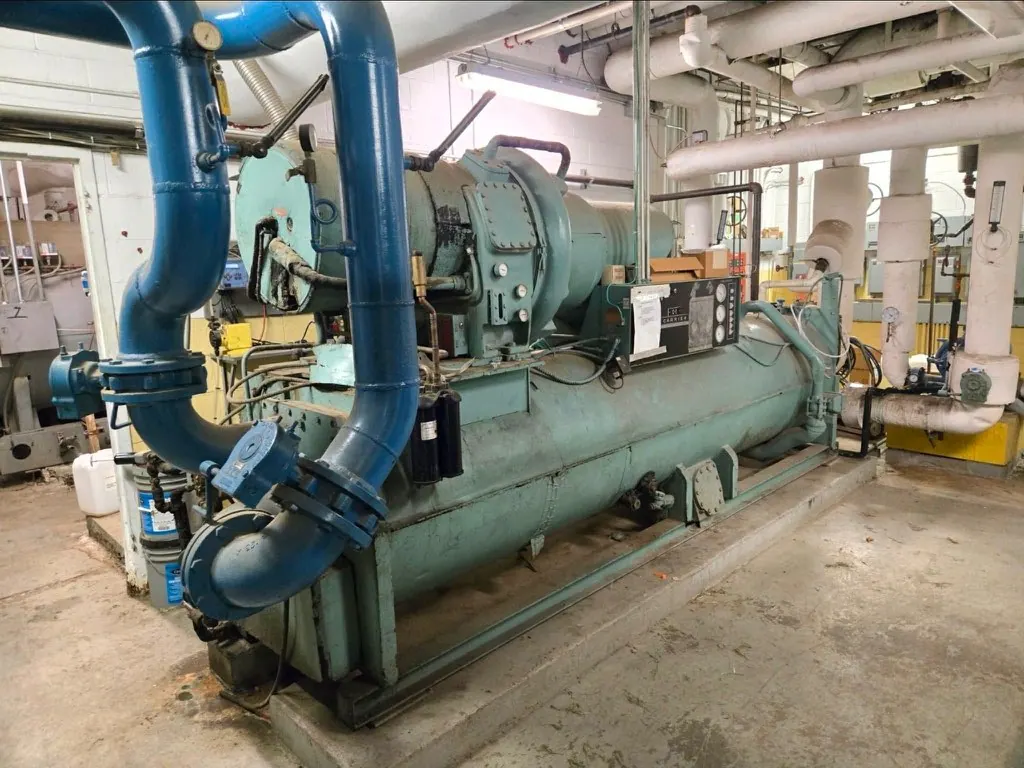
We buy Daikin chillers in Houston, Texas, with cash offers and upfront payment when a purchase is agreed. We handle removal, and the seller does not need to test the equipment.
From first photo to final haul, we take care of the details so you can move forward.
Share a nameplate photo, the location, and whatever you know about your equipment. No testing is required from you.
We review the chiller and your site information, then make an offer. Payment is upfront.
We handle disconnects, refrigerant recovery, crane and rigging, loading, freight and hauling.
A Daikin chiller can be considered for purchase even if it is idle or no longer runs. There is no need to restart it, arrange a performance test, repair it, or open its refrigerant circuit. For an initial review, useful information is what you can safely observe: the equipment identification, its general condition, what is included, and how it could physically reach a loading point.
The route matters because removal is more than lifting a machine. A unit may sit inside a mechanical room, on a roof, or in an outdoor service area; the actual setup is not known until it is described. Note the path from the chiller to the truck’s likely staging area, including doors, stairs, changes in level, gates, and any overhead or floor-clearance limits you already know about. Do not enter restricted areas or move equipment to gather details.
Send a photo of the Daikin nameplate if it is accessible, plus a wider view that shows the whole assembly and its surroundings. Include the model and serial information when legible, but do not guess at missing characters. If controls, pumps, accessories, or loose components are part of the sale, identify them separately. Likewise, point out adjacent equipment and piping that must remain in place.
Capacity information helps establish scale, but a cooling ton measures refrigeration capacity, not the chiller’s weight. Weight, lifting points, dimensions, and disassembly requirements need to be confirmed from reliable equipment information or the actual removal review. Do not infer a crane or rigging plan from tonnage alone.
Describe what is known and mark uncertainty plainly. For example, say whether the unit is connected, disconnected, stored, or reported as non-running, and mention visible damage, corrosion, missing panels, or known modifications. If operating history or service records are available, they may help, but their absence does not require you to arrange testing. A photograph can document visible condition; it cannot establish internal condition or current refrigerant charge.
Before pickup, the authorized site contact should be able to explain access rules, approval requirements, work hours, safety procedures, and any areas that cannot be entered. If the route passes through an active plant or shared space, identify the boundaries and who can authorize work there. A roof location, narrow opening, limited staging area, or operating neighboring equipment could affect the sequence, depending on the actual property.
The buyer coordinates appropriate refrigerant recovery with qualified personnel, along with disconnects, rigging, crane work when needed, loading, freight, and hauling. Sellers are not expected to hire a recovery contractor, crane, or hauler for this process. The site provides accurate information, authorized access, applicable rules, and necessary approvals; the equipment work is the buyer’s responsibility under the agreed scope. Do not vent refrigerant or attempt to open the circuit.
A nameplate can identify the refrigerant originally specified, but it may not tell you what is currently in the system if the chiller has been altered or serviced. Share the label information and any records you already have; do not handle refrigerant to fill gaps. Recovery requirements and removal methods are determined for the actual equipment and site rather than assumed from the brand or model alone.
If a plant upgrade or changeover is underway, clarify which Daikin unit is surplus, when the area can be released, and which connections or neighboring assets are outside the sale. Where other equipment must remain in service, the authorized contact can identify isolation limits and an acceptable work window. The removal plan should protect the agreed boundaries and reflect the facility’s approvals.
We buy used industrial and commercial water-cooled and air-cooled chillers, including Daikin equipment, across centrifugal, screw, and scroll designs. Units generally range from 20 to more than 2,000 cooling tons, and all refrigerants are considered. That range does not mean every machine will be purchased: an offer depends on the specific asset and project review, including its condition, included components, access, and removal scope.
If a purchase is agreed, payment is made upfront before pickup under the terms both sides confirm. The seller does not need to deliver the chiller or complete removal work. Before collection, confirm the equipment included, the authorized handoff contact, access arrangements, approvals, and the agreed pickup window so the physical work can be coordinated accordingly.
Gather whatever is readily available: a nameplate image, overall photos, known condition, included items, and a short description of the route to the loading area. Note what is uncertain rather than trying to resolve it by starting or dismantling the machine. With that information, the equipment and removal scope can be reviewed, and the next step toward a possible cash offer can be discussed for your Houston-area project.

Air-cooled or water-cooled. Centrifugal, screw or scroll. From single units to large shutdown projects, we buy industrial chillers across Texas.
Send us your chiller details and nameplate photos for a cash offer. Don’t worry if you don’t know every specification—we can start with what you have.
Call or text(614) 715-3047TEXT NAMEPLATE PHOTOS ↗Prefer email?
saleselectricalbuyers@gmail.com