
SEND THE DETAILS
Share a nameplate photo, the location, and whatever you know about your equipment. No testing is required from you.
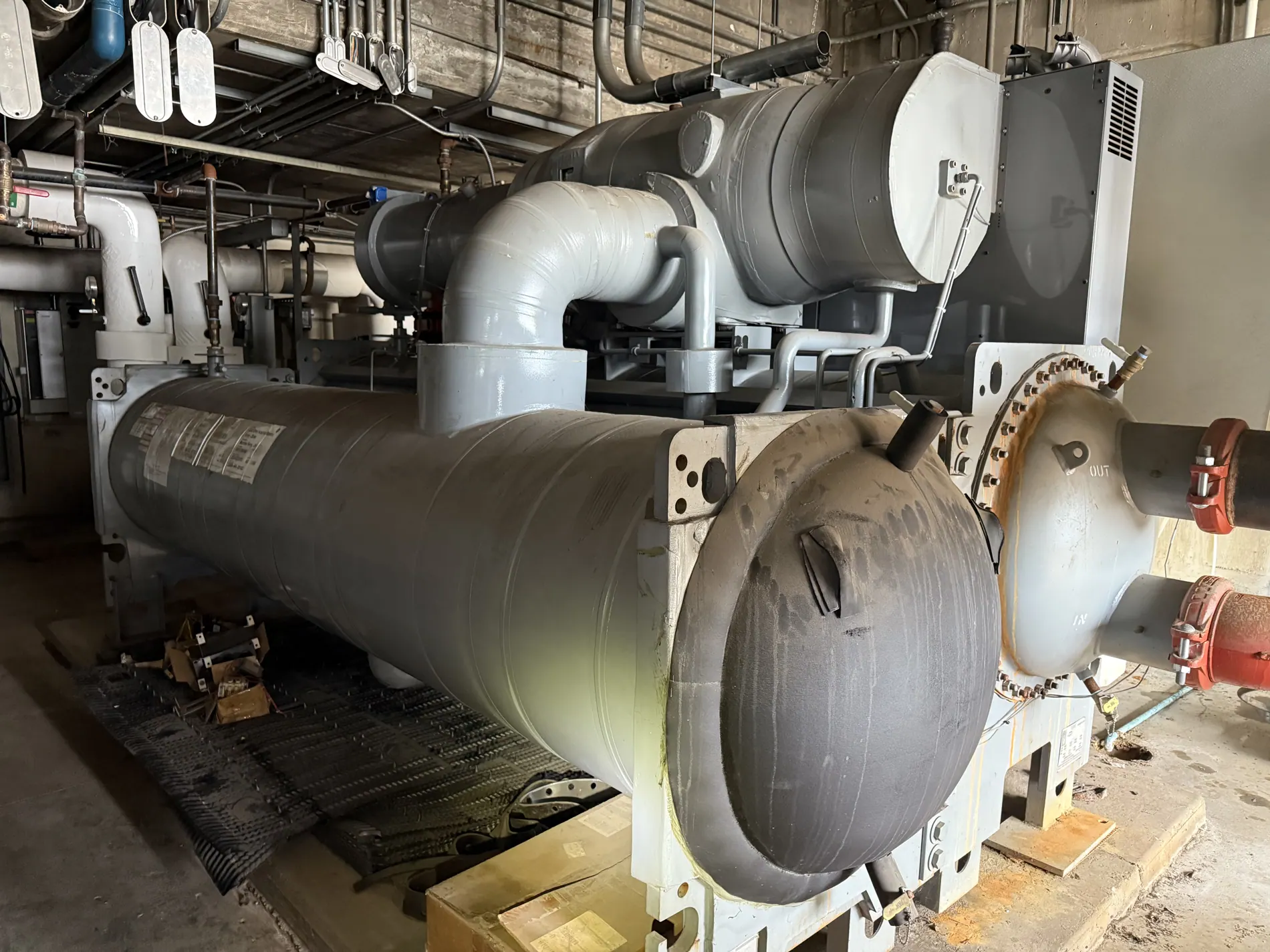
We buy Carrier chillers in Texas for projects involving surplus equipment. We offer upfront payment, handle removal, and do not require seller testing.
From first photo to final haul, we take care of the details so you can move forward.
Share a nameplate photo, the location, and whatever you know about your equipment. No testing is required from you.
We review the chiller and your site information, then make an offer. Payment is upfront.
We handle disconnects, refrigerant recovery, crane and rigging, loading, freight and hauling.
You do not need to restart, test, repair, or clean a surplus Carrier chiller before asking us to review it. Leave the refrigerant circuit closed; do not vent or open it. We buy used industrial and commercial chillers, including Carrier-branded units, and consider idle or non-running equipment. An initial review can begin with a few safe-to-gather details about the machine and where it sits.
A clear photograph of the main nameplate is useful if it is accessible without moving panels or entering a restricted area. Include the model and serial information, rated cooling capacity, voltage, and refrigerant marking when legible. Separate compressor or control labels can help distinguish the installed configuration, especially if components have changed over time.
Also note whether the chiller is operating, idle, disconnected, or known not to run. If its history is incomplete, say so; there is no need to guess at the cause of a shutdown or assemble service records that are unavailable. A few wide photographs and close-ups often communicate more than a speculative description.
Describe the equipment being offered and identify items that will stay with the facility. Controls, pumps, heat exchangers, electrical gear, or loose components may or may not be part of the sale, depending on the actual arrangement. Do not assume that everything nearby belongs with the chiller; a clear boundary helps keep the review and removal plan focused.
We consider water-cooled and air-cooled equipment, including centrifugal, screw, and scroll chillers, generally from 20 to more than 2,000 cooling tons, and consider all refrigerants. Capacity is a cooling measure, not a measure of the machine’s weight. The model, configuration, condition, and pickup scope still need review; tonnage or the Carrier name alone does not establish an offer.
A unit may be surplus after a replacement, a change in cooling demand, a project that did not proceed, or a facility closure. It may remain connected, sit in a mechanical room, or be stored elsewhere. Those circumstances affect how a removal could be organized, but they do not by themselves determine whether we will purchase it. We review the particular asset and project before making a cash offer.
Be candid about known damage, missing parts, corrosion, storage conditions, or prior repairs. If the refrigerant charge or equipment history is uncertain, note that uncertainty rather than trying to inspect the circuit. We arrange appropriate refrigerant recovery with qualified personnel as part of an agreed removal; the seller does not need to hire recovery work to request a review.
For an installed machine, useful context includes its location, nearby operating equipment, door and corridor dimensions if known, overhead clearance, and the route to a loading area. A chiller in a basement or tight plant room may require a different sequence from one stored outdoors. A crane may be appropriate at some sites, but that depends on the actual lift, route, and surrounding conditions—not simply the unit’s rated tons.
Share practical restrictions such as permitted work hours, security check-in, escort requirements, loading-dock reservations, overhead lines, or limits on vehicle access, if they apply. We coordinate with the authorized site contact on disconnects, rigging, crane work when needed, loading, freight, and hauling. The site supplies accurate information, authorized access, applicable rules, and necessary approvals; the removal plan is agreed around those conditions.
A cash offer depends on review of the chiller and the actual project, including its condition, included components, access, and removal requirements. An offer is not automatic, and no amount can be inferred from brand or capacity. If we agree to purchase the equipment, payment is made upfront before pickup on the agreed terms. Confirm the exact unit and included items, sale authority, payment terms, and pickup scope before work is scheduled.
Equipment work is the buyer’s responsibility under the agreed arrangement. You are not expected to test, run, repair, restart, disconnect, or prepare the chiller yourself. Keep the machine as it is and follow your facility’s own safety and access procedures while the details are reviewed.
To begin, gather the nameplate image if safely available, a few views of the complete machine, known condition and refrigerant information, a list of included items, and basic access notes. If photographs or records are unavailable, explain what you do know and what remains uncertain. The authorized site contact can later clarify route restrictions and approvals before a pickup plan is settled.
Send those details for review and identify who can authorize a sale and coordinate site access. We can then discuss whether the Carrier chiller fits a purchase and what removal scope would need to be agreed. Until terms and timing are confirmed, there is no need to alter the equipment or arrange a lift or haul.

Air-cooled or water-cooled. Centrifugal, screw or scroll. From single units to large shutdown projects, we buy industrial chillers across Texas.
Send us your chiller details and nameplate photos for a cash offer. Don’t worry if you don’t know every specification—we can start with what you have.
Call or text(614) 715-3047TEXT NAMEPLATE PHOTOS ↗Prefer email?
saleselectricalbuyers@gmail.com