
SEND THE DETAILS
Share a nameplate photo, the location, and whatever you know about your equipment. No testing is required from you.
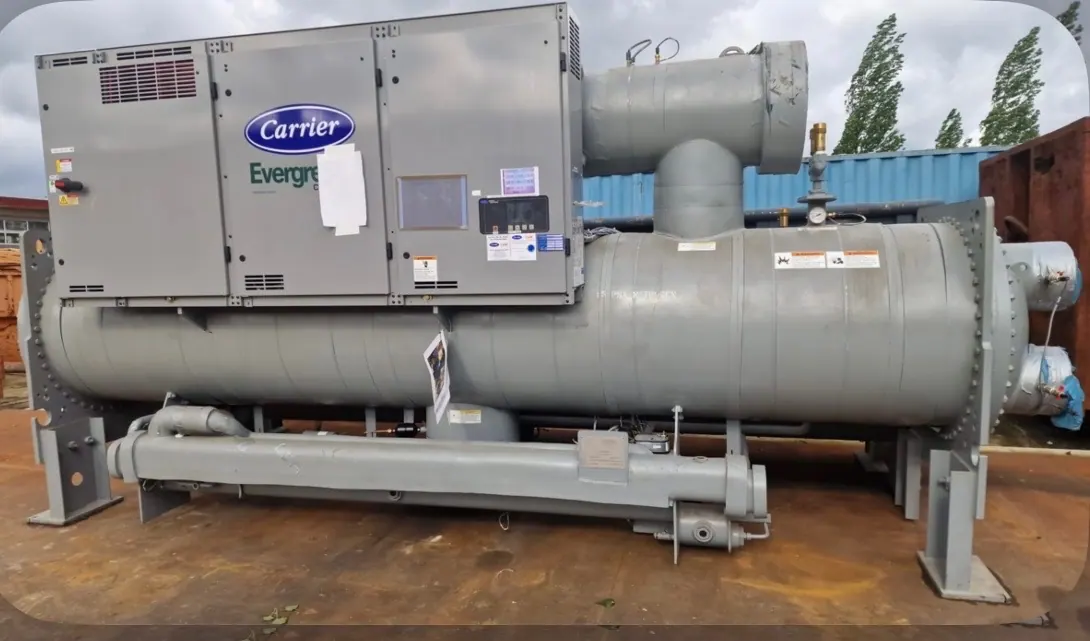
We buy Carrier chillers in Texas for projects involving refrigerant recovery. We offer upfront payment, handle removal, and do not require seller testing.
From first photo to final haul, we take care of the details so you can move forward.
Share a nameplate photo, the location, and whatever you know about your equipment. No testing is required from you.
We review the chiller and your site information, then make an offer. Payment is upfront.
We handle disconnects, refrigerant recovery, crane and rigging, loading, freight and hauling.
A Carrier nameplate is a useful starting point, not a complete description of a chiller. For an initial review, share clear photos of the main equipment label and, if safely visible, the compressor and control labels. Capacity, model and serial information, refrigerant markings, and any known component changes help distinguish one configuration from another.
We buy used commercial and industrial chillers in Texas, including Carrier-branded water-cooled and air-cooled units and centrifugal, screw, or scroll equipment. We consider a broad range of sizes, generally from 20 to more than 2,000 cooling tons, and all refrigerants. An idle or non-running machine can still be reviewed; you do not need to start it, test it, repair it, or restore it to service.
Along with the labels, send an overall photo and a short account of what is known: whether the chiller is operating, stored, disconnected, or awaiting removal; which major components are included; and whether there have been refrigerant conversions or compressor replacements. If service records or conversion documents are available, they may clarify the equipment history. Missing records are fine—identify what you do not know rather than trying to infer it.
For refrigerant review, use markings and records already available to you. The current charge and contents may not be established by a label alone, particularly if the system has been altered or its history is incomplete. Do not vent refrigerant or open the circuit to find out what is inside. Testing or seller-arranged recovery is not a prerequisite for submitting the equipment for review.
Next, explain where the chiller sits and what a removal crew would encounter. A few wide photographs of the machine, its room or pad, and the route toward the loading area can make the discussion more concrete. Include known dimensions of doors or openings and any stairs, tight turns, low clearance, restricted vehicle access, or overhead obstruction that could affect rigging.
If other plant equipment must remain in operation, identify the asset being sold and the services or areas that must stay undisturbed. The authorized site contact can explain access rules, approval requirements, permitted work hours, and how the equipment may be isolated. These details shape the work plan; they do not require the seller to perform disconnects or arrange a crane.
Once the equipment and site information are available, we review the actual project before discussing a cash offer. The assessment may depend on the chiller’s identified configuration, condition, included components, refrigerant situation, and the practical requirements of recovery and removal. A cooling-ton rating measures capacity, not shipping weight, so it cannot by itself establish what the machine weighs or how it should be lifted.
An offer is not automatic, and no single figure applies to every Carrier chiller. If information is incomplete, say so; the review can proceed from what is known, with follow-up questions where needed. The equipment does not have to be running for consideration, and there is no promise of purchase until the asset and project have been reviewed and terms are agreed.
If we agree to purchase, confirm in writing or through the agreed transaction process which chiller and components are included, the purchase terms, site permissions, and the planned scope of work. Payment is made upfront before pickup, on the terms agreed with the seller. Clarifying the equipment boundary and access arrangements in advance helps prevent confusion when removal is scheduled.
For an agreed purchase, we coordinate appropriate refrigerant recovery using qualified personnel. The timing and method depend on the equipment and site requirements. We also handle the necessary equipment disconnects, rigging, crane work when needed, loading, freight, and hauling. The seller is not expected to hire a recovery contractor, provide lifting equipment, or organize transport.
The removal sequence is coordinated with the authorized site contact, who supplies accurate information, approved access, applicable site rules, and required permissions. Where a chiller is in a confined mechanical room, on a roof, or beside active systems, the actual route, lift conditions, and operating boundaries need to be reviewed before work begins. These are project-specific constraints, not details that can be settled from the Carrier name or a capacity rating alone.
To begin, gather the information already at hand: the equipment location in Texas, nameplate and refrigerant-label photos if accessible, an overall view, known condition and history, and any useful access or route pictures. Note uncertainties plainly. You can then submit those details for review and discuss whether the Carrier chiller fits a purchase and removal plan, without starting, opening, repairing, or preparing the machine for pickup.

Air-cooled or water-cooled. Centrifugal, screw or scroll. From single units to large shutdown projects, we buy industrial chillers across Texas.
Send us your chiller details and nameplate photos for a cash offer. Don’t worry if you don’t know every specification—we can start with what you have.
Call or text(614) 715-3047TEXT NAMEPLATE PHOTOS ↗Prefer email?
saleselectricalbuyers@gmail.com